Destination: Valencia, Spain
Next up on our list of top holiday destinations is Valencia – here’s Ioana to explain how the Spanish city captured her heart…
The fact that it’s not one of the top touristic destinations in Spain, had me not really knowing what to expect of Valencia. Of course, I was looking forward to amazing paella, sunny skies and tapas, but Valencia has its own special charm that makes it feel like everything that you’d expect of Spain but better. Valencia has surprised me in a delightful way and I want to share my excitement and love for this place.
Not too big and with very good public transport options, it’s a very “manageable” city, as a former local told me. They love bikes over there so if that’s your thing, research on how you can rent a Valenbisi. Walking is a pleasure – beautiful old buildings and orange trees that decorate many of the pavements.
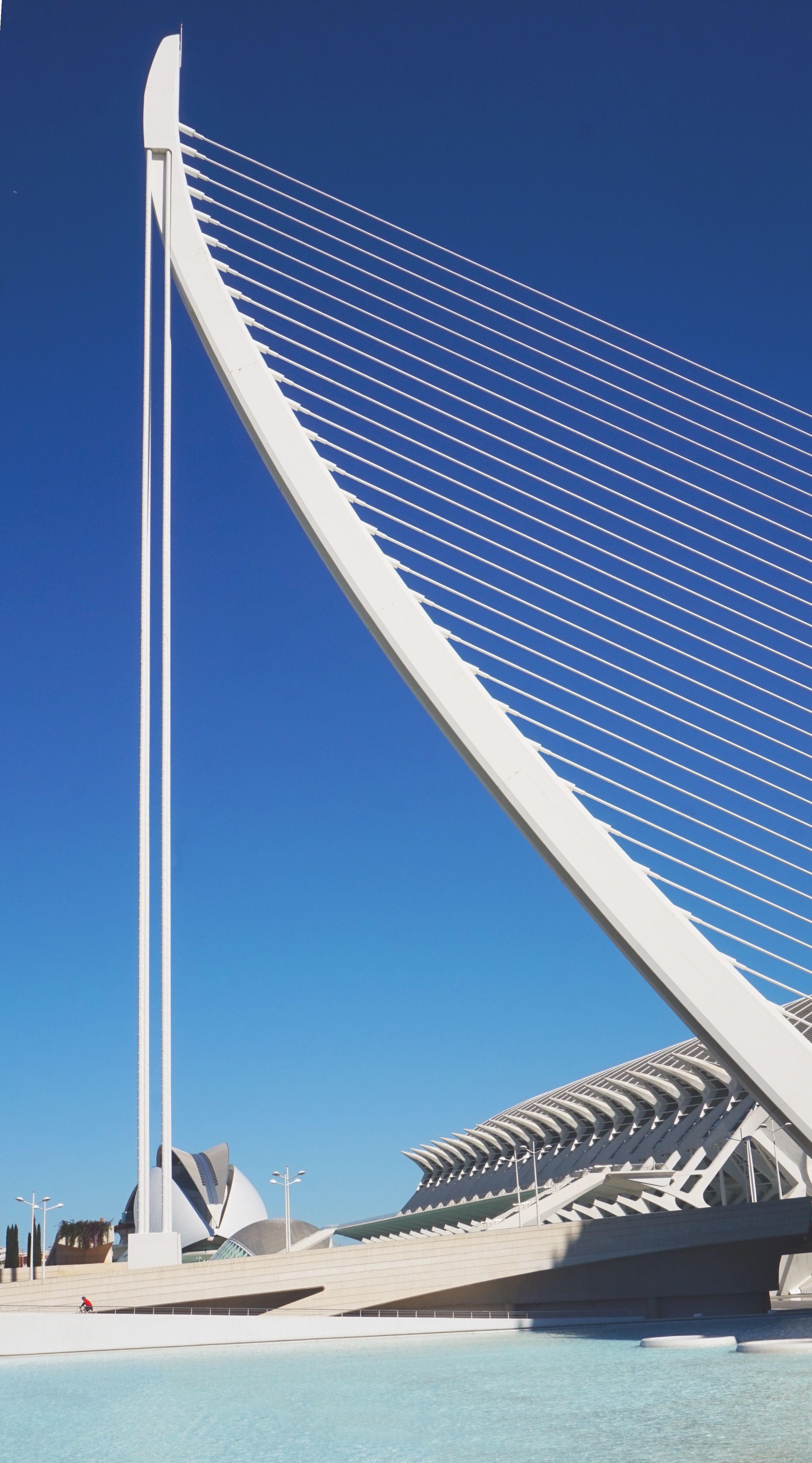
What used to be the bed of the the river Turia was transformed into a huge park with plenty of vegetation, sports courts, fountains and the futuristic looking Calatrava buildings and bridge, collectively called the City of Arts and Sciences, including a planetarium, an oceanarium and an interactive museum. Feeling like you’re about to embark on a spaceship, the beautiful buildings make it hard to take your eyes off them. All white and with bold curves and angles, decorated with light blue water fountains all around, it’s very easy to be impressed by the architect’s talent and vision.
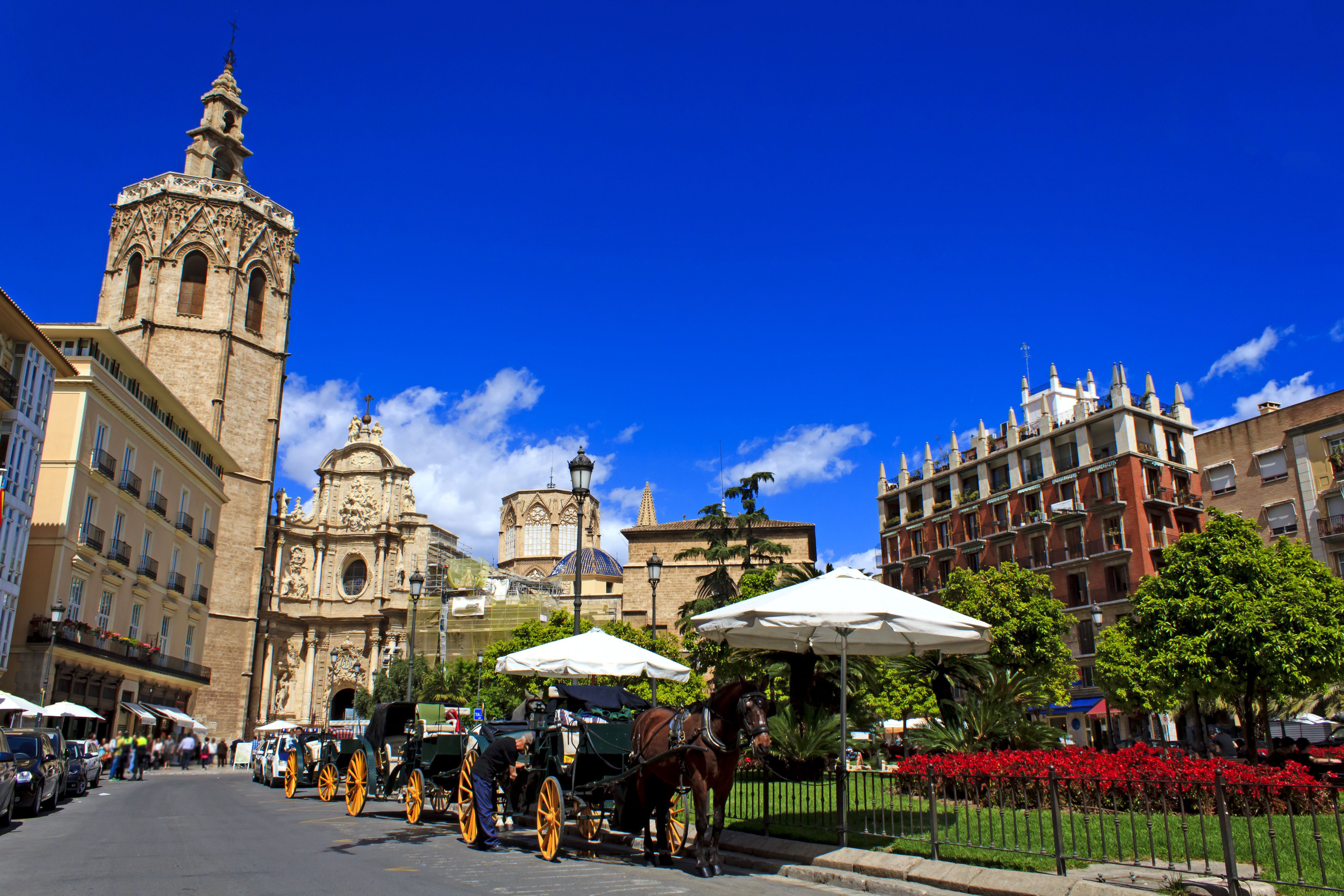
South of the park is the old city centre, which is best explored by foot. All the little streets are beautiful and each neighbourhood has many cafes and bistros where you can take a break and indulge in the delicious Spanish cuisine. One of my favourite places is Plaza de la Reina. The fact that we had some amazing chocolate con churros at one café of the many around the plaza does not influence my decision at all 😉
Where do the cool kids hang out? I hear you ask me. The answer is Russafa. It is the hip neighbourhood with a rich cultural mix which makes it the favourite social place for both tourists and locals. The classic Spanish buildings are home to many restaurants and cafes with delicious pastries. The nightlife here is very lively and is the kind of place where on a hot summer night you might accidentally walk right into a street festival.
In only four days Valencia has managed to make me fall in love with it and quickly climbed and reserved a spot in my top 3 favourite places in the world. Characterful, filled with culture and history, great food, amazing weather and happy palm trees, Valencia surely knows how to impress.
Heading to Spain this summer? Remember to download uTalk before you go so you’re prepared with some basic Spanish conversation!
Did you know you can speak Latin?
Last week we added our 133rd language to the uTalk app – and it’s a good one!
Latin has been around ever since the year 75 BC and it has evolved from Old Latin to Classical Latin, to Early Modern Latin and finally Modern Latin. Along with Greek, its roots are used in theology, biology, and medicine right up to the present day. Romance languages, such as Italian, Portuguese, Spanish, French, and Romanian have developed from Latin. Later on, many words from all these languages were taken into English, so even if you’ve never actively learned it – you might actually speak Latin.
Here are a few examples of Latin words and phrases that we use regularly:
1. ad hoc: to this
Ad hoc refers to something that was created for a specific purpose or situation as the need arises, without previous planning. An ad hoc political committee, for instance, is formed specially to deal with a specific situation.
2. vice versa: the other way around
For example: “I like you and vice versa” means that you also like me.
3. carpe diem: seize the day
This phrase comes from a poem by Horace and is used to encourage people to enjoy the moment without concern for the future.
4. sic: thus
Sic is used with square brackets [sic] after a quotation indicate that an odd or unusual phrase was reproduced exactly as it was in the source, and therefore it is not an editorial error.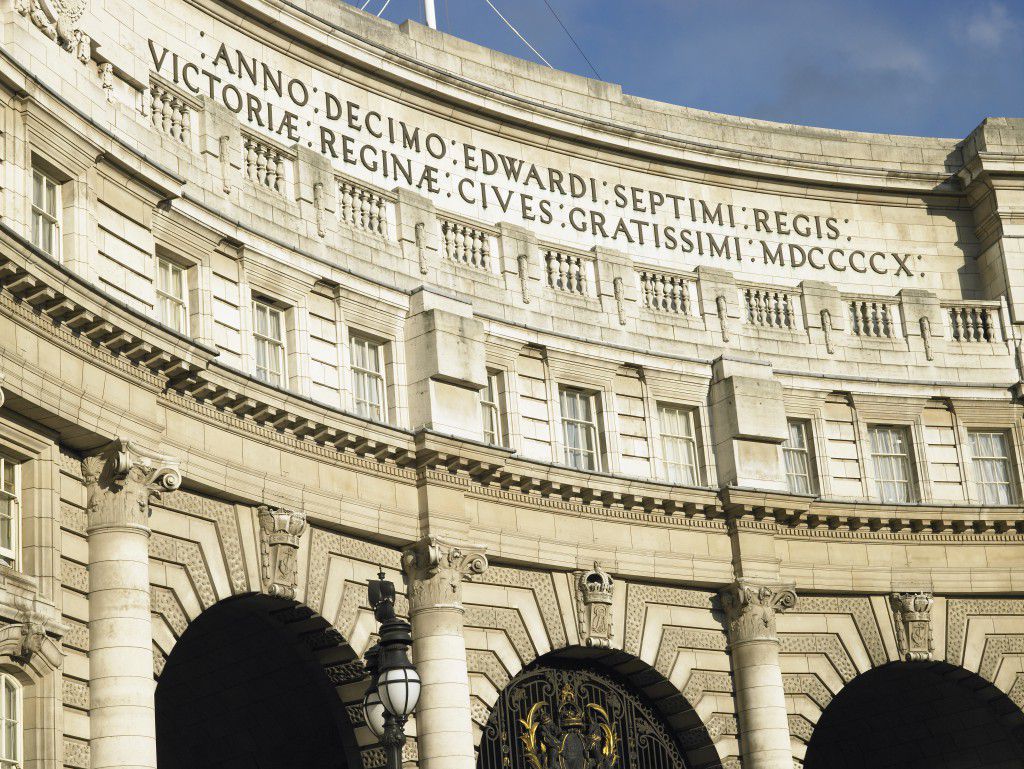
5. per se: by itself
Per se is used to refer to a particular thing by itself. For example: “The idea, per se, wasn’t bad; it was just the way he said it.”
6. mea culpa: through my fault
You might say this if you were admitting guilt, or owning up that something went wrong because you made a mistake.
7. circa: around
If you hear “circa” before a date or other fact, it means it’s an approximation – so for example, “This church was built circa 1600”.
8. in loco parentis: in the place of a parent
When an individual or organisation acts in loco parentis, they assume legal responsibility for a child in the absence of their parents.
We’re really excited to finally add Latin to our uTalk app. Take a look – it’s a great way to see how Latin would sound in modern day society and also to better understand how the language works.
10 famous faces who speak other languages
We’ve posted previously about movie and sport stars who speak other languages. But it turns out they’re not the only famous linguists, so here are a few more. Prepare to be impressed…
Audrey Hepburn
There was much more to the star of Roman Holiday and Breakfast at Tiffany’s than her movie career. Audrey Hepburn was well known for her charity work with UNICEF, and after spending her childhood in Belgium, Britain and the Netherlands, she was also fluent in English, Dutch, French, Italian, Spanish and German.
Rita Ora
Rita Ora was born in Kosovo (then called Yugoslavia) to Kosovar-Albanian parents, moving to London when she was a year old. The pop star, model and X Factor judge speaks Albanian fluently and is proud of her heritage; last year she was named an honorary ambassador for the Republic of Kosovo.
Ellen Macarthur
Former yachtswoman Dame Ellen Macarthur learnt to speak French when she was 21 and living in a French boatyard while she prepared for a solo transatlantic race. She’s now fluent and says she would never have been so successful in her career without knowing the language, which helped her build relationships with other sailors and gain sponsorship.
Eddie Izzard
Comedian (and record-breaking marathon runner) Eddie Izzard is currently touring with his stand-up show Force Majeure, which he performs three times a night, in three languages: French, German and English. In 2014, he was named the Guardian’s public language champion, and told the newspaper: “There’s a political basis for me to learning other languages, because if we don’t come together in the world then the world’s not going to make it.”
JK Rowling
JK Rowling studied French and Classics at university, and when she came up with the idea for the Harry Potter series in 1990, she was working as a bilingual secretary for Amnesty International. She later moved to Portugal and split her time between teaching English as a foreign language and writing the best-selling books.
Mark Zuckerberg
The Facebook founder surprised everyone in 2014 when, during a visit to Tsinghua University in Beijing, he started speaking Mandarin – and continued for half an hour. Though his efforts got a mixed reception from the press, the audience seemed delighted – and we were pretty impressed, too.
Jon Heder
The star of Napoleon Dynamite is a member of The Church of Jesus Christ of Latter-day Saints, and served a two-year religious mission to Japan after high school, where he became fluent in the language. And though he now describes himself as “a little rusty”, he still sounds pretty good to us.
Tim Peake
Tim Peake is the first British astronaut to go to the International Space Station – but before leaving Earth he had to learn Russian (the language of the controls in the Soyuz capsule used to get to the ISS), and has described this as the hardest part of his 14 months’ training.
Tom Hiddleston
Okay so we already mentioned Tom Hiddleston in our last post, but frankly, we never get bored of listening to him speaking loads of languages – among them French, Spanish, Greek and Italian, plus some Mandarin, Russian and Korean. And he studied Latin at university…
Viggo Mortensen
The Lord of the Rings star was born in New York, but spent his childhood in Venezuela, Denmark and Argentina, leaving him fluent in English, Spanish and Danish. He also speaks some French and Italian, and understands Norwegian and Swedish.
Does your favourite celebrity make the list?
Beginner’s guide to Romanian
The Junior Language Challenge is a national competition for children aged 10 and under across the UK. One of the goals of the competition is to give young learners the chance to discover exciting new languages, and this year we’ve chosen Romanian as the first language.
But how much do you know about this European language? Here’s Ioana’s introduction to her mother tongue…
Some other fun facts about Romanian
- The Romanian language is 1,700 years old and is the only Romance language spoken in Eastern Europe. That’s why you’ll be surprised how many similarities it has with French, Spanish, Italian and Portuguese. However, it also retains a number of features of old Latin and also contains many words taken from the surrounding Slavic languages, as well as from German, Greek and Turkish.
- The name “Romania” comes from the Latin word “Romanus” which means “citizen of the Roman Empire.”
- Something that might come in handy is that Romanian is a phonetic language, so words are pronounced as they are spelled. Yay!
- A foreigner trying to learn or speak Romanian can expect positive reactions from native speakers. Most Romanian will certainly appreciate the fact that you are making an effort to speak their language.
- Romanians tend to be very good at foreign languages, they start learning as early as 6 years old in school either English, French or German and they add a second language at the age of 11. The majority of young people speak very good English and some of them even another one or 2 languages.
- Romanians love meeting new people and making friends; they are also renowned for their hospitality, so if you speak Romanian you have a pretty good chance of having a blast if you’re visiting this country.
- And speaking of travelling, Romania has amazing landscapes. In fact, Romania’s Carpathian Mountains are home to the largest undisturbed forests in Europe.
- Don’t deny yourself the ease of ordering delicious Romanian food that comes in generous portions, and you’re guaranteed to remember a trip to Romania as one of the best you’ve ever had.
La revedere și mult succes (goodbye and good luck)
If you’re a parent or teacher of children aged 10 and under in the UK, visit juniorlanguagechallenge.com to find out more about our annual competition, which is now open! Entry costs just £5, which is all donated to our fantastic charity, onebillion.
Mum’s the word! How different languages say ‘mother’
Today is the day we celebrate ‘Mother’s day’ or ‘Mothering Sunday’ here in the UK.
Mum is one of those words we start to use from a young age; perhaps you used ‘mumma’, ‘mother’, ‘mam’ or ‘mummy’ instead; there are many ways to say it! Some languages offer a similar word to English, like ‘la madre’ in Spanish and in Italian. Typically the word for mother does start with an ‘m’ or a ‘b’ as these are soft and easy sounds when you’re a child, creating the ‘m’ noise is one of the easiest ones to make. In Afrikaans the word for mother is just ‘ma’ and in Swahili it’s ‘mama’.

My mum and me enjoying the sunshine!
However, that’s not always the case: in Fijian the word for mother is ‘tina’, in Kurdish (Sorani) it is ‘daik’ and in Swiss it is ‘d’Mueter’. In other languages the m or b is replaced with a ‘h’ sound – in Japanese mother is ‘haha’ and in Somalia it is ‘hooyo’. Would you expect ‘Whaea’ to translate into the English word ‘Mother’? This is perhaps one of the more unusual ways of saying mother in another language (Maori). Interestingly in Georgian, it is completely different to English, with ‘mama’ meaning father and ‘deda’ for mother.
When it comes to the Romance and Germanic languages, there are a lot of similarities between both ‘mother’ and ‘father’ translations. Father tends to start with a ‘p’ or a ‘b’ sound, which are also easy noises for children to make.
Here are some other words for ‘mother’ in different languages:
Slovak – matka
Scots Gaelic – a’ mhàthair
Hungarian – anya
Albanian – nënë
Tagalog – nanay
How do you say ‘mother’ in the language you’re learning?
Happy Mother’s Day to all the mums, tinas, madres and nanays – we hope you have a lovely day!
Alex
