Language of the Week: Japanese
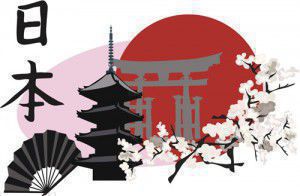
As it was the Japanese Grand Prix on Sunday, we have chosen Japanese as our Language of the Week.
First and foremost, our thoughts and good wishes go to Jules Bianchi for his full recovery following his crash on Sunday at Suzuka.
Though in many respects I’m a complete petrol head, I have never found Grand Prix very interesting to watch, lap after lap, rarely exciting in my book. However, when I started to research the history of the Japanese Grand Prix, I found some interesting facts:
Surprisingly it is the only circuit that crosses over itself in a figure of eight and therefore runs both clockwise and anti-clockwise.
The fastest lap ever recorded at the Suzuka circuit is 1:30.54 minutes and was set by Kimi Räikkönen in 2005. To put this into perspective, since the track is 3.387 miles long, if a Cheetah could run at its fastest for further than 1500ft, it would take it approximately 2.7mins!
When looking to learn Japanese it can appear very daunting because of the characters. However, it is one of those languages which is much easier to speak than write. Unlike the majority of languages, nouns do not have genders and there is also no differentiation between singular and plural. Personally, we love both these facts. There are also no pronunciation or tones.
Here are a few fun facts about Japan:
 Japan’s trains are among the most punctual in the world, their average delay is just 18 seconds. (What we’d give for that on a rainy Monday in London!)
- Japanese farmers are growing square watermelons, because they are easier to stack and store. (Now that is thinking outside the box! Or is that inside?)
- In Japan there is a cat café where you can and go drink coffee whilst hanging out with cats for hours (Is that a new kind of speed dating opportunity?)
- This one has to be one of our favourites – sleeping on the job is acceptable as it’s a sign of exhaustion from working hard. (Sweet dreams!)
- In Japan there is no Ronald McDonald!! But panic not Big Mac fans, he’s called Donald McDonald due to the lack of a clear “R” sound in Japanese.
- There is an island in Japan called Ōkunoshima or Rabbit Island, since numerous feral rabbits run wild, though apparently they are quite tame!
The challenge for you all this week is another tongue twister:
Niwa no niwa ni wa, niwa no niwatori wa niwaka ni wani wo tabeta
Which means: In (Mr) Niwa’s garden, two chickens suddenly ate a crocodile.
So let’s see your best efforts! Send us your videos on Twitter to @EuroTalk using #itsJapaneasy or send them to us on Facebook – our favourite will win a free uTalk Premium in a language of your choice. Get twisting!
Are you learning Japanese? Or do you have any favourite facts about the language or the country? Let us know in the comments!
Amy
Quote of the week: 4 Oct 2014
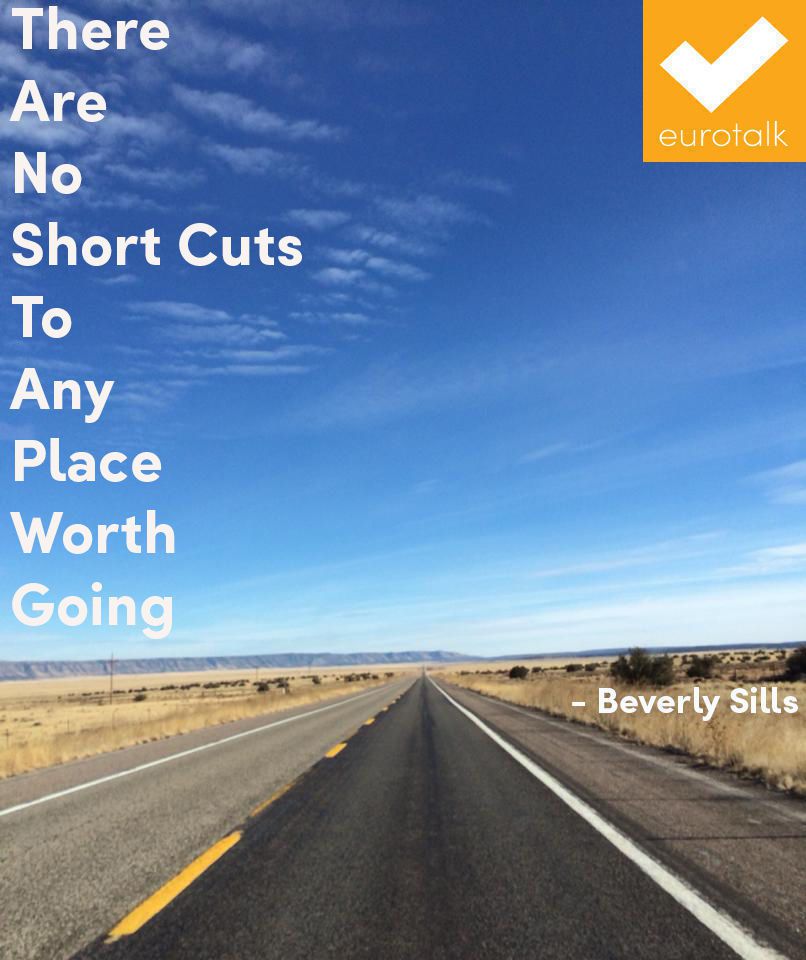
“There are no short cuts to any place worth going.” Beverly Sills
For more like this, find us on Pinterest.
Embed This Image On Your Site (copy code below):
10 reasons to visit… Malawi
Today’s post is by Alex from onebillion. As you may know, onebillion are an organisation set up by Jamie and Andrew from EuroTalk to provide basic maths, reading and English teaching through apps to children in developing countries (and they were recently featured in a BBC Click report). A few weeks ago, the whole onebillion team travelled to the African country of Malawi to expand their project to a new school.
Perhaps Malawi might not seem like an obvious choice for a visit, but here are ten reasons why Alex thinks you should give it a try 🙂
1. ‘Interesting’ foods
I’m not sure if this is a reason to visit Malawi or not, but it is quite interesting to see what some of the locals eat. Typical local cuisine mainly consists of a maize porridge called nsima, which they eat 2-3 times a day, but you can buy great-looking fresh fruits for next to nothing. You can also get international cuisine from some restaurants in Lilongwe or Blantyre (the two major cities). But a particular highlight is seeing the ‘mouse boys’ who sell sun-dried mice on sticks (complete with fur) on the side of the road. For some reason none of us has been brave enough to try one yet. You also have to drink some fresh-ground Malawian coffee – and bring back some beans for the EuroTalk and onebillion offices, of course!
2. Lake Malawi
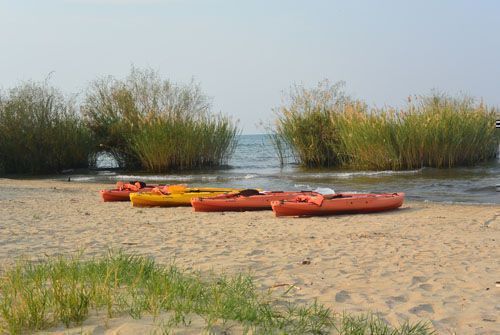
This is one place you have to see before you die. The most beautiful place I’ve ever been to. You can stay in a simple straw beach hut, see the stars and wake up to the sound of the waves and nothing else. The lake is home to many varieties of fish, alligators and hippos, and we saw dozens of monkeys and other critters all around the lake. Including some rather terrifying new species of bugs. Be careful to check whether it’s safe to swim in the part of the lake you visit, but even if you can’t it’s an amazing place to see some stunning nature.
3. Get involved in a voluntary project
onebillion recently returned to Malawi to check up on our progress with delivering tablet-based learning in Biwi school and to expand to another, larger school. We were so excited to see how much progress the children have made with their maths skills. But there are many other organisations working there on things like building schools, digging wells and volunteering as a teacher or healthcare assistant. See Malawi Volunteer Organisation or VSO, for example.
4. See a totally different way of life
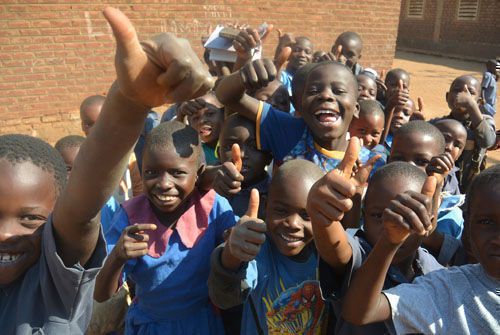
Even in Lilongwe, the capital, Malawi is not very developed. You’ll be bumping along mud roads and seeing people walk past with bicycles stacked up with insane quantities of firewood, huge towers of mud bricks being baked dry and barefooted children running around with chickens and goats. Just seeing how people go about their daily lives will give you a new perspective, and chatting to some of the locals and children who have never seen technology such as smartphones or tablets is really worthwhile. Seeing the faces of groups of Malawian children when they first play a maths game on a tablet or seeing our flying ‘drone’ camera was priceless.
5. Experience life without modern conveniences
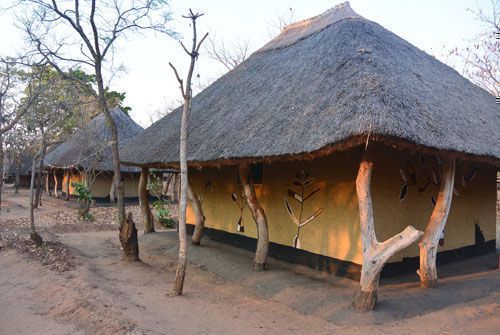
You know all those things you take for granted, like running water, drinking water on tap, electric lights, flushing loos, wifi? Maybe try a couple of days in a traditional Malawian-style hut and say goodbye to all of those things for a while! Whilst freezing ‘showers’ from a bucket, candlelight and a few days without Instagram might be hard to get used to – it’s a really interesting experience which makes you appreciate all the home comforts you took for granted before. And you might find you see and experience something new when you’re forced to go without Facebook for a couple of days. Kumbali Village in Lilongwe is the perfect way to experience a back-to-basics stay but with clean water available and clean rooms too.
6. Wildlife!
One of the first things you’ll notice as you take a walk or drive around when you arrive in Malawi is all the different plants and animals that you’ll see everywhere. You can take a safari (the Swahili word for ‘journey’ by the way) or visit one of the country’s incredible national parks, such as Liwonde and Lengwe to see hippos, lions, elephants and more. But you’re likely to spot monkeys, baboons, colourful insects and birds just out and about. Just watch out for chickens, goats and dogs running in front of your car when you’re in one of the villages!
7. Climb Mount Mulanje
I didn’t actually do this when I visited, but Zane and Alan from onebillion did on their visit and said it gave them a really great sense of achievement, as well as an awesome view. Mt Mulanje is 9,849 feet high – quite a climb, but not requiring special equipment or training.
8. Friendly people
We often say this about a place, but in Malawi it really is true! Malawi is called the ‘warm heart of Africa’ and much of this is to do with how warm and friendly people are. They are really genuinely interested to talk to people from other places and happy to share their lives and interests with you in return. They’re also really happy if you manage a couple of simple Chichewa phrases: greet people with ‘moni’ (hello), say ‘zikomo’ (thanks) and ‘chonde’ (please) and you’ll get along fine.
9. Unspoiled landscape and scenery
Depending on the time of year, Malawi is either lush and green or dry and very dusty. However it is always a very impressive country to see, with a variety of different terrains and landscapes, including mountains, lakes and rivers. There are a lot of open spaces and not many tourists, so it’s a great place to see some real and unspoiled nature where commercialism hasn’t taken over yet.
10. The climate!
Ok, since our trips to Malawi are mainly about working on our ‘one billion children’ project we don’t have sooo much time for sunbathing. We’re normally up with the sunrise at 5.30am, in school all day and up charging and configuring tablets, processing data or marking until about 11. But there’s normally some time to relax as well, and sunbathing might also happen (only if our work is done first, honest). You might think of Malawi as extremely hot, but most of the year it is a really nice temperature around 30 degrees and not too humid. Remember your suncream (and insect repellent!) and it really is a great place to soak up some sun.
Alex
Language of the Week: German
As the annual festival of Oktoberfest gets underway in Munich this week, we’ve chosen German as our latest Language of the Week.
If you’re anything like us, when you hear ‘Oktoberfest’ you probably think of beer (oh – just us?) but there’s a lot more to the event than that. Oktoberfest is actually the world’s largest funfair, and it’s a 16-day festival running from late September to early October. There is a lot of beer consumed though – 6.7 million litres at the 2013 festival! – and it’s also a great place to try traditional German food.
German is often described as a less attractive language to learn than, say, Spanish or Italian, but we’re not sure we agree. For one thing, German’s far more creative. How many other languages have a word for ‘a face badly in need of a fist’? It’s backpfeifengesicht, in case you were interested.
Here are a few fun facts about German:
– It’s an official language of five countries: Germany, Austria, Switzerland, Luxembourg and Liechtenstein, and has at least 100 million native speakers around the world.
– You might know more German than you think – ever used the word ‘angst’, ‘kindergarten’ or ‘doppelgänger’? These are just a few examples – there are plenty more.
– German is known for its very long words, which are created by sticking together other words to explain a concept. In 2013, the language lost its longest word – rindfleischetikettierungsueberwachungsaufgabenuebertragungsgesetz – which is 63 letters long and means ‘law delegating beef label monitoring’, thanks to a change in EU regulations.
However most of these long compound words don’t appear in the dictionary. The longest word that does appear is kraftfahrzeughaftpflichtversicherung (‘automobile liability insurance’) at a mere 36 letters long, although we wish donaudampfschifffahrtsgesellschaftskapitaenswitwe (widow of a Danube steamboat company captain) was in there too.
We love this video by Language Hat, which is a really fun explanation of how these long words are put together. If you don’t find yourself craving rhubarb cake or beer by the end of it, you’re doing better than us!
– ‘Gift’ may be a nice thing in English, but in German it means ‘poison’, so be careful who you give it to…
– In German, when telling the time, ‘half three’ actually means ‘half an hour before three’ (i.e. ‘half past two’) – definitely worth knowing before making any plans.
– Germany is often known as Das Land der Dichter und Denker, which means ‘the land of poets and thinkers’. Not surprising really, since this is the country that gave us Johann Wolfgang von Goethe, Thomas Mann, Albert Einstein and the Brothers Grimm. It’s also the home of the first pregnancy test, invented by German researchers Selmar Aschheim and Bernhard Zondek. So now you know.
We know there are a lot of German fans out there, so please tell us why you love the language and the country – either in the comments or on Twitter to @EuroTalk with hashtag #loveGerman 🙂
And if we’ve convinced you to give German a go, remember you can start learning it completely free with uTalk or the free demo on our website.
Quote of the week: 20 Sep 2014
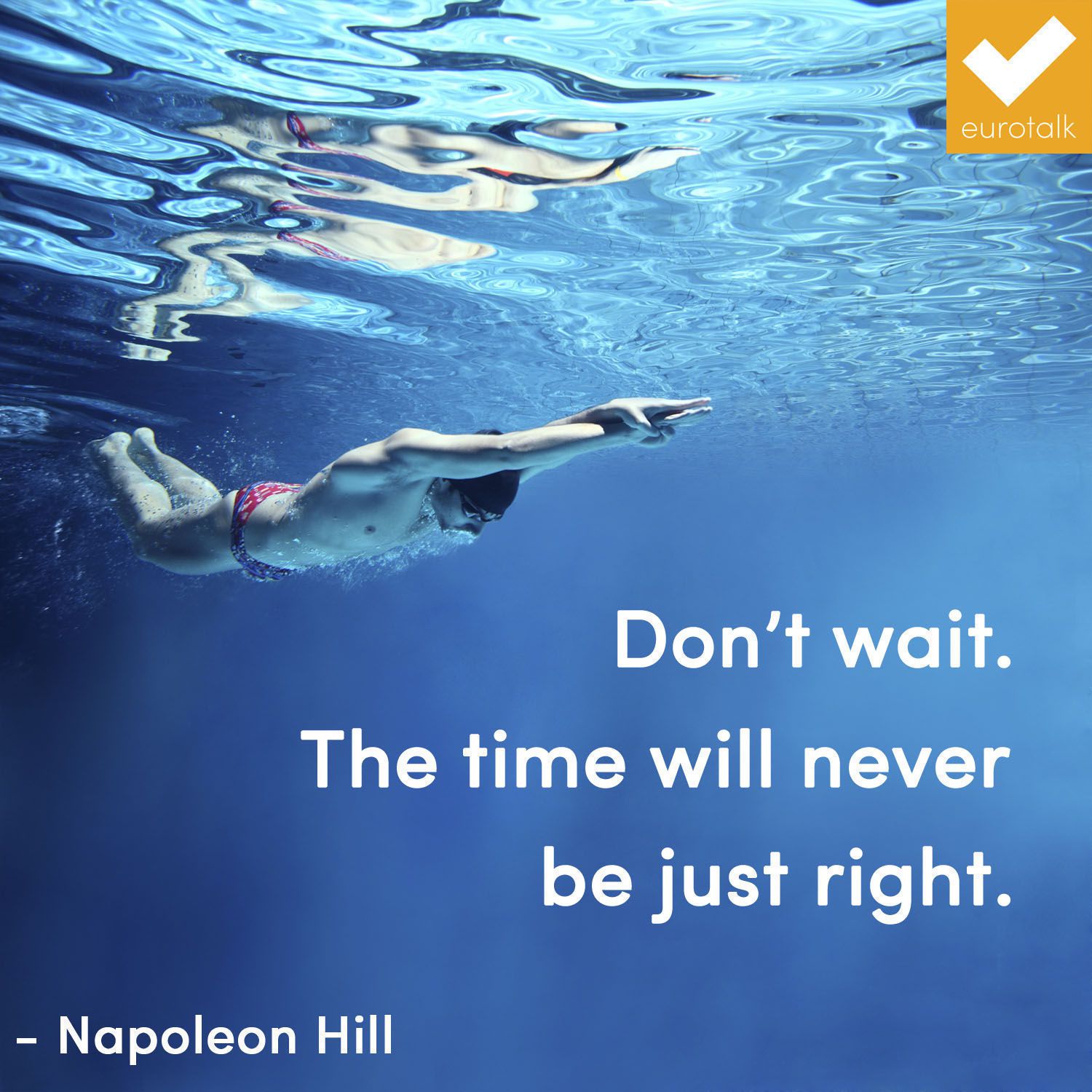
“Don’t wait. The time will never be just right.” Napoleon Hill
For more like this, find us on Pinterest.
Embed This Image On Your Site (copy code below):
