Not your average Monday: what’s so special about 29th February?
Happy Leap Day! The 29th of February comes around every four years, but how much do you know about this extra day?
What is Leap Day?
Originally the Sumerians divided the year into 12 months and allocated 30 days for each month. This was adapted by the Egyptians, who realised that this didn’t fit in with the amount of time taken for the Earth to orbit the sun. The Egyptians decided to add five days in at the end of each year to give us the 365 days we have now; however, these five days were just for partying and celebrations – sounds good, right?! The leap year then came about from the Gregorian calendar, with the idea that one day would be added onto February every four years.
Leap years around the world
No one seems to know why it is called a ‘leap’ year, but there are other names for it around the world. In German a leap year is called ‘Schaltjhar’, in Russian it is ‘année bissextile’ and in French it is similar with ‘anno bisestile’. Interestingly in Italian it is called ‘l’ann d’la baleina’ which translates to ‘the whale’s year’, after a belief that whales only give birth during leap years. In many countries a leap year is believed to be bad luck; Russia and the Ukraine believe that getting married or buying a house during a leap year is unlucky. In Taiwan it is considered really unlucky; the Taiwanese go so far as to say that parents are more likely to die during a leap year.
What’s all this about women proposing?
 Perhaps the most well-known leap year tradition is the idea that women can propose to men in this year. This is believed to be introduced by an Irish nun who thought that women had to wait too long for suitors to propose and convinced St Patrick to give women permission to ask a man to marry them once every four years. It was thought that if a woman did want to propose she had to wear breaches or scarlet petticoats in order to do so.
In certain European countries it was thought that if a man refused the proposal they should pay a penalty. In Finland they had to buy the lady fabric so she could make her own skirt. In Denmark, the suitor had to buy her twelve pairs of gloves so the lady could hide her embarrassment at not having an engagement ring.
What if you’re born on 29th February?
People born on the 29th have to decide which day to celebrate their birthday for the other three years. However the chances of being born on the 29th of February are 1 in 1,461. For those that are born on this day, the city of Anthony (next to Texas) celebrates the leap year with a four-day festival; this is done to celebrate the leap year babies’ birthdays. There are also Facebook groups for people born on this day, and many restaurants and retailers offer ‘leap day’ deals.
Is it your birthday today? Or did you propose?! Tell us about it!
You speak more French than you think
So you think you can’t speak French? You may not realise it but if you’re an English speaker, you probably know more French than you think. Just take a look…
Delicatessen/Deli
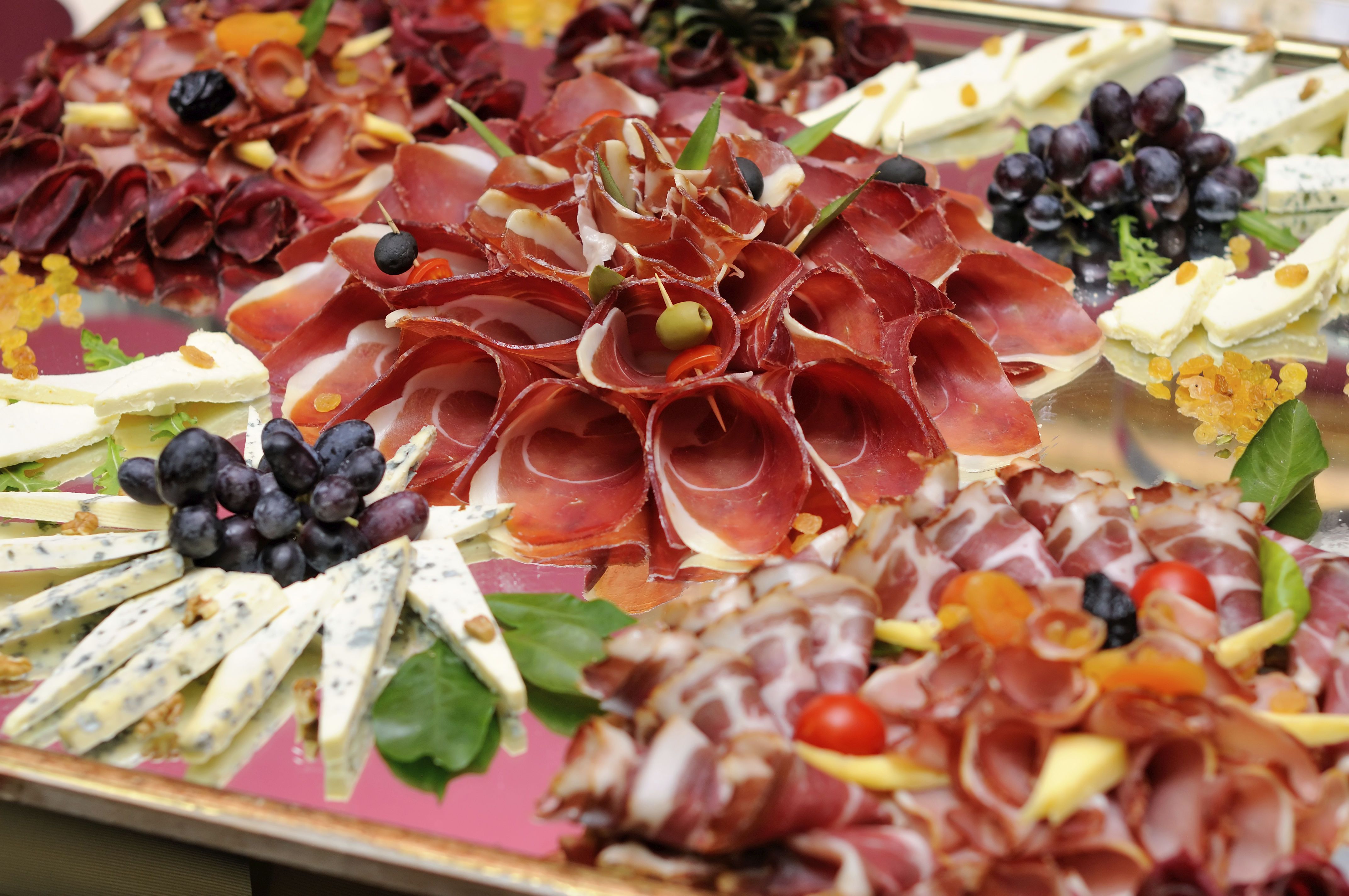
Whether you go to the ‘deli’ aisle in the supermarket, or an independent delicatessen for some dips, sauces or meats, we’ve all used this word. In French the word for this is ‘delicatessen’, which literally means ‘delicious things’.
Biscuit
A common snack or treat in the UK and the US, there are so many options to choose from. But did you know that this originates from French, meaning ‘twice cooked’. The original biscuits were baked first, and then put into another oven to dry out so that they kept longer.
Faux Pas
Often seen in magazines or newspaper as a favourite way to describe a celebrity fashion ‘faux pas’. It originally means ‘false step’ in French related to a social mistake, which leads to embarrassment.
Picnic
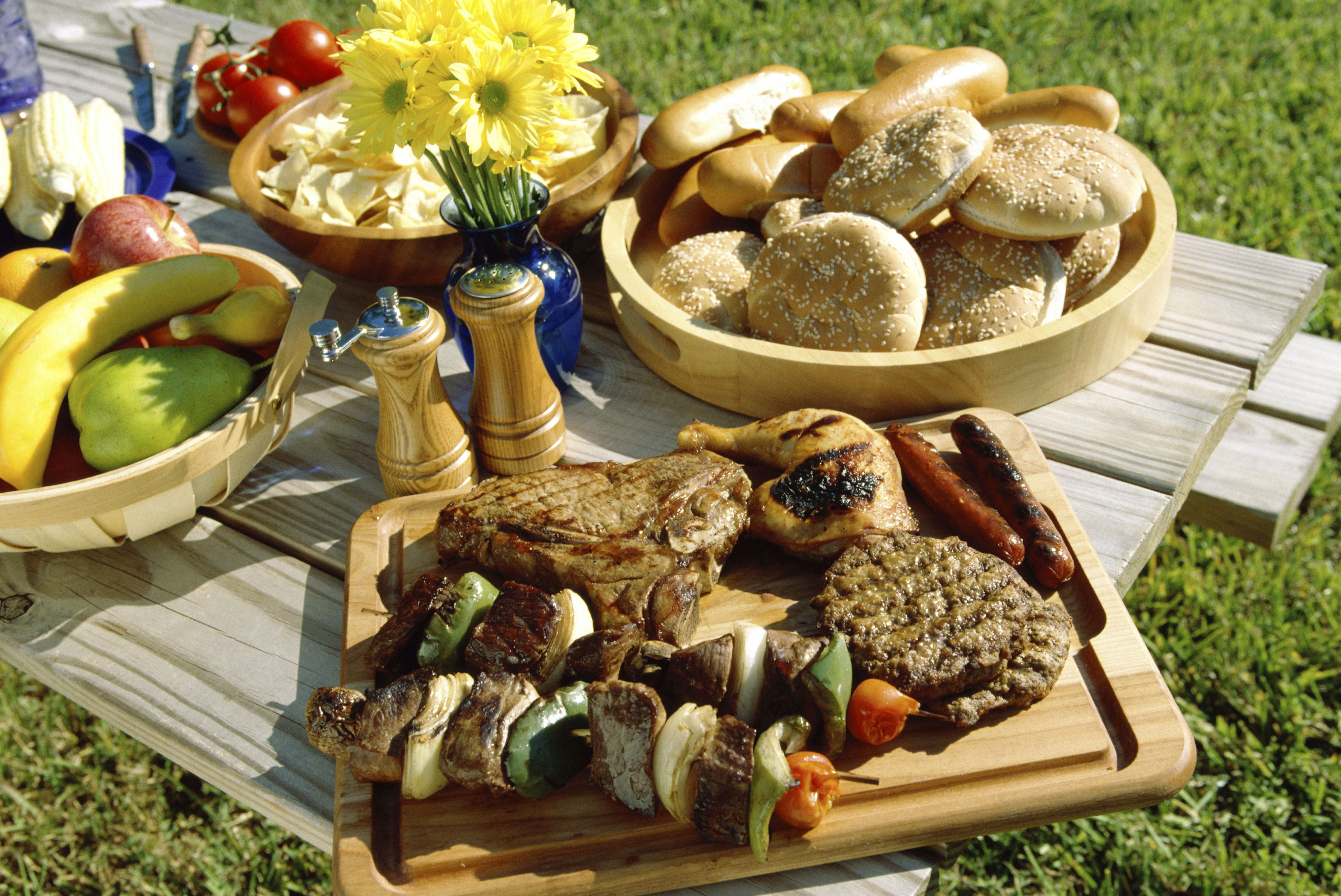
The original meaning of picnic was to describe people who bring their own wine to a restaurant. The connotation of bringing something has stayed today with the idea that people contribute different things to a picnic. Today we also know it as a meal we eat outside or ‘al fresco’ (which is from Italian, if you were wondering).
Sabotage
Interestingly this word was first related to a work dispute and the idea that workers threw shoes into the machinery (originally clogs) to stop it from working, so they could strike. Today we associate this word with the idea of doing something which will prevent the desired outcome.
Fiancé(e)
We do have a couple of words for the person we’re going to marry in English, but for some reason the French is used much more regularly than ‘intended’ or ‘betrothed’. Perhaps it’s just that the French sounds more romantic?

Sauté
A term used in cooking such as to sauté an onion, it means frying in a small amount of fat. It originates from ‘sauter’ which means to jump in French.
Can you think of any other examples of French words or expressions that are regularly used by English speakers?
Let the cat out the bag…
The world has become slightly obsessed with cat videos and cat Instagram accounts (have you seen the video where cats see a cucumber? Trust me, it’s worth a watch). They are seriously cute! I am a massive cat lover and my phone is filled with photos of my cat, Marcella.
And when it comes to the English language, we love to use cats in idioms; you may find some are more difficult than others to guess the meaning of.
Here are some examples:
Has the cat got your tongue?
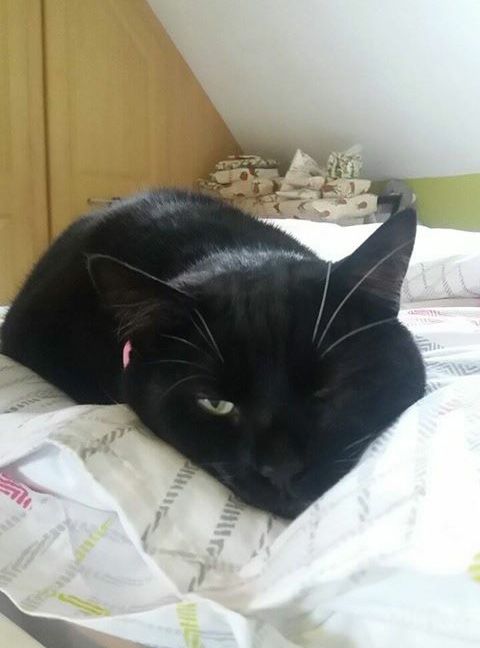
Marcella looking really impressed by all my cat idioms…
This basically means why are you being so quiet? Why aren’t you speaking? Sometimes associated with the idea that you’ve done something wrong and don’t know what to say to get out of the situation.
It’s raining cats and dogs
It’s raining (like it does A LOT in England) and it’s raining really hard.
Look what the cat dragged in
This is a very catty comment (see what I did there) this is said to someone when you don’t particularly like him or her. You’re making a point to say you don’t want them there in the same place as you.
There isn’t room to swing a cat
Okay I don’t know why you would want to swing a cat but this idiom means, it’s a really small space.
Put the cat among the pigeons
This is when you say something or do something that causes trouble. This could be expressing a different opinion to people in a group who all think the same thing.
Let the cat out of the bag
You’ve said something you shouldn’t have said, a secret maybe. You’ve said it to someone you shouldn’t have, which means you’ve essentially ‘let the cat out of the bag’.
The cat’s pyjamas/whiskers
This is an expression that means something is fabulous or excellent, similar to the ‘bee’s knees’.
If you have any other fun cat-related idioms (or any great cat videos to share with us), let us know!
Alex
The Year of the Monkey
Happy Chinese New Year!
Today is the first day of the Chinese Lunar New Year. The period before Chinese New Year is one of the biggest annual migrations of people, all going home to their families to celebrate together. This is for the New Years Eve dinner, also known as the reunion dinner, normally done at home rather than in a restaurant. A variety of dishes are served at the reunion dinner, these usually include fish and dumplings, which signify prosperity. It also includes lettuce, shallots, celery, duck and Chicken – each of these represent a different attribute.
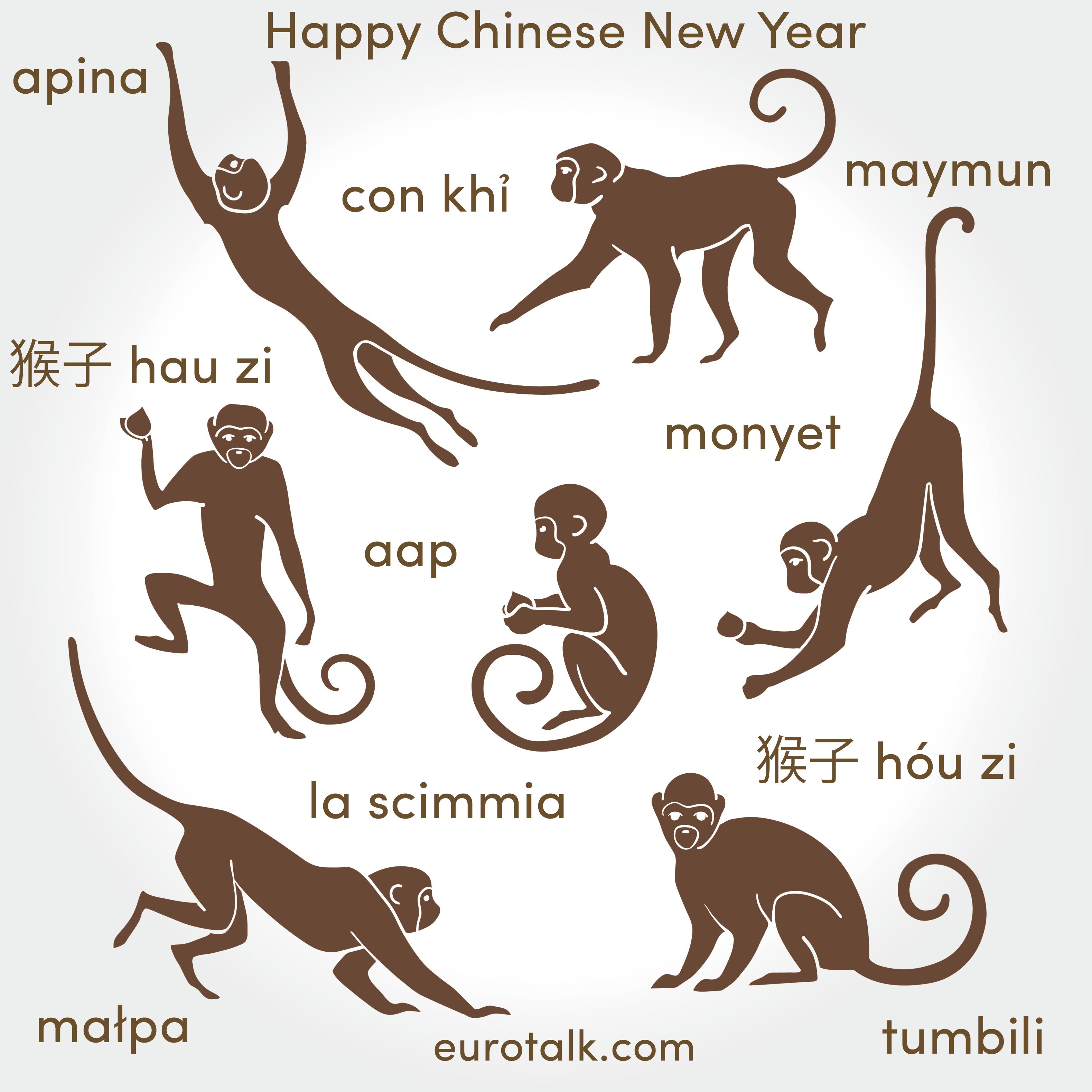
The Chinese Zodiac has a different animal representing a year on a 12-year cycle. Meaning that the year of the Monkey hasn’t happened since 2004 and won’t happen again until 2028. The monkey is the 9th animal in the Zodiac and each animal is said to have different attributes. If you were born in the year of the Monkey, you’re thought to be sociable and innovative. Every zodiac sign has lucky numbers, colours, flowers and even directions. Next year the year of the Rooster will be celebrated.
Chinese New Year is celebrated with the colour red, which is seen as a sign of good fortune. Red envelopes/packets with money in, called Ang Pow are given on Chinese New Years and are a sign of future success. It is also seen as favourable to give an even amount of money rather than an odd amount. These are very different to Pak Kum, which are white envelopes given at sad occasions like funerals.
There are many taboos, which surround the New Year, these are things that shouldn’t be done on the first day of the year.
- Washing your hair – this shouldn’t be done, as it’s a sign of washing away good fortune.
- Taking medicine – if you take medicine on the first day this means you will be sick for the whole year.
- Wearing black or white – these are mourning colours.
Do you have or know of any Chinese New Year traditions? Let us know!
How did you get your surname?
Do you know how you got your surname?
It is regarded as a tradition for women to take their husband’s surnames when they get married in Britain. It’s also the tradition for men to always be Mr but women will be Miss until they’re married and become Mrs. So if Miss Young married Mr Smith, she would become Mrs Smith. A survey in 1994 showed that 94% of British women decided to take their husband’s surname when married. This ‘tradition’ is no longer as common today, with many women choosing to keep their own surname, or creating a double-barrelled surname.
In Poland many women choose to take their husband’s surname when they get married. However, they have masculine and feminine endings to their surnames. My surname – Koszykowska – like many Polish names ends in ‘ski’ for males or ‘ska’ for females; my dad follows this rule, as does one of my uncles, but the other uncle keeps its simple by using ‘ski’ for his family. It’s thought that originally Polish surnames ending in ‘ski’ or ‘cki’ came from the places where people lived; so if you lived in Wola you would become Wolski.
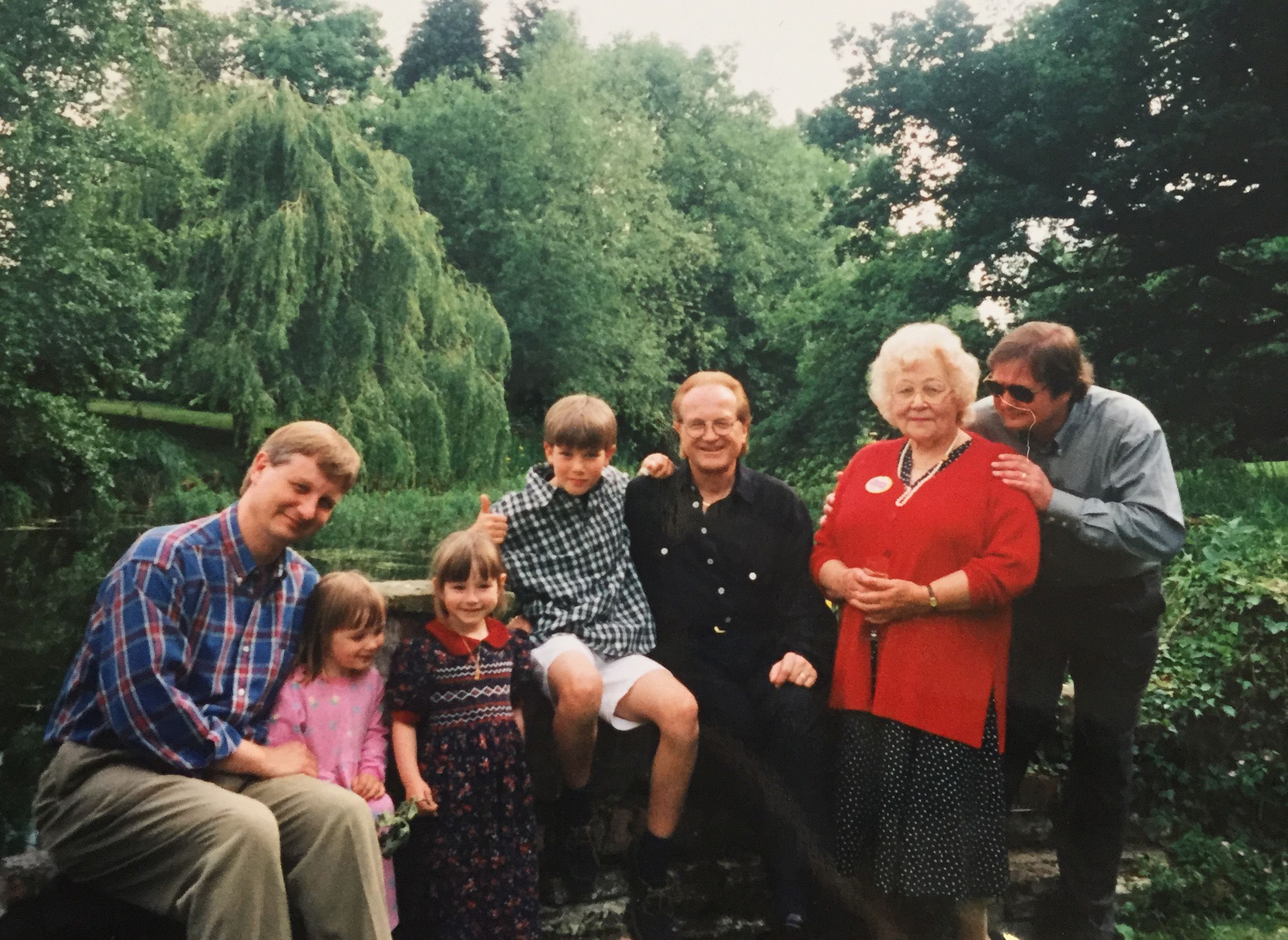
The Koszykowski (and Koszykowska!) family
In Iceland the family name reflects the immediate father’s name or in some cases the mother’s. This is a more complex way of creating a surname compared to the British tradition. If Jón Einarsson had a son called André, André’s surname wouldn’t be Einarsson; instead it would be Jónsson. This is a combination of his father’s first name ‘Jóns’ (the s indicates that he is literally Jón’s son) and the Icelandic word ‘son’. If Jón had a daughter her surname would be Jónsdóttir, dóttir being the Icelandic word for daughter. In some cases they may use the father’s middle name, or their grandfather’s name.
In Spain it’s the norm for children to take the surname of the father and their mother’s maiden name to form one surname. For example if Alejandro López marries Daniela Rodriguez, their child Paula will take the father’s surname López as their second name and their mother’s Rodriguez as their third; Paula López Rodriguez. Then it gets slightly more confusing: if Paula marries she won’t change her surname; instead she will add it to her name. For example, she marries Álvaro Arroyo; her name will become ‘Paula López Rodrigues de Arroyo’. This continues when Paula has children, her mother’s surname will be dropped from their surnames to become ‘López Arroyo’.
Is there an interesting story behind your surname? Let us know!
Alex
