Rising Demand for English as a Foreign Language Reveals Spain’s Biggest Educational Bugbears
Today we welcome back guest blogger Eve Pearce, with an interesting article about the demand for language learning in Spain, and its implications for the future.
It is rather ironic that while numbers of Brits studying a foreign language to A-level have dropped dramatically over the past few years, nearby Spain – officially out of one of the deepest recessions in its history but still struggling in terms of its high rate of unemployment – is undergoing a veritable boom in foreign language study, with the English language taking pole position, since some 78 per cent of all job offers demand this language from successful candidates.
 The Spanish crisis, which has rocked the nation since its commencement in 2008, has also led to a greater demand for German and French language learning, since many Spaniards are considering migrating to these countries given the bleak economic forecast. In many private nurseries and schools, the study of Chinese is all the rage as well, since parents see this language as the difference that could make or break their child’s job application in the future. This level of competition is only logical, since the forecasted unemployment rate for 2014 stands at 26.4 per cent of the population. Vice-President of the European Commission and commissioner of Economic and Monetary Affairs, Olli Rehn, recently declared that although the unemployment rate in Spain has stabilised, it continues to be “unacceptably elevated”. The situation, he claimed, was similarly bleak in Italy.
Interestingly, despite the general consensus as to the value of learning foreign languages, the Mayor of Madrid, Ana Botella’s recent address to the Olympic Committee during Madrid’s bid to host the 2020 Olympics was deemed by many to be representative of the current failure of the public educational system to meet the demand for spoken English at an acceptable and truly functional level. In many ways, this is owing to the small number of hours dedicated to English in the public system curriculum, as well as the heavy focus on textbook-style teaching (which leans heavily on grammatical exercises) rather than on fluency and bilingualism/multi-lingualism. As a result, while most students are able to successfully complete intermediate-level exercises (involving the use of the simple past tense and conditionals, for instance), they are far less comfortable when asked to speak in public or to conduct business by phone. Meanwhile, those who are able to afford it are relying more on private classes with tutors, who are able to offer students conversational practise, one of the most sorely lacking activities in many schools and academies. Many adults (who are also flocking to EFL academies or completing online courses) frequently lament not having adequately learned English at the optimal point of their lives (i.e. in their early childhood) and now, more than ever, dreams of moving to greener pastures are being put on the back burner owing to this glaring failure in the system.
What, then, is the solution for this crisis-struck nation, at least in so far as language learning is concerned? There are a number of measures educators and those governing alike need to adopt, some of which may be:
An increase in the hours dedicated to English
If students are to gain the confidence they need to speak fluently in a variety of both social and professional settings, schools should consider not only elevating the number of hours dedicated to learning English, but also, perhaps, taking a leaf out of the book of many costly British and bilingual (Spanish-English) schools, where core subjects such as mathematics and science, are also taught in English. It is of great utility for students to be confident when counting in English and to learn to solve practical problems they can encounter in daily life in a second language (e.g. dividing into fractions, comparing items by weight, adding and subtracting, etc).
Learning other subjects in English also wrests from the necessity of contracting separate ‘conversation’ classes, since students grow accustomed to expressing their thoughts in English in a more effortless manner. During his time in office, ex-Spanish President, José Luis Rodríguez Zapatero acknowledged that the flawed system of education in English was an “evident problem“, and vowed to implement new strategies into his government’s education plan. In Madrid, one in every three public schools offer between 30 and 50 per cent of their classes in English or another foreign language. The aim is to raise this figure to one in every three schools by 2015. Interestingly, neither Zapatero nor current President, Mariano Rajoy, speak English.

Government-funded EFL classes for mature-aged students
Greater access to classes run by fully qualified EFL teachers will not only help unemployed adults hone their language skills, they will also promote spoken English within the home setting, which is bound to benefit children in both a direct and an indirect manner.
The provision and adoption of useful materials in class
As spoken and listening skills are the biggest stumbling blocks for most students, the encouragement of learning through audio-visual material (films, songs etc.) should be encouraged, to increase levels of comprehension.
Specialised teacher training
Although the number of bilingual schools has increased in recent years, the number of truly bilingual teachers is currently insufficient to meet the demand. Therefore, an investment should be made in encouraging teachers to complete courses in English-speaking countries, which ensures that they will obtain the sufficient level of fluency required to elicit the same from their students.
The solution to the Spanish crisis may lie in the distant future, yet there seems little reason to wait so long for the adoption of new methodologies when it comes to learning foreign languages at school. Recent budget cuts to the Department of Education, however, have seen the country take a turn for the worse in so far as public schools teachers’ salaries and University costs are concerned, leading us to wonder if the government is willing to back the admitted need for improved language learning, with the necessary funding. Investment in education is always wise, but it is no less than crucial in times of crisis.
Eve Pearce
10 of the world’s most amazing places
One of our top tips for learning a language is to take a holiday – it not only gives you a chance to practise your new language with the locals but you also get to visit somewhere nice. And why not take the opportunity to visit some of the world’s most amazing (if sometimes slightly bizarre) places while you’re at it?
1. San Alfonso del Mar
Like the world’s largest swimming pool, for instance, which is at San Alfonso del Mar in Chile. If you’re thinking of swimming lengths, you might want to stock up on energy drinks before diving in to this one. It’s more than 1,013 metres long, so paddlers should beware! It also has a 35-metre deep end – not for the unwary swimmer. The Guinness Book of Records named this pool as the biggest in the world, needing 66 million gallons of water to fill it up.
2. Mt HuaShan
Or maybe you’d like to visit a traditional Chinese tea house. What about this one, at the top of Mt. HuaShan? It’s 2,160 metres high and the path to get there is nothing short of terrifying. It’s thought that there may be as many as 100 fatal falls a year, and yet the trail is popular with tourists, keen to visit the teahouse, on the southern summit of the mountain, which used to be a Taoist temple, or the chess pavilion on the east peak.

3. Stewart Island
If bird-watching is your thing, you could visit Stewart Island in New Zealand. It’s one of the most remote destinations in the world, with only one town, Halfmoon Bay (also known as Oban) and an estimated population of just 450 people. The island is the only place to see the Kiwi bird in its natural habitat and is also home to five species of penguin.
4. Pink Lake
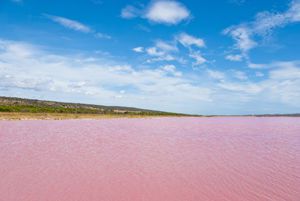
Next door in Australia, Pink Lake, just west of Esperance, is worth a visit. As its name would suggest, in certain weather conditions the water in the lake is pink, thanks to a particular kind of algae in the water. And this isn’t the only pink lake in the area. Lake Hillier, on Middle Island, is another example and an even brighter colour.
5. Joffre Lakes
However, if you prefer your lakes blue, the Canadian park of Joffre Lakes in British Columbia comes highly recommended. The lakes are a more traditional, but stunningly beautiful, turquoise blue and surrounded by peaks and glaciers. A trip to Joffre Lakes isn’t complete without an overnight stay, where you can camp under the stars and listen to the ice calving from the glacier.
6. Kizhi
The Russian island of Kizhi is found almost exactly at the centre of Lake Onega and boasts a spectacular wooden church, the Church of the Transfiguration, which was built in the 18th century without a single nail. Legend says that the lead builder used just one axe for the whole building, and then threw it in the lake when the church was completed, saying, ‘There was not and will not be another one to match it.’
7. Kayaköy
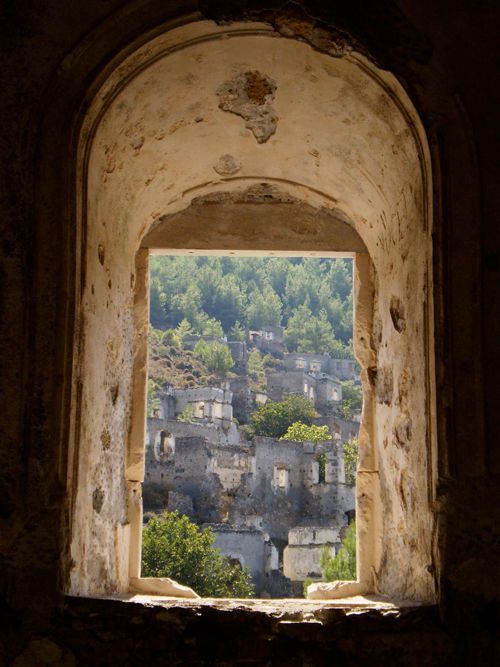
Just a few miles from the popular resort of Fethiye in southwestern Turkey, on the side of a mountain, is the village of Kayaköy. Greek-speaking Christians lived there until the 1920s but the village was abandoned follow a population exchange agreement between Turkey and Greece in 1923. Now a museum and historical monument, Kayaköy is a beautiful but rather eerie ghost town.
8. Capuchin monastery
Speaking of eerie, the Capuchin monastery in Sicily is home to 8,000 mummified corpses in the monastery catacombs. The bodies are all dressed in their best clothes and arranged in different rooms according to the type of person. The oldest in the collection dates from 1599, while the most recent addition is the body of Rosalia Lomabardo, who was embalmed in 1920 and is known as ‘Sleeping Beauty’.
9. ICEHOTEL
If you’re looking for somewhere a bit different to stay, you could try the ICEHOTEL in Jukkasjärvi, Sweden. Made with ice from the Torne River, the hotel offers ice and snow rooms, and runs a survival course every night for new guests on what to wear and how to cope when sleeping in temperatures below zero. But don’t worry – warm rooms are also available if you’re not a fan of the cold.
10. Malapascua
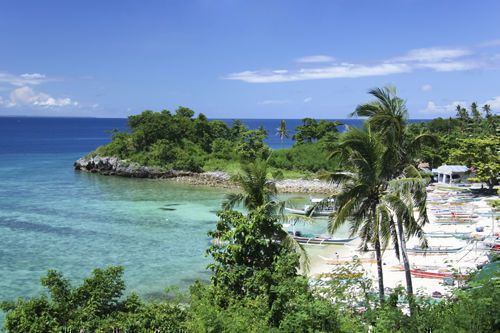
One extreme to the other – the island of Malapascua in the Phillippines boasts beautiful beaches and is most popular with divers, as it’s the only place in the world to see the pelagic thresher shark. There’s no transport on the island because it’s small enough to walk everywhere, and the only way to arrive on the island is by banca (a local boat ferry).
We hope that’s given you a few ideas for your next holiday. Don’t forget to learn a few words in the local language before you leave! And if we missed your favourite place, let us know in the comments…
EuroTalk’s Top 10 Tips for Learning a Language in 2014 [Infographic]
Happy New Year! As life begins to return to normal, it’s time to get going on our New Year’s Resolutions (assuming we haven’t broken them already…) Many people will be taking the opportunity to learn a language, so we’ve put together this handy infographic with our top 10 tips to keep you motivated. Enjoy!

If you’ve enjoyed our infographic, please share it with others using one of the options below. We’d love to hear which languages you’re learning too, and how it’s going, so do let us know in the comments.
Read more about this in our recent blog post, Learning a Language – our top 10 tips.
Embed This Image On Your Site (copy code below):
EuroTalk: a look back at 2013
It’s been another busy year at EuroTalk, with new products, new languages… and a new puppy. Throw in a royal encounter and a cake that looks like a Dalek, and you’ve got the makings of an interesting twelve months.
Languages
In June, we launched our new app for iPhone and iPod touch, uTalk. This had been in development for a long time, and we were really proud and excited to be able to share it with the world. It’s got more content and more activities, and it’s free to download and start learning the essential words you need to get by in 60 languages. We’ve been adding more languages regularly since the app was launched, and will continue to do so over the coming months. So if we haven’t yet got the language you need, don’t worry – we soon will.

And that’s not all. Last month, we added Lao, the official language of Laos and also spoken in the north east of Thailand, to our range with the release of Talk Now, our beginner program for PC and Mac. Lao has about 15 million speakers worldwide, and is a language we’ve been wanting to offer for some time now. There are more new languages on the way in 2014, so watch this space…
Maths
This year also saw the launch of part 2 of our second maths app, Maths, age 4-6, and two new practice apps – Count to 10 and Count to 20. We also released a version of Maths age 3-5, for schools, so teachers can use the app in the classroom.

Malawi
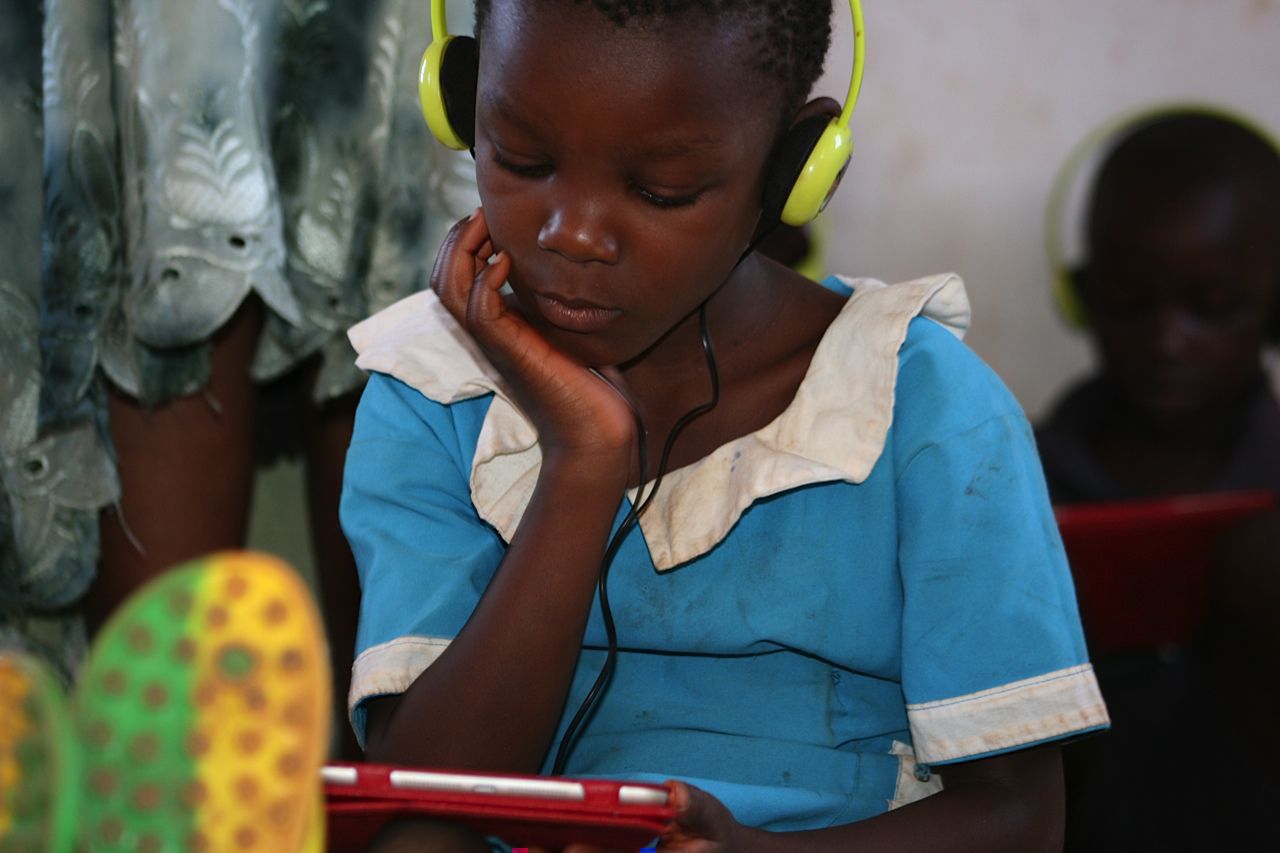
We’ve been working in Malawi now for several years, as part of our mission to ensure one billion primary age children reach their full potential in numeracy, reading and English. This year, Dr Nicola Pitchford from the University of Nottingham conducted an evaluation at Biwi Primary School in Malawi, to measure how effective our maths apps are for the children’s learning, compared to other teaching methods, including other apps. The preliminary results show that not only did the group using our apps perform significantly better than the other groups, but in fact they tripled their maths knowledge in just eight weeks. This is really exciting and encouraging, and we hope now to scale up the project in Malawi to reach more children, in more schools.
Junior Language Challenge
2013 saw the return of the JLC, after a year off in 2012. Our annual language learning competition for primary age children across the UK is always very popular, and this year was no exception. We were joined at the final by Martha Payne of NeverSeconds, who at just 10 years old, has raised over £140,000 for Mary’s Meals, a charity providing school dinners to children in Malawi. Martha, with her dad and her sister, was our special guest and handed out the prizes to our finalists, including the JLC Champion for 2013, Ella Whittingham from West Bridgford, Nottingham.

Martha Payne with JLC Champion Ella Whittingham, runners-up Morgan Fry and Tudor Mendel-Idowu, and EuroTalk Chairman Richard Howeson
A Royal Visit
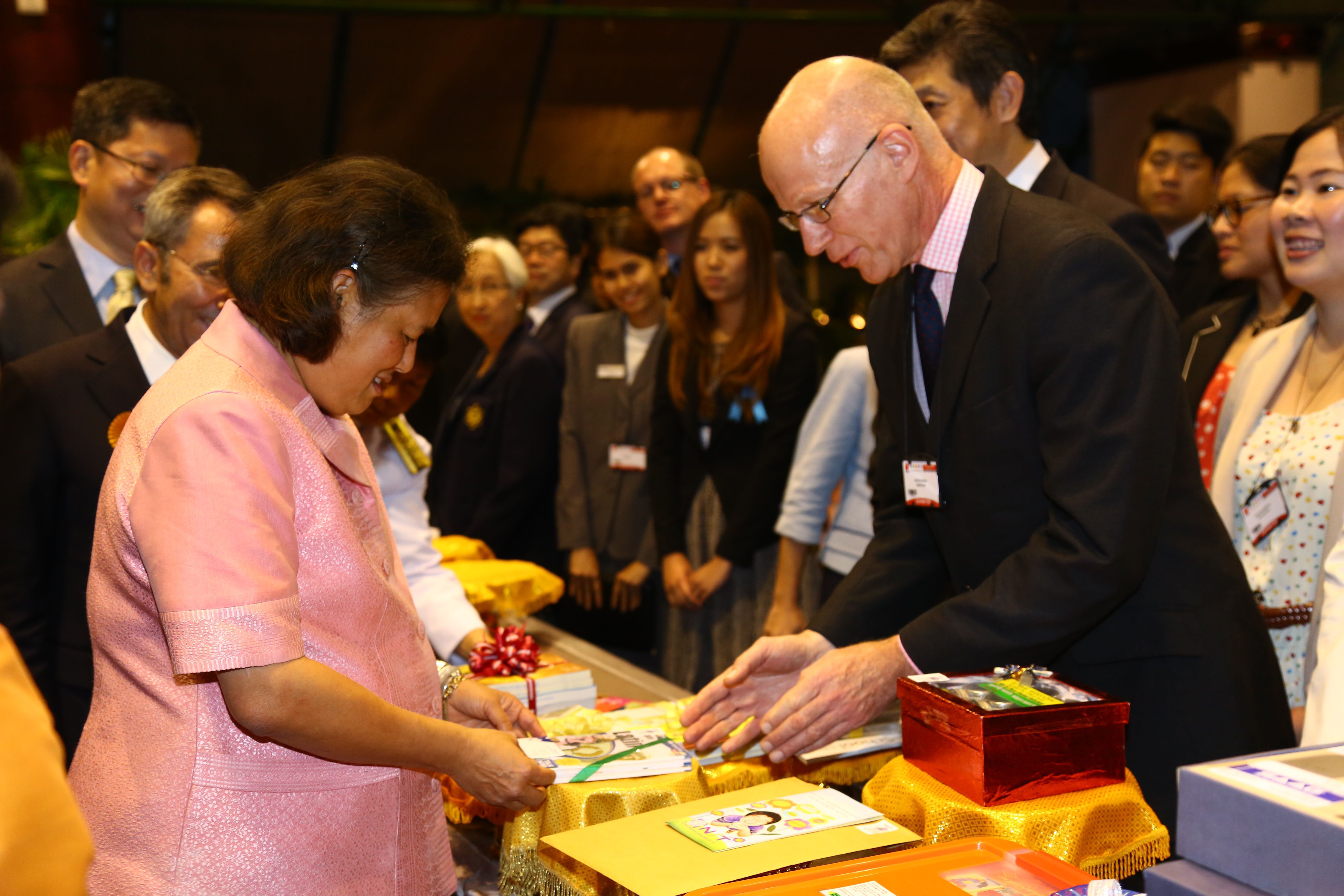
In October, Steve was honoured by a visit from Her Royal Highness Princess Maha Chakri Sirindhorn of Thailand, while at an exhibition in Bangkok. The Princess came to have a look at the EuroTalk stand, and later Steve presented her with a gift on behalf of the company. He had to be instructed on the correct way to bow, and fortunately he got it right!
New arrivals
This year, we’ve said a sad goodbye to Glyn, Tom and Hanna, but welcomed Safia, Seb and Pablo. We’ve also been lucky to have Lorena with us from Germany for a few months; you may have enjoyed some of her blog posts! And in August we welcomed Molly the puppy, who caused a certain amount of mayhem, but was very easily forgiven because she’s so cute.

Fancy dress fun
We entered into the ‘spirit’ of Halloween by getting dressed up for the occasion. With everything from vampires to skeletons, pumpkins to werewolves, we were quite a sight to behold. Although some of us were scarier than others…

Lots of cake
We’ve always enjoyed a bit of cake here at EuroTalk, but this year we’ve been thoroughly spoilt, with keen bakers Safia and Alex (but mostly Safia) providing us with masterpieces like this amazing Dalek cake. (It took us three days to eat, but it was totally worth it.)

And so the year has come to an end in style. Thanks as always for reading our blog, and to our guest bloggers who’ve been in touch over the last year. Please do contact us if you have something you’d like to share!
Happy New Year, everyone – see you in 2014!
100 words for snow…?
It’s a commonly stated ‘fact’ that Eskimos have lots of different words for snow. Some accounts say nine; others 48; others still say 100! Language isn’t usually that easy to pin down though – ‘Eskimo’ actually covers lots of different groups of people and if we’re getting philosophical, what do we mean by ‘word’? It’s probably fair to say though, that people do have lots of words for the things that affect them the most…

218 for Rain
Weather inspires lots of new words. Some people have counted 218 words for rain, fog and mist in the Scots language! But the Hawaiians are also rain-obsessed – there are 139 words for rain, including some really specific ones like ‘nahua’ for the ‘fine rain that accompanies the north-east trade winds along the northern part of Maui’.
4 for Love
Greek offers four different words for love that range from ‘philia’ (φιλία), which means ‘friendship’ in modern Greek, to ‘agapē’ (αγάπη), which means ‘love’ in the sense of ‘I love you’. Some might say that’s a very sensible distinction to make!
46 for Camels
Animals are important too. There are about 46 Somali words for camels in various stages of the reproductive cycle, but then this pales into insignificance when you consider that there are around 500 breeds of dog referred to in the English language!

Lots for Drunkenness
And of course, the British have hundreds of slang terms for being drunk, including ‘sozzled’, ‘pickled’ and ‘wellied’, as well as lots of other bizarre words that were almost certainly dreamed up under the influence of alcohol themselves…
And that’s not all…
If we think about it, there are actually lots of examples in English for this – for many words it would be quite easy to come up with at least a handful of others that mean something very similar.
Take ‘angry’, for example; you could be miffed, frustrated, annoyed, furious or even incandescent. All these words express a slightly different degree of the same emotion, and this is just a selection. That’s the great thing about language – there’s a word for (almost) everything!
Can you think of any more examples from your language?
