A brief guide to English Office Jargon
Today’s post was contributed by Mark James, Copywriter at Crunch Accounting.
It’s been just over a year since I traded academia for the office, my three years spent studying English coming to an end and my career as a copywriter now starting to take shape.
 In that past year I’ve had to make an array of adjustments; getting used to waking when the sun comes up rather than when it goes down and trading clubbing plans for pension plans amongst the changes I’ve felt. Getting to grips with corporate lingo is something I’ve faced too – an English dialect of its own that can be just as baffling as Scouse or Geordie (perhaps even more so).
Concerned about its influence, the Plain English Campaign has tried to contain its spread, going so far as to say that it’s damaging the economy. That’s probably a tad extreme but there’s no doubt that office jargon’s causing contention, certain phrases creeping outside of the workplace and into our everyday language.
As such, if you’re planning on spending some time on these shores it might be a good idea to learn some of the basics. Here’s an overview of some of the most popular…
‘Touch base’
Heard in offices across the country, confusingly this doesn’t refer to playing baseball, it simply means to establish contact with someone, perhaps through telephone, email, or a meeting in person.
Example usage – ‘David, I think you ought to touch base with Boris. His political aspirations are getting way out of control.’
‘Going forward’
You’ll hear this in meetings a lot. Essentially, it translates as ‘in the future’. Why ‘in the future’ isn’t deemed good enough again confuses me, but hey ho, people seem to like using it.
Example usage – ‘I’ve got my eye on a Bugatti Veyron, so going forward I propose we cut costs and outsource to India.’
‘KPI’
An acronym which stands for ‘Key Performance Indicator’, you’ll often hear this in appraisals and the like. Basically, the term encompasses anything that management can use to manage the effectiveness of a strategy or, you as an employee.
Example usage – ‘For someone brought in to increase productivity by 200%, Tarquin’s KPIs are woefully low. Clear his desk whilst he’s away at lunch.’
‘Thinking outside the box’
This phrase must be a nightmare for a non-native speaker, as there’s no boxes involved, it simply means to think unconventionally.
Example usage – ‘To prosper in the global race, we’ll need to increasingly think outside the box.’
‘ROI’
Another acronym that I thought needed explaining, this stands for ‘Return On Investment’. Put simply, it refers to how much cash an investment in something like property or a marketing campaign reaps in the long term.
Example usage – ‘We invested £200 billion in subprime mortgages but our ROI appears to be less than 300 billionths of that. In other words, we need a government bailout.’
In my first year of office work, these five terms are the ones that I’ve come across the most. There’s many more though, as this article from the BBC reflects, and if an episode of The Apprentice is anything to go by, there’s plenty more where that came from. I’d start developing an office jargon app if I were you, EuroTalk…
Mark James is a Copywriter for Crunch Accounting. If you’d like to touch base with him going forward, find him on Twitter at @MarkJames891.
And if you’re interested in learning some business English, you might want to try Talk Business, which is available as a download or a CD-ROM. It may not include the jargon above, but it’s a good place to start!
Image credit – arenagroove
Getting to know you: ‘Hallo’ from Lorena
My name is Lorena and I am from Germany. I just finished school and now I’ve started a placement at EuroTalk for five months. This is my third week in the company and it is very exciting. I am working on a project to help EuroTalk promote their maths apps in Germany. I’m having fun thinking about this task and I have a lot of ideas!
On my third day at EuroTalk, Wednesday 18th September, I went to the Junior Language Challenge at the Cranmore School in Surrey. It was the semi-final for London (South). At one o’clock we arrived at the school and prepared the iPads so that the children could use the Greek app.
About thirty thrilled children were ready to start! 🙂
… And after the welcome, it was finally happening.
The children were split up in two groups of thirteen and each group played the games. The children with the best score came into the final. The teachers and some parents could follow which position the children were in, because there was a whiteboard with the current score. For the children it was a very exciting situation and the teacher and parents were pretty curious.
After the challenge I saw only smiling kids! They were so happy and very proud of the certificates they got from EuroTalk.
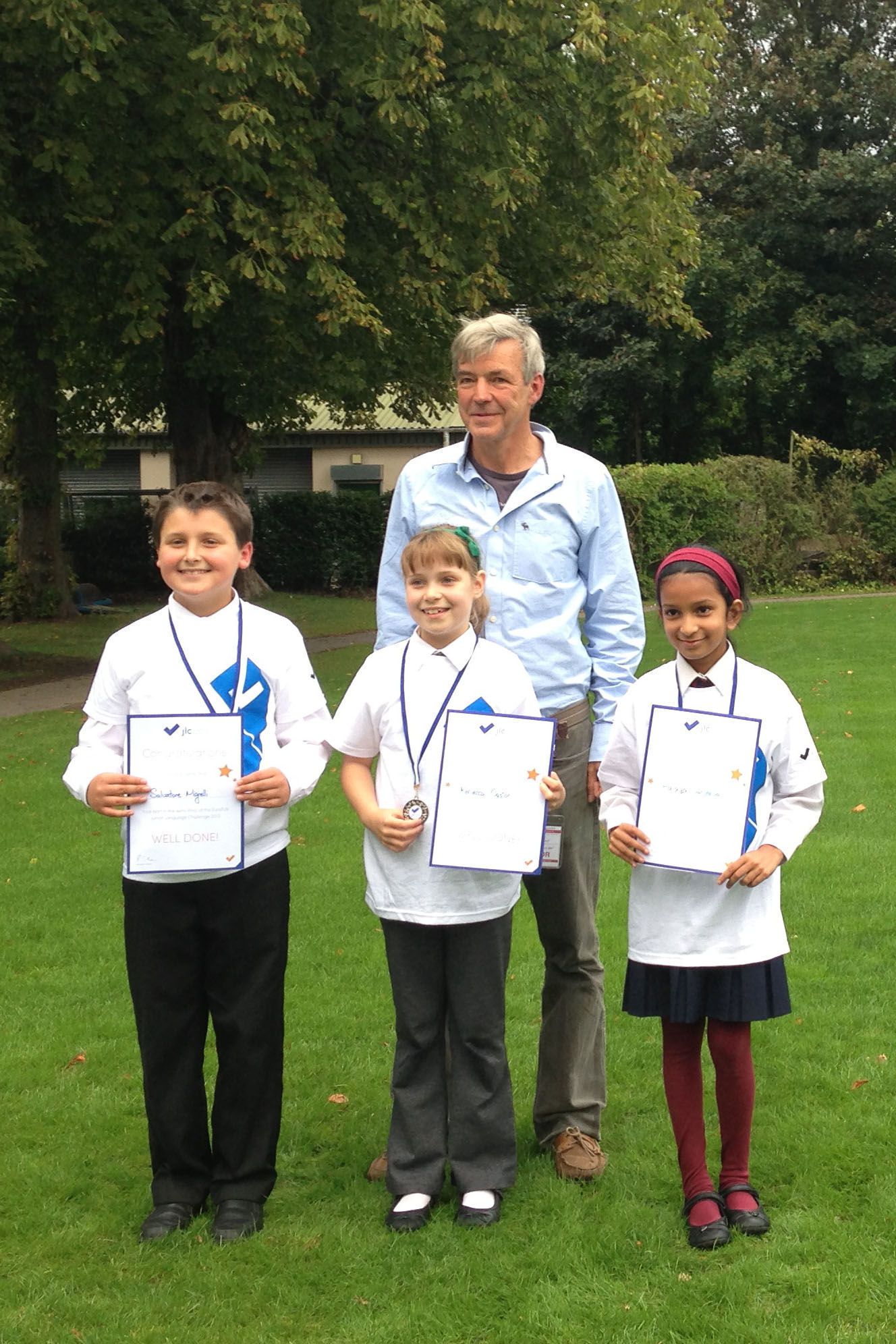
The three finalists from London (South) – Salvatore, Rebecca and Aalaya
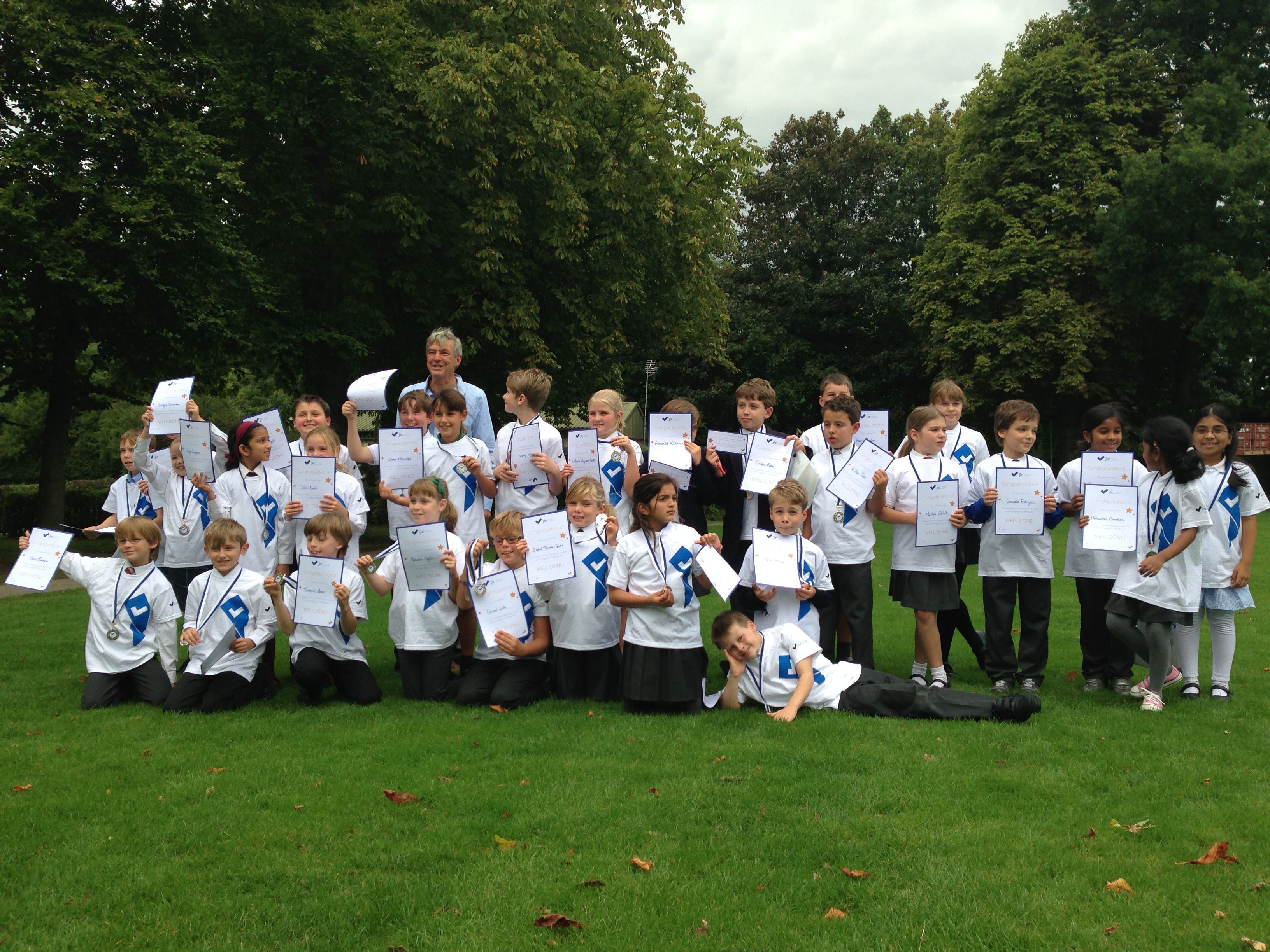
The semi-finalists with their certificates 🙂
And for me was it an interesting day and I got some impression of how EuroTalk promotes languages for children.
Lorena
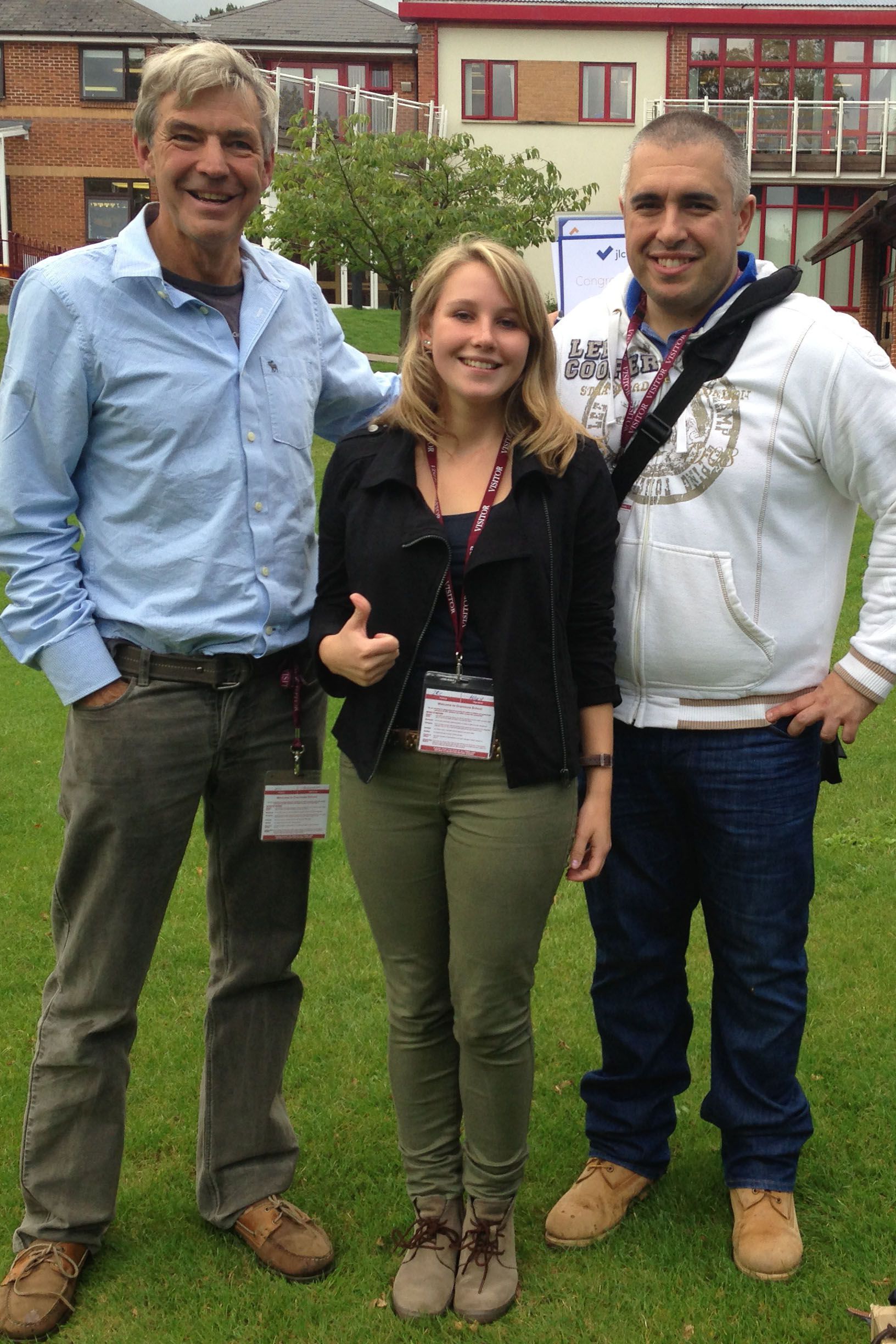
Me with Dick and Franco from EuroTalk
A step closer to one billion children
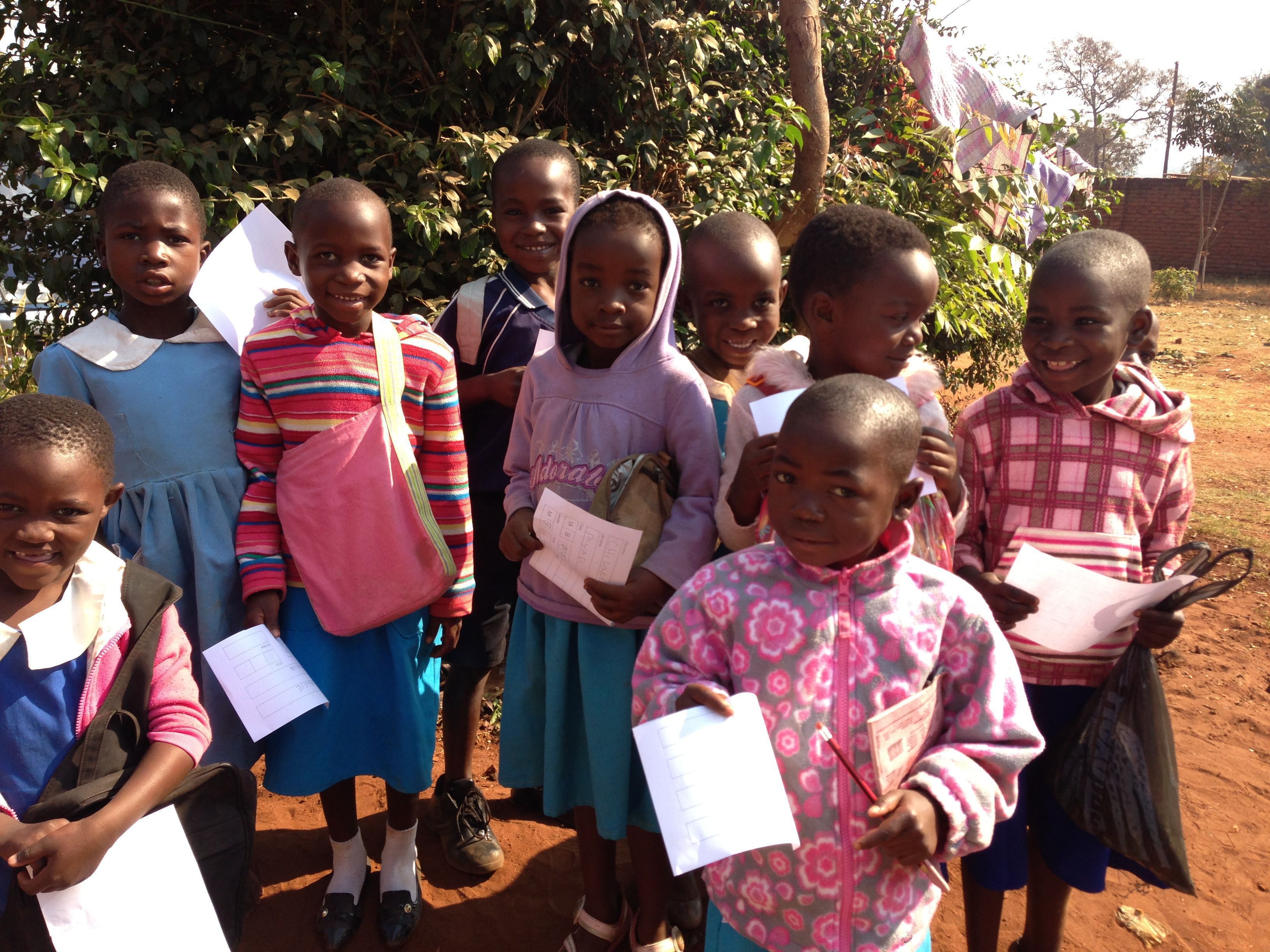
If you’ve been on our Facebook or Twitter page recently, you may have noticed some of our photos from our recent trip to Malawi. Although some members of our office are convinced we went over there to buy beans for our new coffee machine, we were actually there to run an evaluation on the success of our maths apps in schools there. Myself, Jamie, Andrew and Nicola Pitchford from Nottingham University spent 10 days in Lilongwe, Malawi’s capital, testing around 400 Malawian kids at Biwi primary school on basic maths and motor skills, as well as asking them questions about their aspirations and how they feel about school life in general.
 If you have never tried to register the names and details of hundreds of small children, and chase them all down to put the right coloured and named wristbands on each one, you might struggle to imagine the level of chaos that we experienced, with several kids coming back to try and get their photos taken twice, some losing or destroying their wristbands after just one day, and our complete inability to spell Malawian names!
However, somehow we managed this massive task, and got down to business putting the children into groups (a red group, who will use our maths apps for 8 weeks, a blue group who will use other fun, but non-maths, apps, and a pink group who will carry on with teaching as usual). After this, we began to assess the children, running our specially-designed evaluation app on groups of around 50 children at a time.
Thanks to Nicola’s amazing organisational skills and hard work from everyone, we managed to assess all the children who are part of the study in just three days, albeit with our stress levels a little higher at the end of several hours of using our rather basic knowledge of Chichewa to explain to kids how to use their shiny new ipads (or ‘gadgets’ as they call them!). The red group will now have 8 weeks to use the Masamu (maths) apps for a few hours each week, and we will be back to assess their progress in November!
We all had an amazing time in this beautiful country, and it was fantastic to see the level of interest that there is in our project. I was particularly happy to see how far some of the children got with the assessment tasks, and how hard some of them concentrated on getting the right answers, and trying out a range of new tasks that they would never normally be asked to do. There is clearly a lot of natural maths talent there, so we’re extremely excited to see the progress that they make with the extra teaching and support we are giving them during the study.
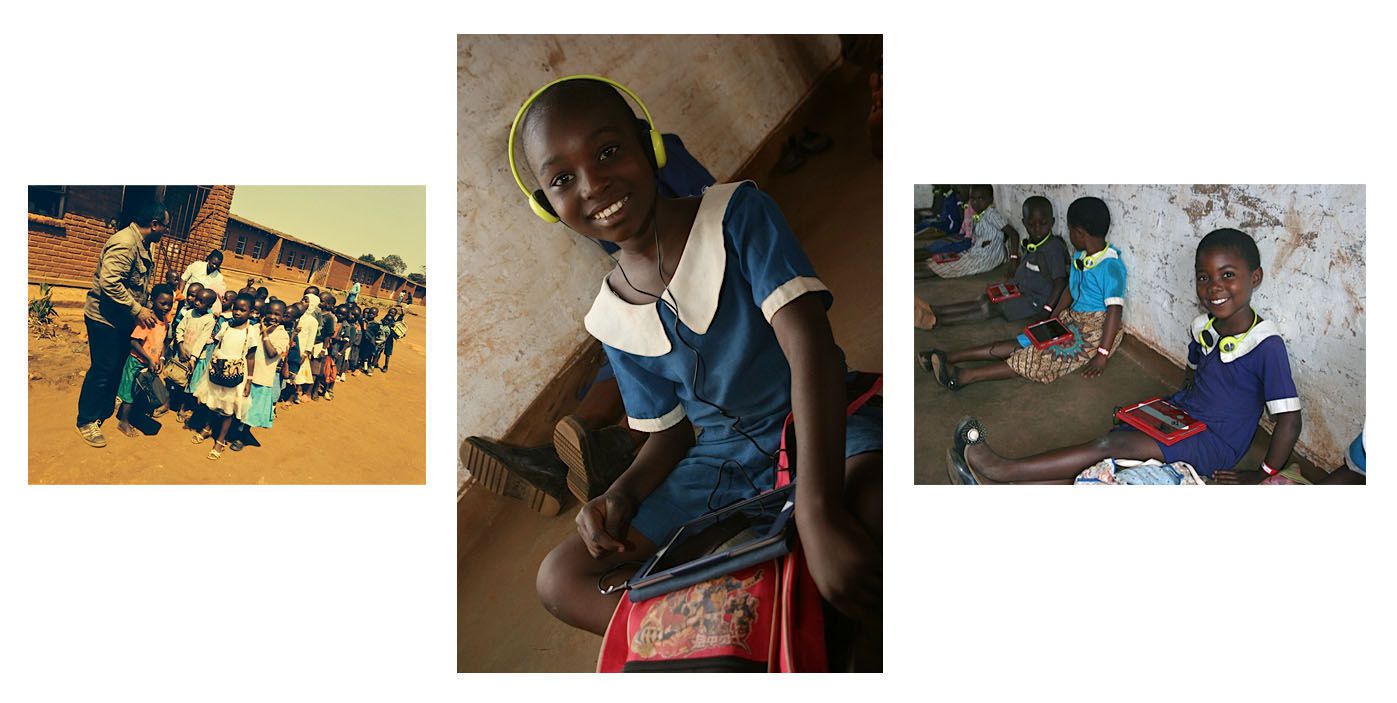
Make sure you check out our Flickr account for loads of pictures of the goings-on at Biwi school!
Alex
It’s Raining Cats and Dogs (and Wheelbarrows and Old Ladies)
‘It’s raining cats and dogs!’ is a common British phrase meaning that it’s raining particularly hard. There are various theories as to where the expression came from – although there’s no evidence that it’s ever actually happened!
It may come from the Greek expression cata doxa. This means ‘contrary to experience or belief’ and might explain why the expression is used when it’s raining unusually hard.
Equally, it could be derived from the old French word catadupe, which meant waterfall.
An old theory was that in heavy rain, dead animals would often be washed out of drainage systems on 17th century buildings in Europe.
There’s no conclusive answer. It may just be that it was a funny expression that caught on and became popular. We’ll probably never know…
In Britain it also rains buckets, stair rods, tacks and pitchforks… But did you know that in other areas of the world, it rains other things?
Our favourites are:
‘It’s raining wheelbarrows’
Czech: Padají trakaře
‘It’s raining knives and forks’
Welsh: Mae hi’n bwrw cyllyll a ffyrc
‘It’s raining shoemakers’ apprentices’
Danish: Det regner skomagerdrenge
‘It’s raining fire and brimstone’
Icelandic: Það rignir eld og brennustein

‘It’s raining lady trolls’
Norwegian: Det regner trollkjerringer
‘It’s raining husbands’
Spanish: Están lloviendo maridos
‘It’s raining old women with knobkerries’
Afrikaans: Ou vrouens met knopkieries reen (by the way, a knobkierrie is a kind of African club!)
‘It’s raining snakes and lizards’
Brazilian Portuguese: Chovem cobras e lagartos
‘It’s raining frogs’
Polish: Leje zabami
We’d love to know where some of these expressions came from, so if anyone has any information, please share it in the comments!
Why I love the JLC
Many people will already be aware of the national languages competition organised by EuroTalk each year, called the Junior Language Challenge. It’s open to all children aged 10 and under, and gives them an opportunity to learn three new languages and compete against other children from their region and ultimately from across the country.
The JLC starts in March and finishes with the final in October. And it’s a lot of work – from a technical point of view (our programmers have literally had sleepless nights getting the software up and running in time) and in terms of organisation. Running a competition like this isn’t an easy task, and with the semi-finals taking place over the next two weeks and the final still to come, it’s only going to get busier.
But I still love the JLC, and here’s why…
Firstly, the children taking part really enjoy it. It’s lovely for us to see their enthusiasm at the regional semi-finals and the grand final in London. Tension’s always high and sometimes there are even tears, which obviously isn’t a good thing in itself, but it does show how passionate the children have become about the competition. In 2011, Ben Fawcett from Chichester even returned early from his family holiday at Disneyworld to compete in the final – that’s what you call dedication.
Secondly, it gives children a love for languages that they can take with them into their future studies and career, and that they might otherwise have missed out on. Marliese Perks from Edinburgh, who reached the final in 2004, wrote to us shortly before she left for university to study Law and Spanish: ‘The competition inspired me to learn languages … little did I know at that age that Spanish and languages would ultimately become my passion … I can’t say thank you enough, you set me on this path and I am loving every minute of it!’ This is the goal of the JLC – to let children know that they can learn languages, and that it can be fun. Not only that but they don’t have to just learn the ones they’re taught at school; Marliese learnt Spanish, Greek and Saami. I’m not sure how often she uses her Saami these days, but what’s important is the JLC showed her she had the ability to learn it, which I think is pretty inspiring.
And finally, there’s a whole other side to the JLC. Each child who enters pays £2.50, and this money is used to purchase tablet devices for schools in Malawi, where class sizes are so huge, it makes teaching a near-impossible task. A tablet that can be shared by several children will fill the gap left by over-stretched teachers, and as a result will literally change lives. A basic education is something that every child should have, no matter where in the world they are, and the competition not only provides opportunities to youngsters in the UK, but it also makes a huge difference for children in Malawi too. I’m proud to be a part of it – albeit a slightly stressed out, panicked part.
To everyone preparing for a semi-final, good luck! To those who’ve already made it through to the final – congratulations, and see you in October 🙂
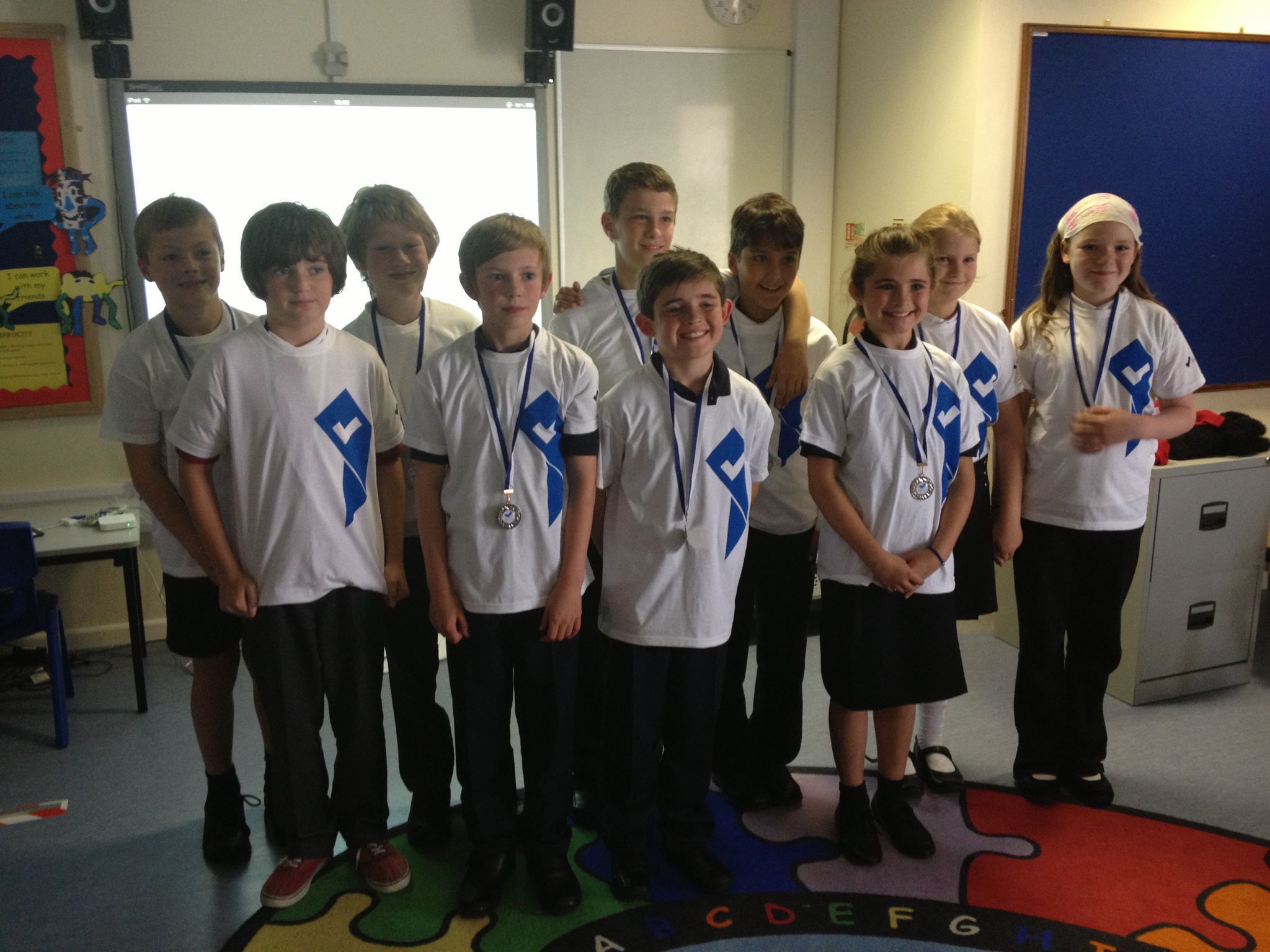
Semi-finalists from the HTV West/Wales semi-final, in Bristol yesterday
And to everyone who’s taken part in the JLC – not only in 2013, but every year – thank you.
Liz
