Junior Language Challenge – the semi-finals!
Back in March, over 1,100 primary school children from around the UK joined our annual competition, the Junior Language Challenge, learning Italian online. Over the next three months, they scored points in the language games, and then in June the top scorers from each region of the country progressed to the second round.
Not wanting to make it too easy, for their next challenge we asked them to learn the notoriously tricky language of Japanese. Impossible, you might say – how can you expect children under 11 to learn such a difficult language?
As we discovered this week, it’s not impossible at all. Over the last ten days, we’ve been travelling around the country for the regional semi-finals, and have been seriously impressed with what we’ve seen. All the children had clearly worked really hard, and we had several very tense contests in the race to grab a place in the final. There were some familiar faces, and some first-time competitors, and everyone gave it their all. So on behalf of EuroTalk, thank you to all the teachers, parents and most importantly, the children for joining in so enthusiastically.
The competition also raised nearly £6,000 for a brilliant organisation called onebillion, who create apps to teach children in developing countries basic maths and reading, giving them valuable learning opportunities that we often take for granted here in the UK. onebillion were recently featured by BBC Click, and their report gives you a taster of the fantastic work they’re doing in Malawi.
But what about our finalists? They’re not finished yet. For their third and final language, they’ll be learning the African language of Somali, ready for the grand final in London next month, where they’ll compete for the title of Junior Language Challenge Champion 2014, and a family holiday to Africa.
We hope that everyone who’s taken part in the JLC this year, whether you’re continuing on to the final or not, really enjoyed it. Now you know that you can learn any language, even difficult ones, the sky’s the limit!
And to our finalists… see you next month 🙂










uTalk – Learn a Language: A Guided Tour
If you follow us on Facebook or Twitter (or maybe even if you don’t) you’ll know that we recently released a new update for our app, uTalk. And we’re really, really excited about it; not only does it now work on iPads, it’s got 130 languages included and it looks gorgeous. So I thought I’d give you a quick guided tour, so you can see what all the fuss is about.
Choose your language
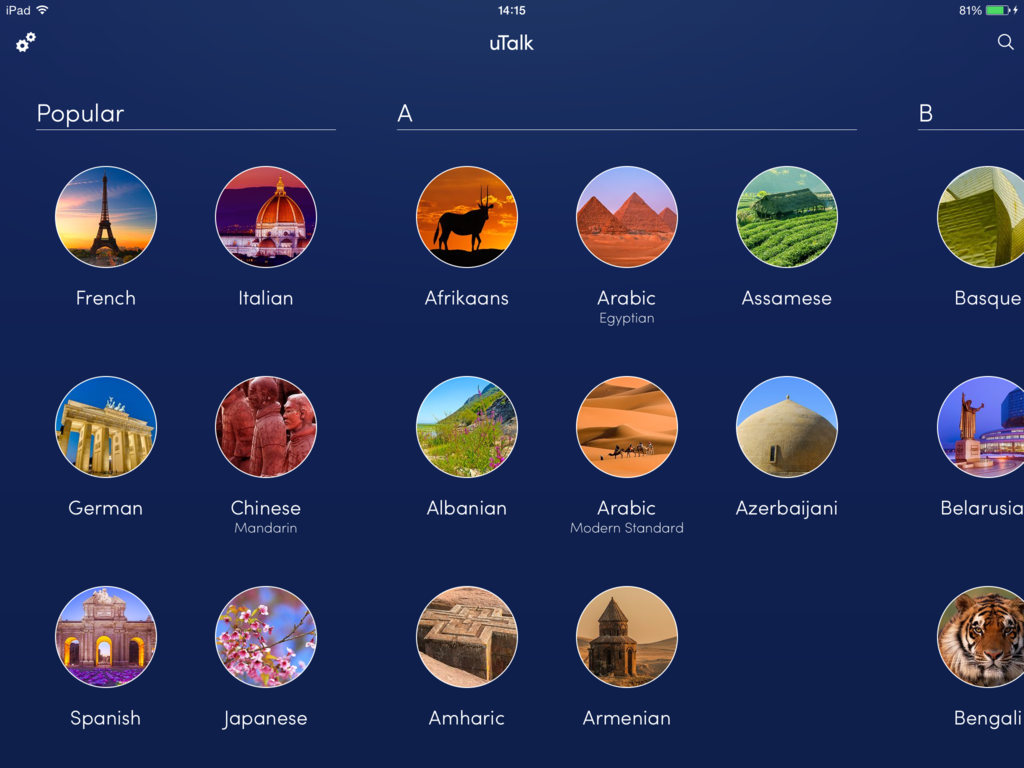
Once you’ve download the app, the first thing you’ll probably notice is that it’s got loads of languages. From French, Spanish and German, through to Lao, Kachchi and Cebuano, we’ve got them all (and if we don’t have the one you want, we probably soon will – let us know what you’re waiting for in the comments).
The best bit is if you’re just curious and want to hear what a language sounds like, it won’t cost you a penny, because uTalk gives you a Starter Words section in all 130 languages completely free.
Starter Words
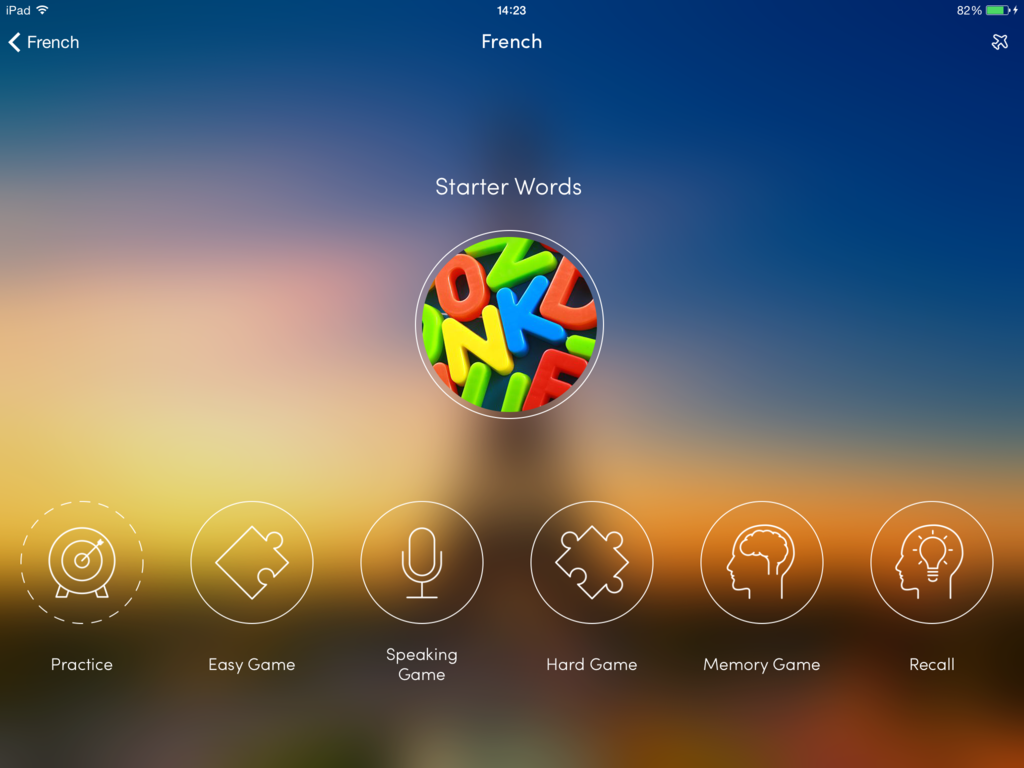
These Starter Words include the essentials that you’ll need when you first arrive in a new country – ‘hello’, ‘please’, ‘thank you’ and ‘help’ (hopefully you won’t need that one, but it’s always a useful word to know!) among others.
There’s also a selection of games to help you remember these key words, so you’re totally prepared before you step off the plane.
Upgrades
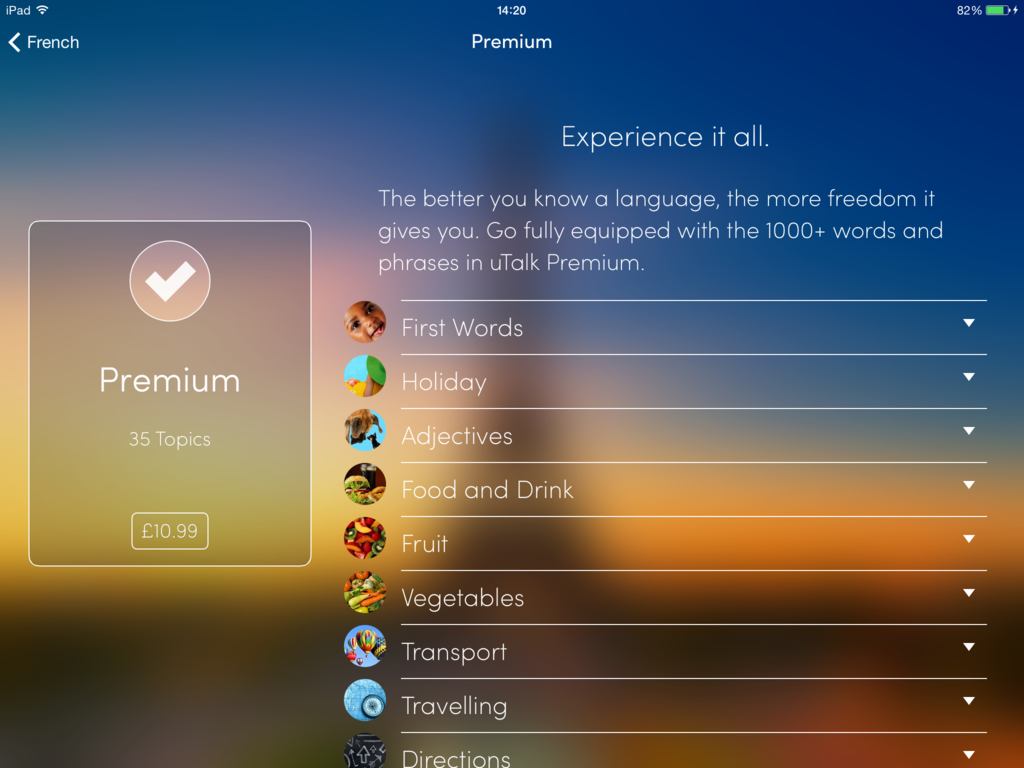
If you’re anything like me, though, once you’ve learnt a few words you won’t want to stop. So uTalk gives you the chance to learn more, with the Essentials and Premium upgrades.
The Premium will unlock 1,200 words and phrases across 35 categories for the language you choose – and that’s when it gets really fun. The app’s got everything from food and drink and travelling, to adjectives and numbers up to ten million. You can order a beer, ask someone to dance and check you’re on the right train (again – useful).
How it works
Ok, let’s get down to business. You’re going to France for a few days, and you want to learn some French before you go. How should you use uTalk?
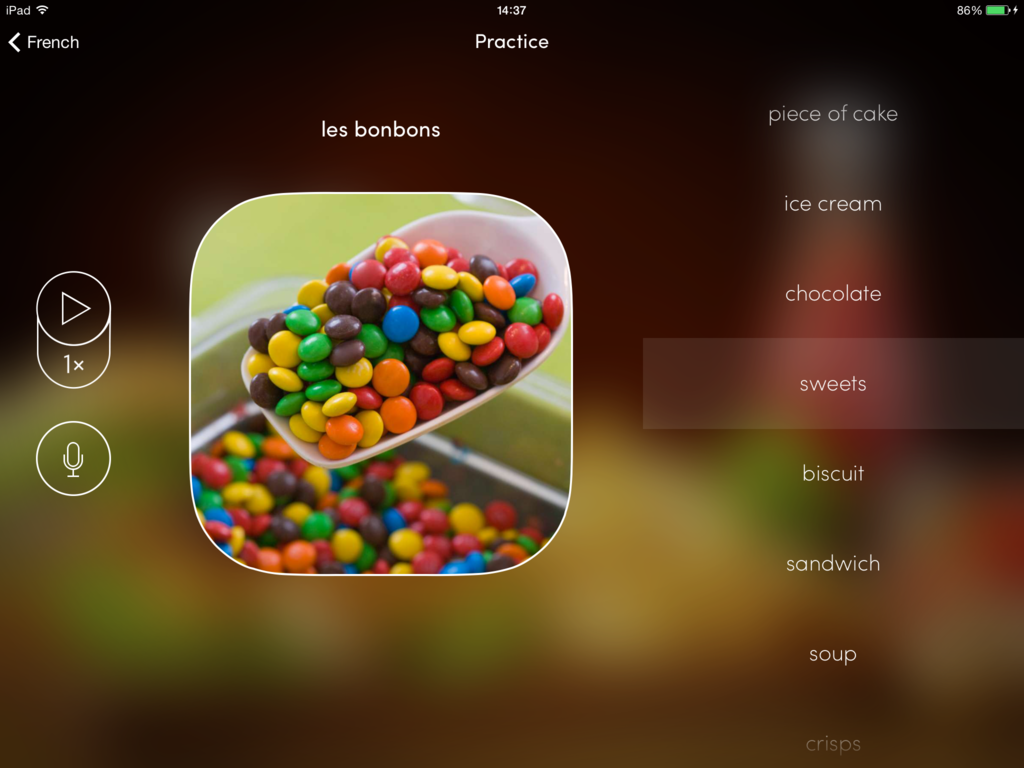
First, choose your topic. Then, start with the Practice; this is where you learn the vocabulary. You can listen as many times as you like, slow it down, even have a go yourself with the recording button. Each word or phrase has a corresponding picture, which will help you remember it later, and they’ve all been translated and recorded by native speakers.
Then it’s time for the games. Start with the easy game, because it’s – well, the easiest. You’ll be shown some randomly selected pictures and hear one of the words you’ve just learnt. Choose the correct picture to carry on and start scoring points.
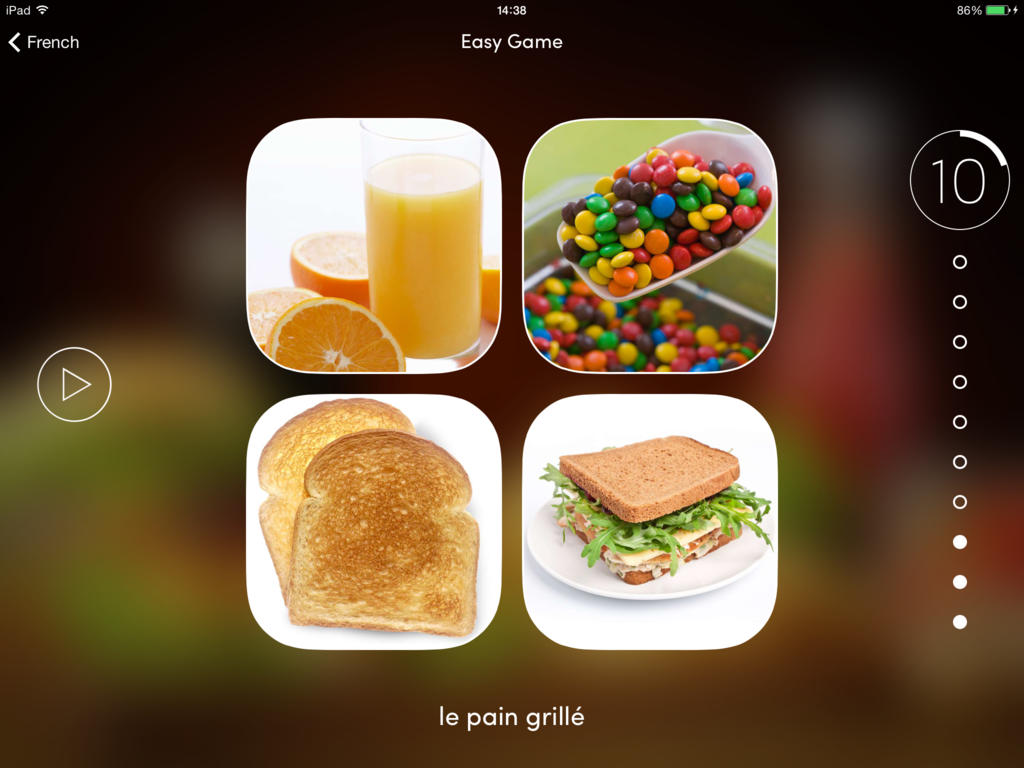
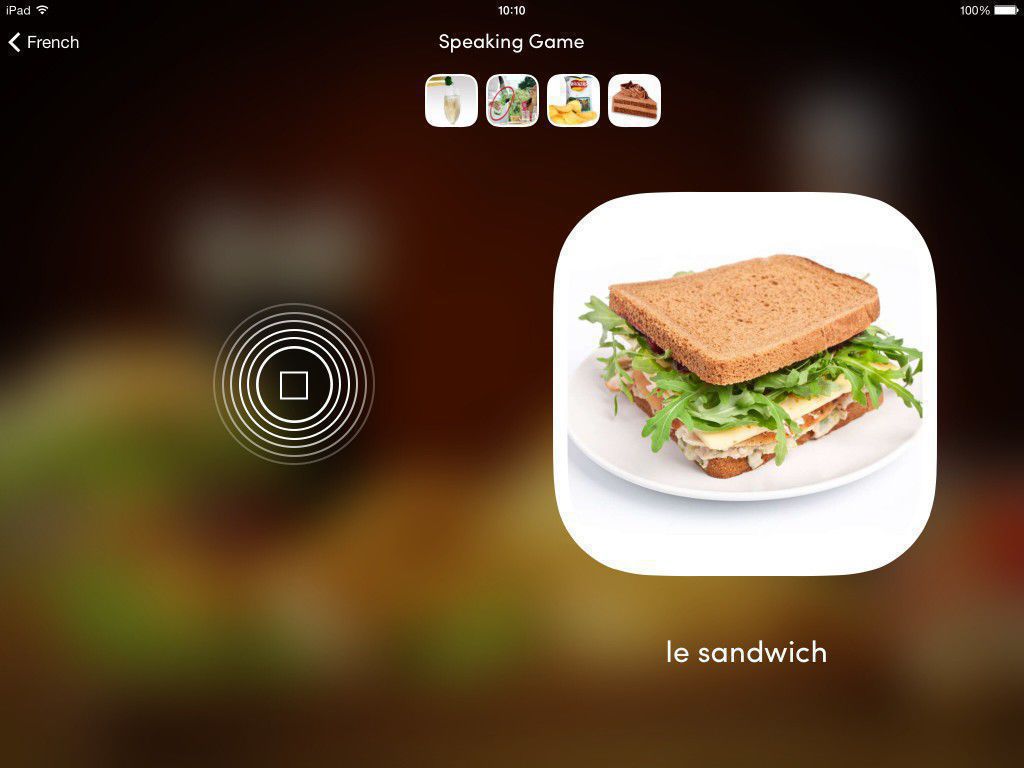
Then work your way up through the games, which get gradually more difficult. Be warned, they’re very addictive, so you may miss your stop because you’re concentrating so hard. And you might get some funny looks when you play the recording game on the train. I speak from experience on both of these things…
World Tour
Hidden throughout the app are 48 achievements. No, I won’t tell you what they are – but every now and again you’ll see a message pop up that says ‘World Tour Destination Unlocked’, and then at the end of that game, you can go and see where you’re heading off to.
Tap on the destination and watch your plane take off. To see how many destinations you’ve collected (and how many you still have to find) touch the grid icon at the bottom of the screen.

Instant Search
Of course this is all well and good, if you have time to sit and learn the language before you leave home. But what if you don’t?
No worries – just take uTalk with you, and any time you need a word, type it into the search box. (I used this feature myself when I went to Italy a few months ago and it saved me more than once.)
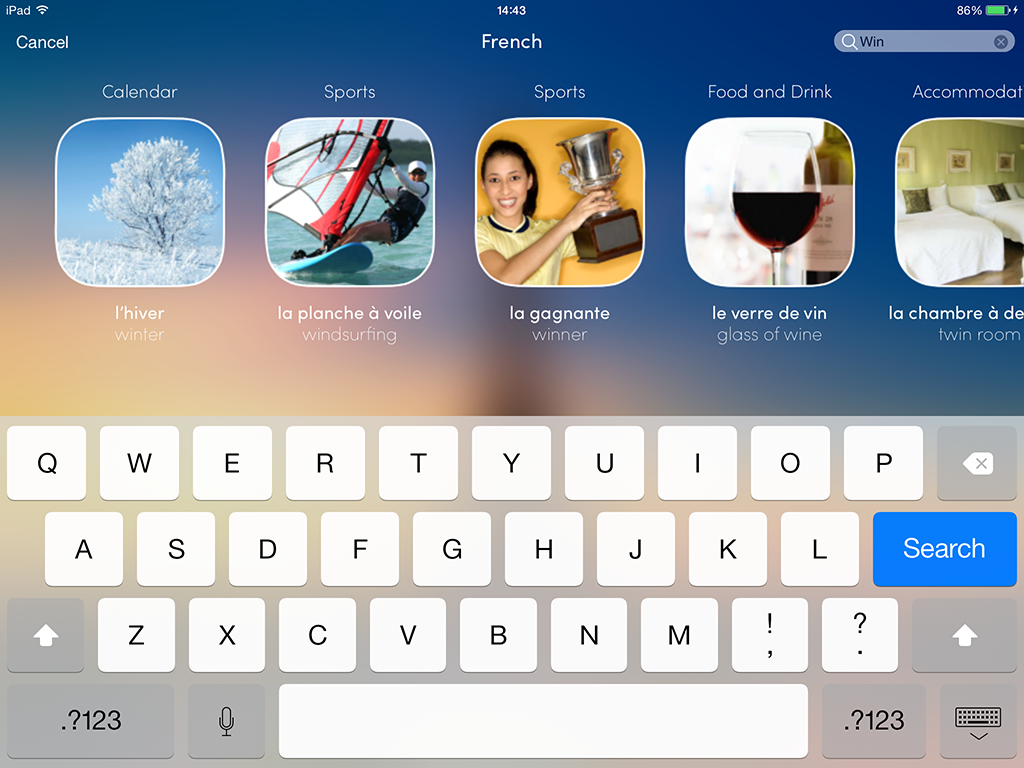
So what do you think? If you’re ready to give it a try, you can download uTalk from the App Store for free right now (no camping out required!). And we love customer feedback, so please do tell us what you think of the new design and features.
Most importantly, we really hope you enjoy using the new uTalk as much as we enjoy telling people about it 🙂
Liz
What’s your excuse for not learning another language?
Even as a pretty serious language geek, who actually learns other languages for fun, I still find myself making excuses sometimes. I spotted this chart the other day (I’m not sure where it originally came from, but I found it when translation agency Finverbus shared it on their Google+ page) and recognised a lot of the excuses as ones that I’ve made at one time or another. It also backs up what we learned in our recent survey. How many of these excuses have you used in the past?

Most of us learn at least one foreign language at school. But sadly many people drop it after that and possibly never take it up again. But why? According to research, there are many reasons (or excuses) that people have for dropping a language or not taking one up. Most commonly, many people say they don’t have enough time (24%) or that they don’t have enough money (11%). Well, if it’s the first reason, check out our top tips on how to fit language learning in to your busy week. Or if you’re struggling for cash, check out our guide to learning on a budget.
The other main reason cited by many is lack of motivation (16%). I have to say I recognise this! When you start learning a new language it’s really exciting. ‘I can say “dog” in French!’, ‘I can say “hello” in Italian!’ But then when you get to memorising long lists of verbs, tenses and grammar, enthusiasm often starts to wane. You have to put quite a bit of time and effort into learning a language properly, and often, life gets in the way, and the latest episode of Game of Thrones seems more interesting than another round of German adjective endings. If this is the case, I feel your pain! But there are ways to boost your motivation and get back into learning if you’ve lost momentum lately.
Try breaking up your language learning into a small chunk each day: ten minutes of using a language app or program like uTalk or Talk Now; reading a newspaper article or language book on the train or listening to a short podcast. Make learning fun by listening to music or podcasts, watching videos or films, reading books or magazines or using fun language games. Don’t put too much pressure on yourself to master perfect grammar – just enjoy it. Find people to chat to and impress yourself with how much you can say already.
Try thinking about what your motivation for taking up a language could be: a holiday to a fantastic new country, moving abroad for work, finding new friends, talking to someone you know in their language, understanding the culture of a certain country (be it Japanese anime, French cinema or German heavy metal) or enhancing your CV. Somehow half an hour of practising verbs and vocabulary seems much more appealing when you picture yourself using your newly-learned ‘un caffè grazie’ to order a coffee in Rome, or asking ‘dónde está la playa?’ in the south of Spain.
Finally, another common reason that I can definitely identify with is feeling embarrassed when speaking another language (11%). I was pretty embarrassed this week when speaking Spanish to my Argentinian colleague and accidentally using the Italian word for butter (‘burro’) instead of the Spanish word ‘mantequilla’ (burro in Spanish means donkey, not butter!). But in most cases, even if you make a silly mistake like this, you can just laugh it off and carry on. It might take a little time to gain confidence when speaking, but the best way to do this is simply to try it, make mistakes, realise it doesn’t matter and carry on. If you’re quite shy, try finding another learner to practise with, doing a language exchange with someone who is learning your language (so you’re in the same boat) and practising with friends before you actually go to the country.
Saying that, the BBC language page has some funny examples of when languages go wrong!
So, whatever your reasons for slacking off in your language learning, I hope we’ve given you a few ideas on how to get back into it, or get started on a new one if you’ve been putting it off.
Alex
Learning a language – why bother?
Today, we’re excited to introduce Amy, our new sales and marketing assistant. Amy’s going to be with us for the next twelve months while on her placement year from university, and she’s written today’s blog post, about why learning a language is one of the most important things you can do.
When you ask people if they can speak another language or if they would like to learn one, the response is often, ‘Why? What’s the point, everyone speaks English?’ Here at EuroTalk we want to change this perception and to show you why learning a language can be rewarding, enlightening and open up so many more opportunities.
Yes, it may be easier when visiting another country to assume they will speak English, and very often they do in the main cities and tourist areas, but what if you want to explore off the beaten track and find the soul of a country? Do you want to feel apprehensive, excluded and unable to participate, or do you want to be able to jump in with both feet, get to know local people, their customs and truly the best places to visit and eat, not just the latest Top 10! Without the ability to speak the language it is difficult to get to the heart of a country and to appreciate its people or culture in any depth, you can end up merely skimming a clichéd surface.
If you know the language, you will enjoy meeting people rather than feeling awkward and are likely to make some good friends as well, an even greater benefit if travelling alone. In life, isn’t it as much about the people you meet and the experiences you share, as where you were at the time?
Maybe you’re worried that learning a language is a bit boring? Not any more. With our app, uTalk, you learn in a fun and exciting way, no more sitting at a desk for hours at a time, dreading being asked to read out loud! No time? You can learn on your commute, whilst standing in a queue for your lunch or simply sitting on your sofa at home. Learning a language has never been easier and more accessible. No matter where your next adventure may be, make the most of it by learning the language.  Remember, you never look back and regret the things you did do, just the things you didn’t. So what are you waiting for?
Amy
I Can Read Chinese, So Can You
Today’s guest blogger, Peter Gokey, is learning Chinese in China at Keats School. In this article, he shares his own learning experience in Chinese, with a particular focus on learning to read the language. If you’re a student or speaker of Mandarin and have any suggestions to add, please do so in the comments below.
There are two aspects of Chinese that people from western countries find intimidating. The first aspect is the system of tones where the pitch of your voice can be the only difference between two or more words. The second is the writing system, called Hanzi. In order to speak, learners of Chinese must tackle the tones; however, since the barrier to reading and writing seems so high, many language learners delay studying Hanzi or never study it. This is often a reaction to one teaching method that emphasizes reading and writing at the cost of speaking. I think that either extreme is a mistake. Reading reinforces oral vocabulary and grammatical structures. Keats School finds a good balance by focusing on speaking and listening but also encouraging students to recognize the Hanzi for their new vocabulary words.

Finding materials suitable for a beginner-level Chinese language learner, can be a difficult and discouraging task. Early on, my wife and I purchased a book of very short stories designed for Chinese children who are learning to read Hanzi. One year later this book is still beyond our level, but Hanzi is only the secondary reason this book is too difficult. The primary reason is that Chinese children learning Hanzi and those foreigners who learn Chinese in China have different needs. By the time Chinese children begin learning to read Hanzi they are already fluent in spoken Chinese. So a book aimed at children can use thousands of words as long as the pinyin (the phonetic system for writing Chinese using the Roman alphabet) is included above each character. Second language learners, on the other hand, are not yet fluent. They are learning both how Chinese words are pronounced and how they are written at the same time. Therefore, second language learners like us need materials specifically designed for second language learners.
And the good news is that there are such materials. After learning to recognize about 300 Hanzi, I began reading the beginner-level books in a series called Chinese Breeze (15元 each). Each book is a short but interesting fictional story. In this series there is a love story, a murder mystery, and even a couple of traditional Chinese tales. So far this series consists of 16 books in three reading levels (300, 500, and 750 word levels). When complete, the Chinese Breeze series will include 80 titles divided between eight reading levels.

There are a few features about these books that I really like. First, pinyin only appears in footnotes defining select new words. I find it very distracting to practice reading Hanzi with the Pinyin right above it. Second, at the back of the book there are comprehension questions for each chapter and an activity that tests your understanding of the whole story. Finally, each book includes a CD with MP3 recordings of the entire story read by a native speaker at two different speeds.

Having read all the books at the 750 word level, I am now trying books from two other series. The first is a collection of short stories titled Graded Chinese Reader (three books in this series) and the second is a collection of very short essays called Read It Now (there are many books in this series at several reading levels). Both of these books also include CDs.
All of these books are available at Mandarin Books 漫林书苑 on Wenhua Xiang 文化巷 in Kunming.
Thanks Peter! If you’re learning Mandarin, we hope these suggestions are helpful for getting started on reading. Alongside these, you can use EuroTalk’s programs to begin speaking and listening. Good luck!
