uTalk Cockney launches in the East End
If you follow us on Facebook or Twitter, you’ll know that last week uTalk became the world’s first Cockney language learning app! The traditional East London rhyming slang was launched at G Kelly pie shop on the Roman Road by the Pearly King of Forest Gate and Pearly Queen of Old Kent Road.
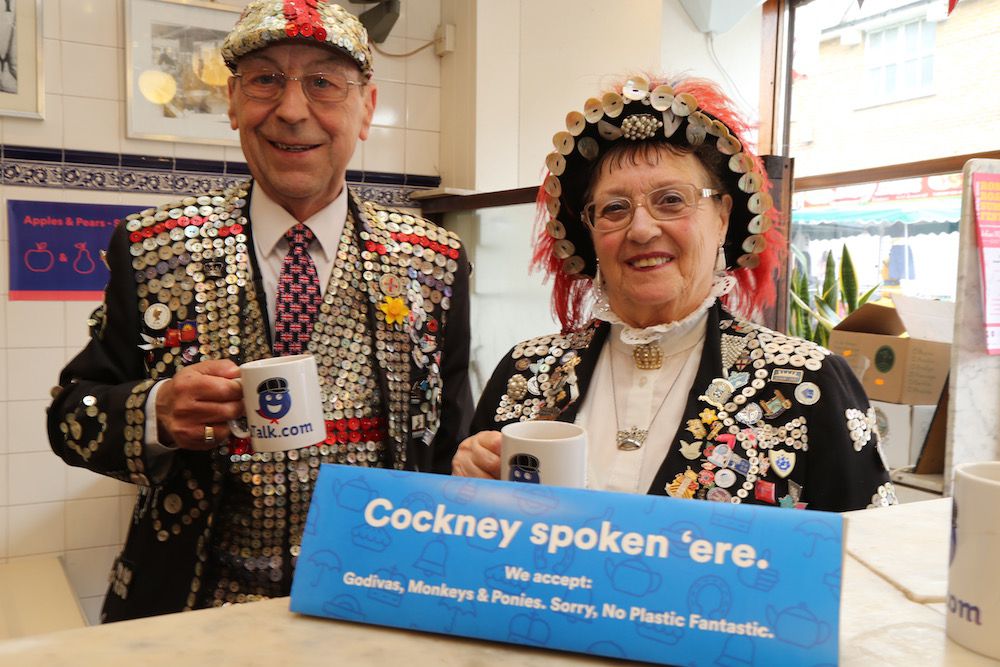
The Pearly King and Queen learned how to use the app, and were impressed!

Some children from Olga Primary School popped in to put the uTalk app to the test. They had fun playing the games, and were keen to show our chairman Dick what they’d learnt.

And we finished with a good old-fashioned East End knees up, led by our Pearly King and Queen, pianist Mick Yarrow and the voice of uTalk Cockney, Patrick Mackervaie.
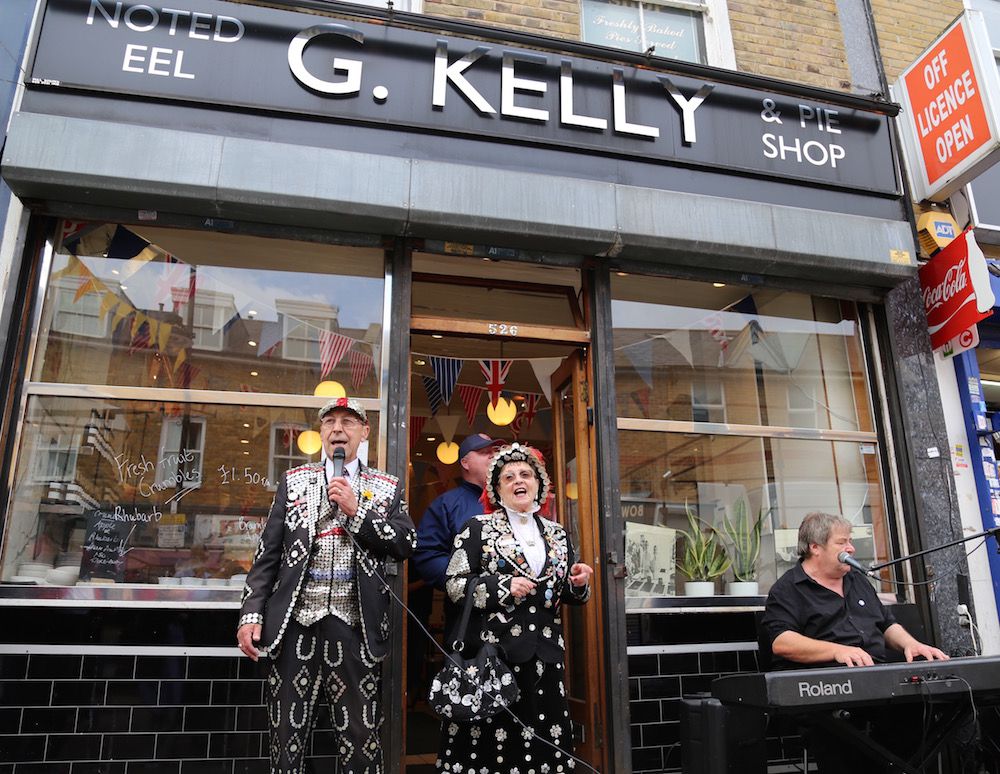
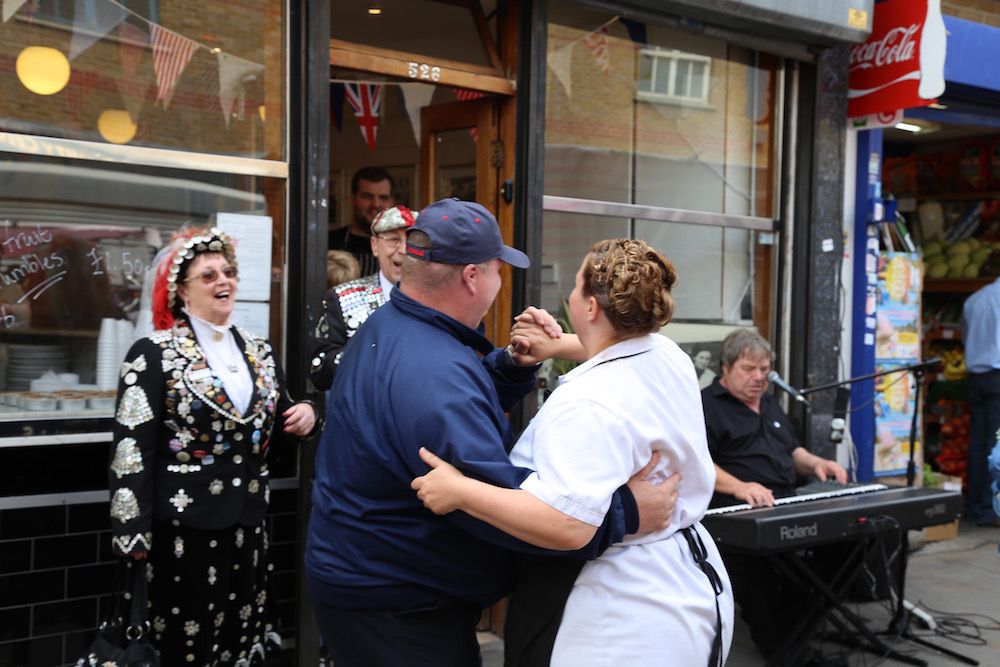
It was a fantastic day – thank you to everyone who got involved. Check out our video for more!
Our launch even made the news! As well as a feature on ITV London News on Thursday evening, our language expert Nat appeared on London Live with chairman Dick to talk about the app, and was interviewed with actor Patrick by Robert Elms on Friday morning for BBC Radio London (listen from 1 hour 40 mins onwards).
On Sunday we were back in the East End, giving Cockney lessons to visitors at the Roman Road Summer Festival. Patrick, who’s from Hackney, got the crowd warmed up with some Cockney quizzes (some harder than others), before inviting everyone to come and have a go with the app.
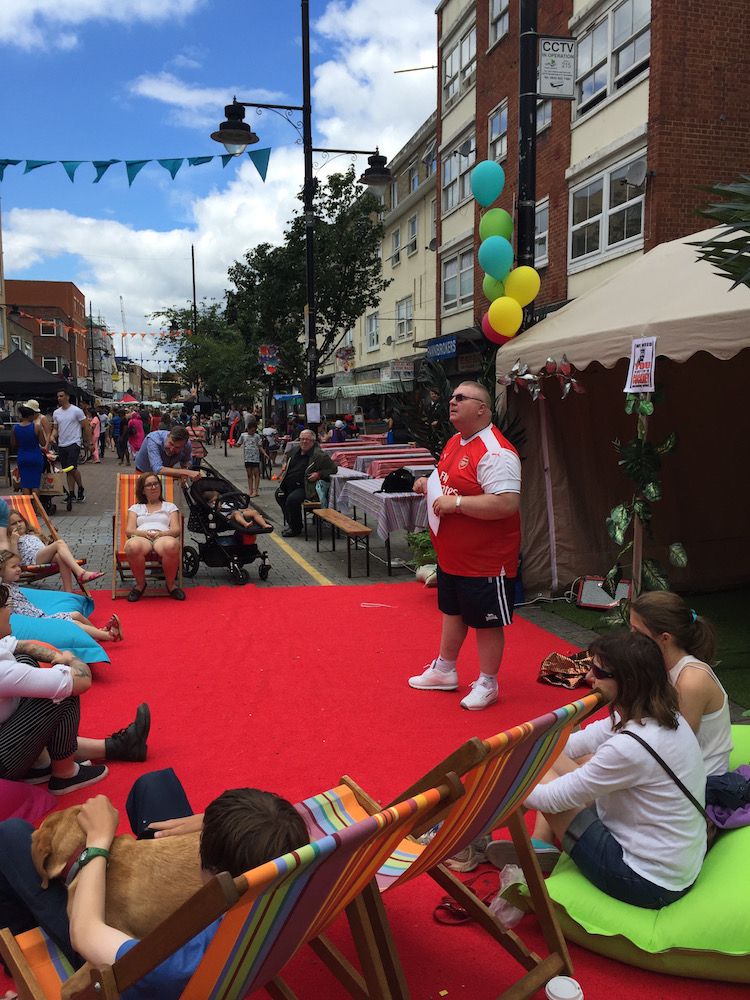
Want to have a go yourself? We’re giving away uTalk Cockney with the Evening Standard – and you get a free month’s subscription to all 133 other languages as well! Just visit eveningstandard.co.uk/offers to get started.

Enjoy! And we’d love to hear what you think – we know Cockney is constantly changing, and that not everyone has the same way of saying things. Email us at mycockney@utalk.com or tweet us with #myCockney to join the discussion!
A few of our favourite things…
Today is a big day here in the UK, as we’re voting in a referendum to decide our future in the European Union. A lot’s been said on both sides of the debate, so we won’t repeat any of the arguments for or against Brexit.
Instead, lets focus on the rich and fascinating cultures of both the UK and Europe. And who better to ask about their favourite things about them than our lovely staff?
Our colleagues from overseas have come up with some interesting things they love about the UK:
Nikolay (Bulgaria) – I ♥ British humour and specifically panel shows! Can’t get enough of “Mock the Week”, “QI”, “Would I Lie to You?”, “Have I Got News for You” etc.
Pablo (Spain) – People’s politeness and patience. In crowded places like in the centre, underground or the streets full of cars, is where you can notice it the most. The only way you can survive from bursting into a full crisis is with both qualities. I really really love that.
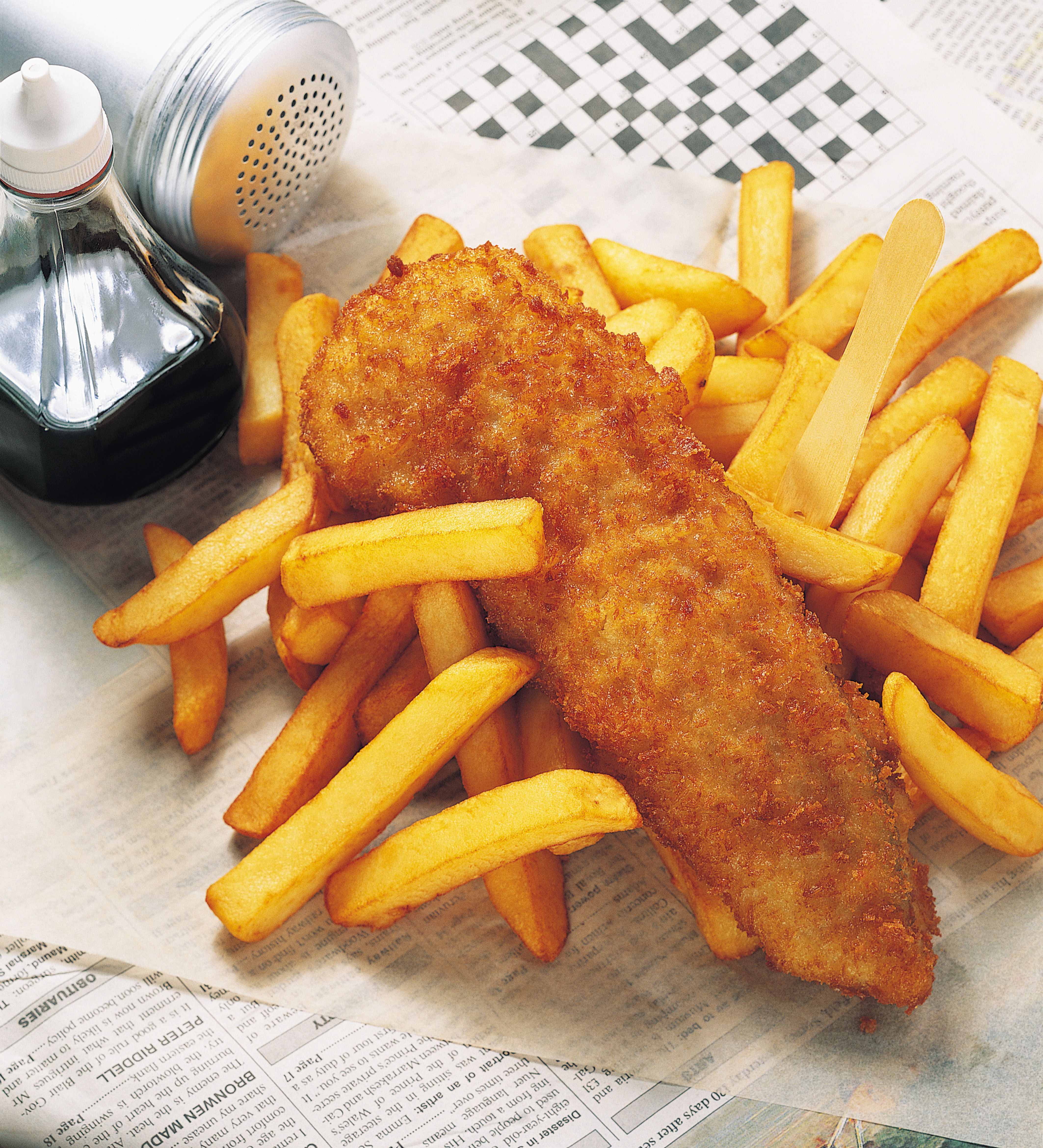
Sandra (Poland) – For me it is the Sunday roast, and fish and chips. Living with a lovely bunch of friends who love to cook means that I get to discover some great British dishes, and also that I love to have gravy with almost every meal!
Aditya (India) – I enjoy the British weather, in particular that I love the rain and cloudy weather! Originating from Delhi and having also lived in Dubai, I am rather fed up of the heat/sun.
Ioana (Romania) – Before I came to Britain I thought the idea of tea and milk is disgusting. Now I’ll have a cuppa if I’m sad, happy, with friends, by myself, in the morning or in the evening, there is just something incredibly comforting in a hot cup of tea. Especially on rainy days.
And here are some thoughts from our British colleagues…
Brett – I think the obvious one here is pizza!
Phil – European beaches are the best 🙂
Simon – I visited the Sagrada Familia on my recent trip to Barcelona, and it is an absolutely incredible building, with exceptional architecture.

Safia – I love Italian hot chocolate, you can eat it with a spoon!
Liz – The pain au chocolat… it’s a miraculous culinary invention that brightens up the dullest morning…!
Over to you! Brits – what do you love about Europe? And non-Brits, what’s your favourite thing about the UK? 🙂
Ramadan: what’s it all about?
Eid Mubarak!
Today marks the start of the holy month of Ramadan, where millions of Muslims around the world will spend the month fasting and praying. It is believed that 1400 years ago the Quran was shown to the Prophet Muhammad in this month. The start of Ramadan varies around 11 days each year, as it is all to do with the lunar cycle; this year the new lunar moon was seen on Sunday evening in the Middle East.
Potentially the most well known part of Ramadan is the fasting that happens. Muslims are not allowed to eat or drink during daylight. For those who miss a day of fasting they have to make up for this on another day, for example those who are travelling a long distance are allowed to eat and drink; but must make up for this another time. During Ramadan, breakfast or ‘Suhoor’ as it’s known, must be eaten half an hour before sunrise, this is also where people have the chance to drink water to be hydrated for the day ahead.
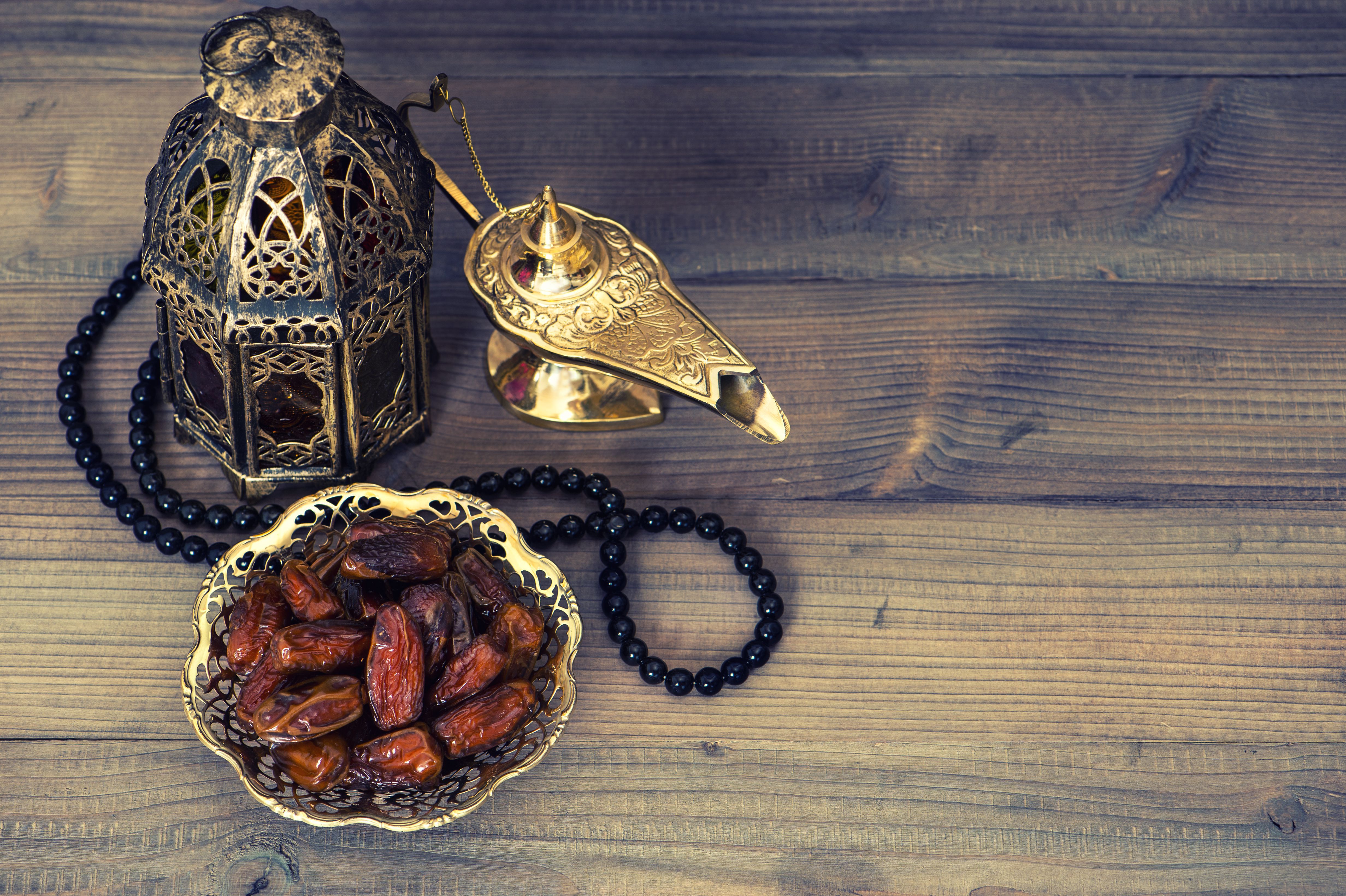
At the end of the day after sundown a communal meal is made, called ‘Iftar’, which literally translates into ‘break fast’. This is where people come together and they can eat until the next morning’s Suhoor. At both meals, fresh fruit and vegetables are served, along with halal meat, cheeses, breads and sweets. The meal caters for all of the food groups needed for a healthy body. Following the main meal different snacks can be prepared such as dates.
As well as having to follow strict eating and drinking guidelines, during the month of Ramadan, Muslims will visit the Mosque regularly. The month is used as a way to improve morality and work on themselves. Last year 14 million Muslims visited the city of Mecca within the first 2 weeks of the holy month. Mecca is the holiest city in the Islamic religion, and is the place where Muhammad first saw the Quran.
At the end of Ramadan, Muslims celebrate ‘Eid al-Fitr’ which translates as the ‘festival or breaking the fast’; here they gather at the Mosque for a prayer and spend all day with family and friends. The celebration goes on for three days and marks a new beginning for each individual.
The weird and wonderful language of tennis
I’m not generally much of a sports fan, and the less said about my sporting ability – or lack thereof – the better… but I do love a good tennis match. I’m a regular supporter of the British Davis Cup team (which is a lot more fun since they started winning; our humiliating weekend in Lithuania back in 2010 is, thankfully, a distant memory). I’m going to the US Open for the first time this autumn (squeal), and don’t even try booking me for any social engagements during Wimbledon fortnight – if anyone needs me then, I’ll be in front of the TV drinking Pimm’s, eating strawberries and cream and biting my nails every time Andy Murray’s on court.

Wimbledon, summer 2013
Like any sport, tennis has its own unique language and growing up watching it on TV, I had to get fluent at an early age. Besides a frankly baffling scoring system (15, 30, 40, advantage… it makes no sense at all) the game features a good few terms that may not mean a lot to newcomers, and take a while to get used to. So as the French Open comes to a close and we look ahead to the grass court season, here’s a quick guide to Tennis-ese for the uninitiated:
Love: ironically this is not something you want in a tennis match, because ‘love’ means a score of zero points in a game (or games in a set). It’s generally assumed that this comes from the French word l’oeuf, which means ‘egg’ – the same shape as a zero.
Deuce: when the score reaches 40-40 in tennis (3 points each), one player must score two consecutive points in order to seal the game. If they only manage one, the score returns to deuce, and keeps doing so until someone wins the game. ‘Deuce’ could derive from deus, Old French for two, or from à deux de jeu (‘two points from the end of the game’)… and yet, ironically, in France 40-40 is referred to as quarante à the first time, then egalité after that.
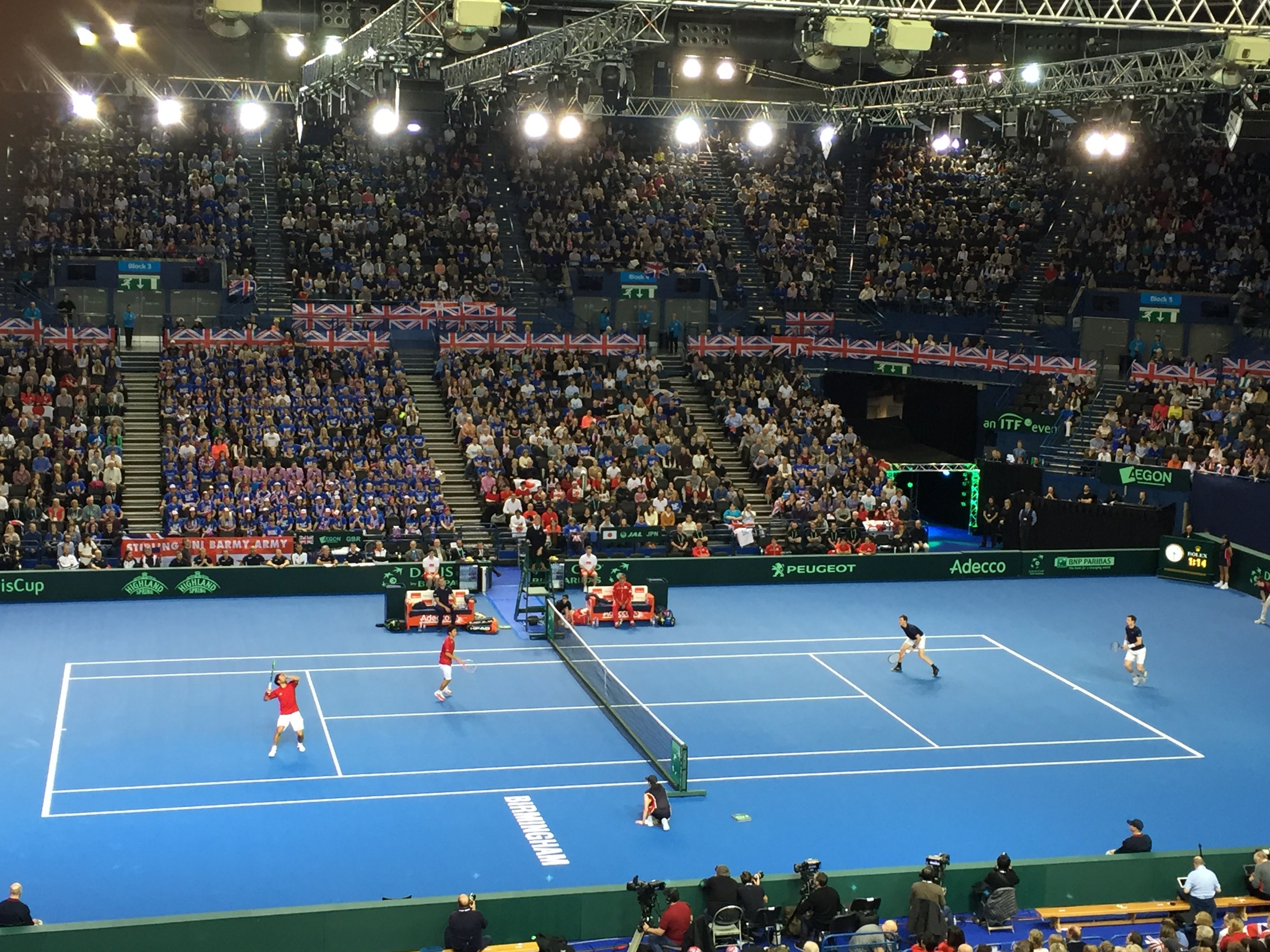
Davis Cup, GB v Japan, in Birmingham, March 2016
Let: when a player serves, the ball must pass over the net and bounce in the service box diagonally opposite. If it goes into the net, or misses the service box, this is a fault; do two faults in a row and you forfeit the point. But if the ball touches the net and still lands in the correct service box, this is called ‘let’. Nobody seems quite sure why, although one possibility is that it’s a shortened version of the French word for ‘net’, filet. Or it could just be because if this happens when you serve, the umpire lets you try again as many times as you need to 😉
Bagel: depending which side of the net you’re on, this is either something to celebrate or a very, very Bad Thing. A bagel occurs when one player wins a set 6-0. If this happens twice in a match it’s a double bagel. I’ve also heard a set that’s been won 6-1 referred to as a breadstick. Who knew so many tennis terms were named for the shape of food?
And finally, a couple of tennis terms with less interesting linguistic origins:
Break and Hold: the players in a tennis match take it in turns to serve. If a player wins a game on their own serve, this is called ‘holding serve’ or just ‘a hold’. On the other hand, if they manage to win a game when their opponent’s serving, this is called a ‘break’, or ‘breaking their serve’. To win a set, a player must be ahead by at least two games, so a break often proves crucial. During a tiebreak, you can also get a ‘mini-break’, which is not, as one might suppose, a short holiday but just means you’ve won a point on your opponent’s serve.
Ace: a serve that goes in but is untouched by the opponent’s racquet, automatically winning the point for the server. John Isner currently holds the record for the most aces in a match, at 115, but then again, that was also the longest singles match ever played – 11 hours, 5 minutes – at Wimbledon 2010, so perhaps it’s not so surprising.
These are just a few examples of the weird and wonderful language of tennis. What’s your favourite tennis term? And – far more importantly – who will you be cheering for at Wimbledon this year?
Liz
Destination: Hanoi, Vietnam
As the warm season is slowly approaching, our minds are starting to wander off to far away places, where we can explore, relax and have some adventures. We did some research (purely for selfless reasons, obviously) and found some great places that seem to be becoming more and more popular as holiday destinations. Over the next few weeks we’ll be giving you our thoughts about each of these amazing places.
Destination: Hanoi, Vietnam
An online friend of mine, Loes, lived there for a while and she was kind enough to share her local experience with us.
Old quarter is very nice! I suggest going in early morning. In the area there’s also an authentic market and it’s not too crowded. There are a lot of nice shopping places, mainly around the cathedral.
They have really good food there, my favorite is bun cha (only eat it at a restaurant that serves nothing else than bun cha, you can get it between 11-12:30 or so), then there is bun bo nam bo, nem (spring rolls) and apparently the best coffee in the world though I can’t vouch for this because I don’t drink coffee. But the cha da (literally tea ice) is pretty good, and the fresh fruit smoothie too!
At the lakes Trúc Bạch and Tây Hồ is also very nice, there you can get bo bia (a very nice coconut snack) and go for a walk or cycle on a water cycle.
Ha Long Bay is amazing! That’s a day or two-day trip from Hanoi. I think it’s around 4 hours to drive there.

Tam Coc, is a beautiful place also known as Ha Long on land. It’s also a day trip from Hanoi. You can rent a cycle there and cycle through the rice fields. Cúc Phương is also super cool, it’s a wild national park. I would combine that one with Tam Coc, two day motorbike trip. Very nice!

There are also some very nice food markets to go to, Chợ hôm and one close to Trúc Bạch lake, not too busy. The Vietnamese street food is known to be one of the safest street eating places in the world, everything is fresh so don’t be shy in trying everything you find appealing!
Needless to say this got us thinking about booking a flight to Hanoi ASAP. If you’ve been inspired too, don’t forget to install uTalk before you go, it’ll help you get along with the friendly locals in all the situations that you could need to speak their language! If you want to see my friend Loes’s pictures of Vietnam you can check them out here.
Ioana
