Breaking down barriers with The Broke Backpacker
Meet Will. He’s the writer and adventurer behind travel blog The Broke Backpacker, and he just embarked on an epic two-year journey from home in the UK to Papua New Guinea.
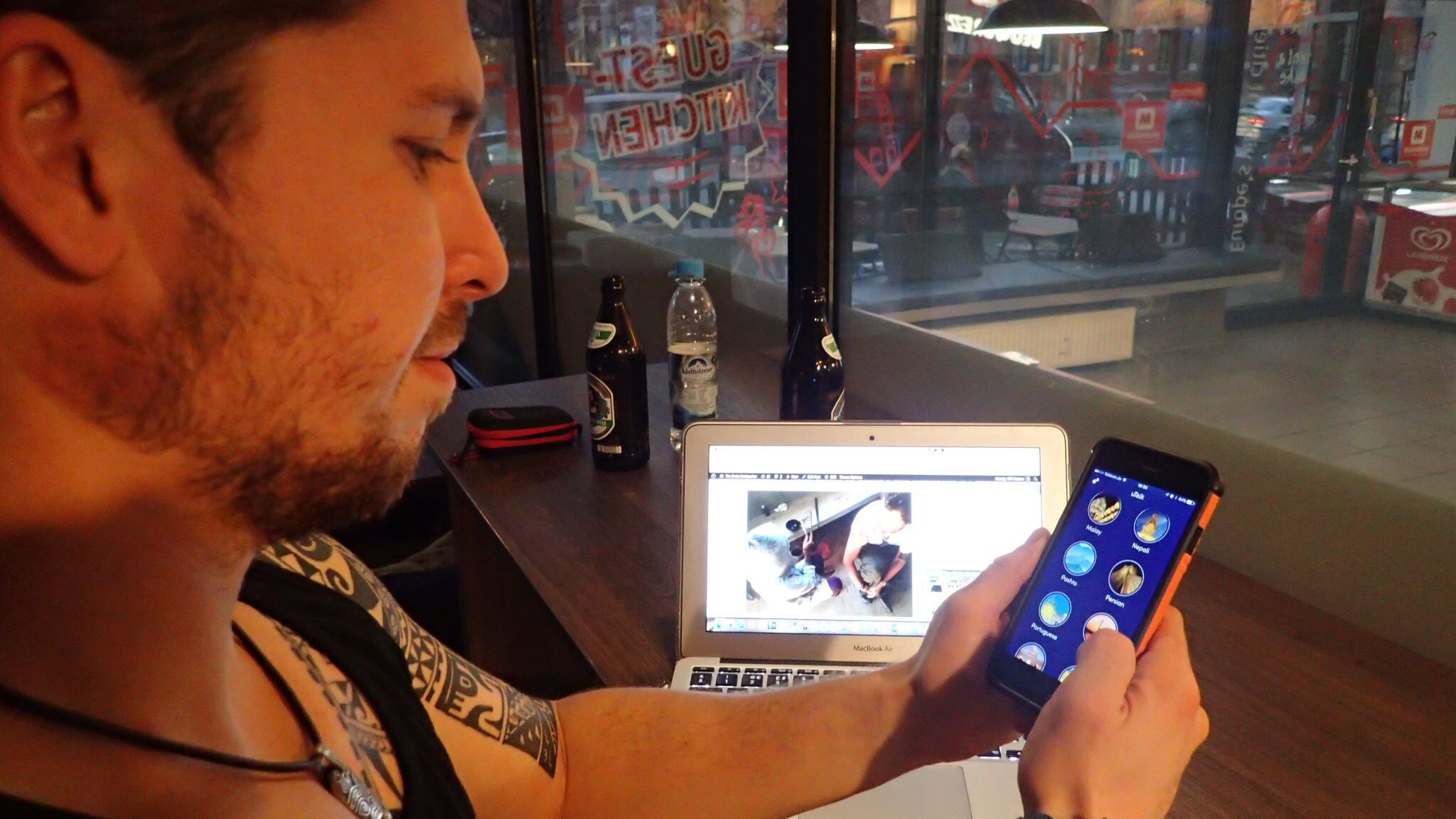
Source: Will Hatton
The twist? He’s not taking any flights. Oh, and he’s travelling on a daily budget of $30.
Will’s been on the road already for two weeks, and is currently making his way through Europe. Over the next two years he’ll be visiting 30 countries, including Turkey, Pakistan, Myanmar, Tibet, and Indonesia, and sharing his adventures along the way.
Why are we telling you this?
Well. When we heard what he was planning, we figured Will might find himself in need of an app that includes over 120 languages from all across the world, which would enable him to talk to people wherever he goes.
Fortunately, it just so happens we have an app like that. So we’re very excited to announce that uTalk is the official language sponsor of Will’s adventure, and he’ll be using the app on the road to learn and speak everything from German to Tajiki, Albanian to Khmer. He’ll even be able to greet people in Tok Pisin on his arrival in PNG.
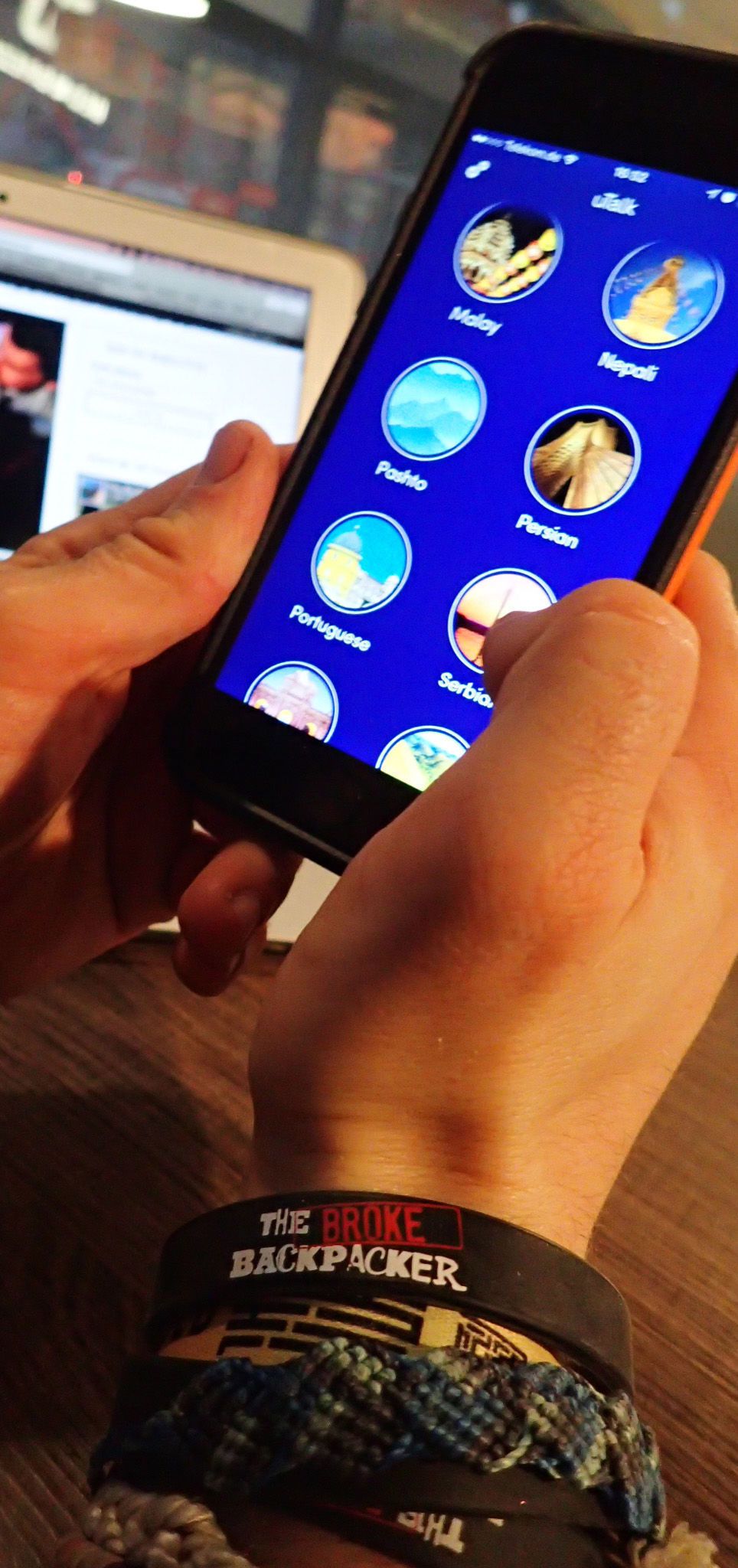
Source: Will Hatton
Will’s been travelling for seven years, and knows how important it is to speak a bit of the local language: “Learning a new language is hands down the best way to make new friends and peek behind the curtain. uTalk helps me to break down barriers, learn the local lingo and make friends in the most unexpected of places.”
We can’t wait to follow Will as he makes his way across the world, visiting some fascinating countries and meeting loads of interesting people. And we’re looking forward to hearing him speak all the languages 😉
You can follow Will’s adventures on Twitter or Facebook, or for more instant updates, on Snapchat (@wthatton).
You never know until you try…
More years ago than I care to remember, I did a degree in Hispanic Studies at the University of Nottingham. I loved the course, but there was one part of it that filled me with terror from the very first day.
The Year Abroad.
This is a pretty standard element of a modern languages degree – you spend your third year living abroad, either working or studying, and that’s when you really learn the language.
I had the choice of going to Spain or Latin America, and being the cautious soul I am, opted to stay close to home (a decision I still occasionally regret). So in September 2002, my friend and I nervously boarded a plane for Madrid.
The first challenge when we arrived was to find somewhere to live; we’d booked a room in a hostel for the first few days, but after that we were on our own. And so we got on the phones.
Now just to be clear, I’ve never been a massive fan of talking on the phone in English; the thought of calling people in another language was genuinely terrifying. But given a choice between that and being homeless, I had to pull myself together and get on with it.
Initially, my friend and I were looking for accommodation together, but when it became clear we weren’t going to find anything, we split up. So suddenly there I was, in a strange city, going off to view apartments on my own, in another language.
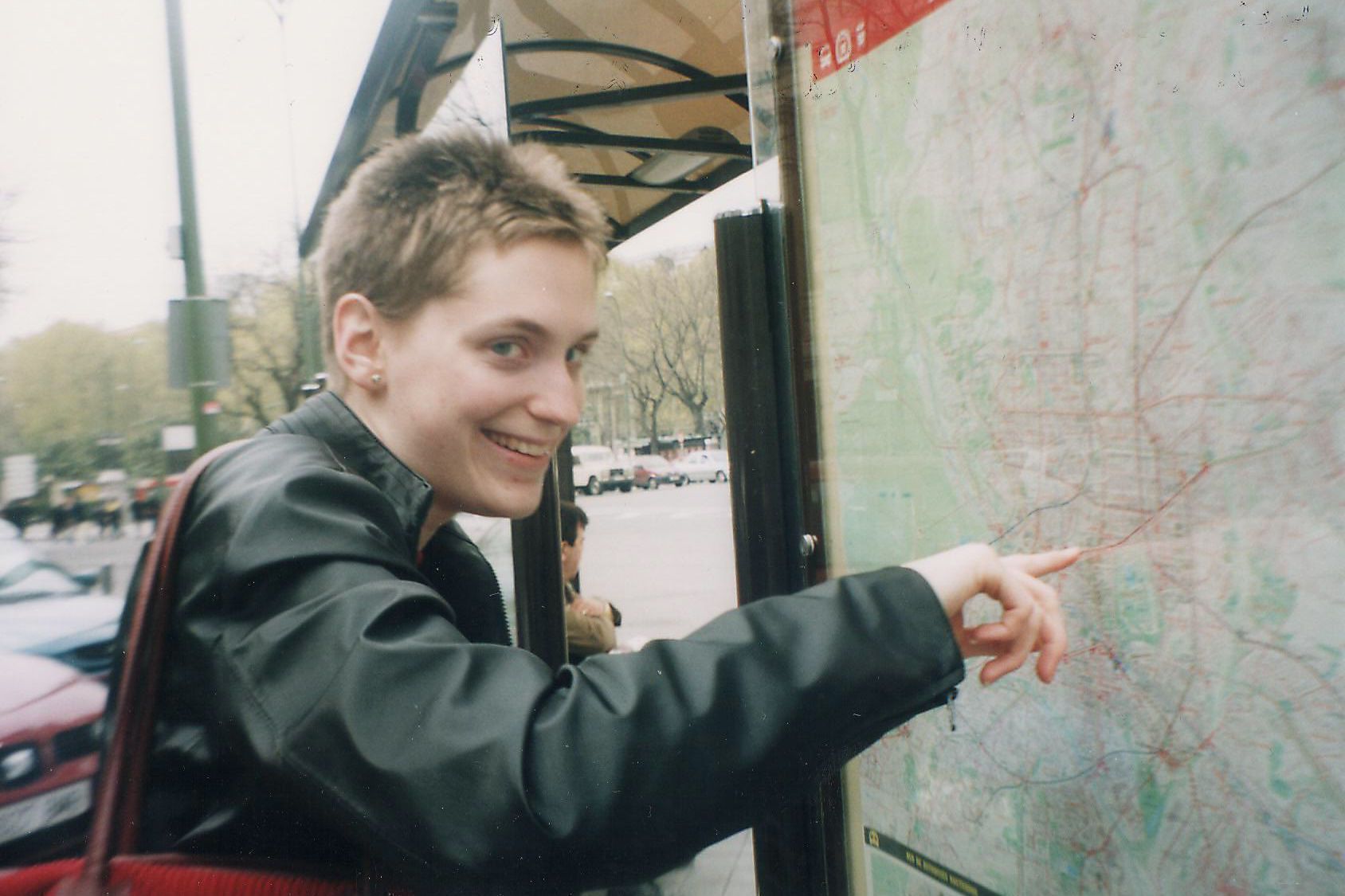
Definitely not lost in Madrid…
Eventually I found a slightly shabby room in a shared flat… only for my friend to announce the following day that her new landlady knew someone with a much nicer room – which was also cheaper. Feeling slightly anxious, I went to talk to my own landladies (two elderly sisters who lived in the flat downstairs) and successfully negotiated the return of my deposit and first month’s rent. In Spanish.
Once the living arrangements were settled, the next challenge was going to university. We’d been enrolled at the Universidad Autónoma de Madrid, and had to pass exams in a certain number of modules to pass the year and continue to the final year of our course. So before I knew it, I was taking classes entirely in Spanish for the first time in my life – and then, a few months later, preparing for two-hour exams, all of which, to my surprise, I passed.
Looking back on my year abroad now, I sometimes can’t quite believe I really did some of these things. I even managed to get my hair cut once, although it didn’t go all that well – let’s face it, I have enough trouble describing what I want done to my hair here in London. And I spent the year living with a very lovely lady who didn’t speak a word of English. (It was always very entertaining when my family – who don’t speak any Spanish – came to visit.)
Learning a language can open up some amazing opportunities, and sometimes you just have to take a chance, however nervewracking the situation. You never know, you might surprise yourself with the things you can achieve. And even if it goes a bit wrong, a bad haircut will grow out eventually.
Liz
Junior Language Challenge – 2016 here we come…
The Junior Language Challenge 2015 may be over, but we’re already thinking about next year’s competition. In 2016, we’d love to double the number of children taking part from 1,100 to 2,200, and raise even more money for our brilliant charity, onebillion.
Every year, we’re blown away by the enthusiasm and commitment shown by children, parents and teachers. 2015 was no exception, as you can see from our brand new video, made at this year’s final.
Please help us make next year’s competition our biggest and best yet, by sharing the video with friends and colleagues across the UK. Thank you!
For more details about the Junior Language Challenge, visit eurotalk.com/jlc or email jlc@eurotalk.com.
How does a Greek person say ‘it’s all Greek to me’?
‘It’s all Greek to me’. This is what an English speaker might say when they don’t understand something at all. In this context the Greek language is used as a metaphor for ‘something incomprehensible’.
So that got us thinking here at EuroTalk… if an English speaker uses Greek, what does a Greek speaking person use? And in fact how does this expression translate in other languages?

Well as it turns out there is a (somewhat complicated sounding) term for this – ‘language of stereotypical incomprehensibility’. So Greek is the language of stereotypical incomprehensibility in English.
Other languages have similar expressions and they usually pick as a metaphor for ‘impossible to understand’ a foreign language with an unfamiliar alphabet or writing system.
To answer our original question: in Greek the language used as a metaphor for incomprehensibility is Chinese.
Chinese actually turns out to be the most popular choice as a synonym for ‘I do not understand’ and is used in many languages, including Albanian, Arabic, Bulgarian, Catalan, Dutch, Estonian, French, Greek, Hebrew, Hungarian, Latvian, Lithuanian, Polish, Portuguese, Romanian, Russian, Serbian, Spanish, Ukrainian.
Greek itself follows closely, and is used as a language of stereotypical incomprehensibility in: English, Afrikaans, Norwegian, Portuguese, Swedish, Spanish, Polish, Persian.
(Bonus fact: the origin of the phrase in some European languages can be traced to the Medieval Latin proverb, ‘Graecum est; non potest legi’, which translates to ‘It is Greek; it cannot be read.’)
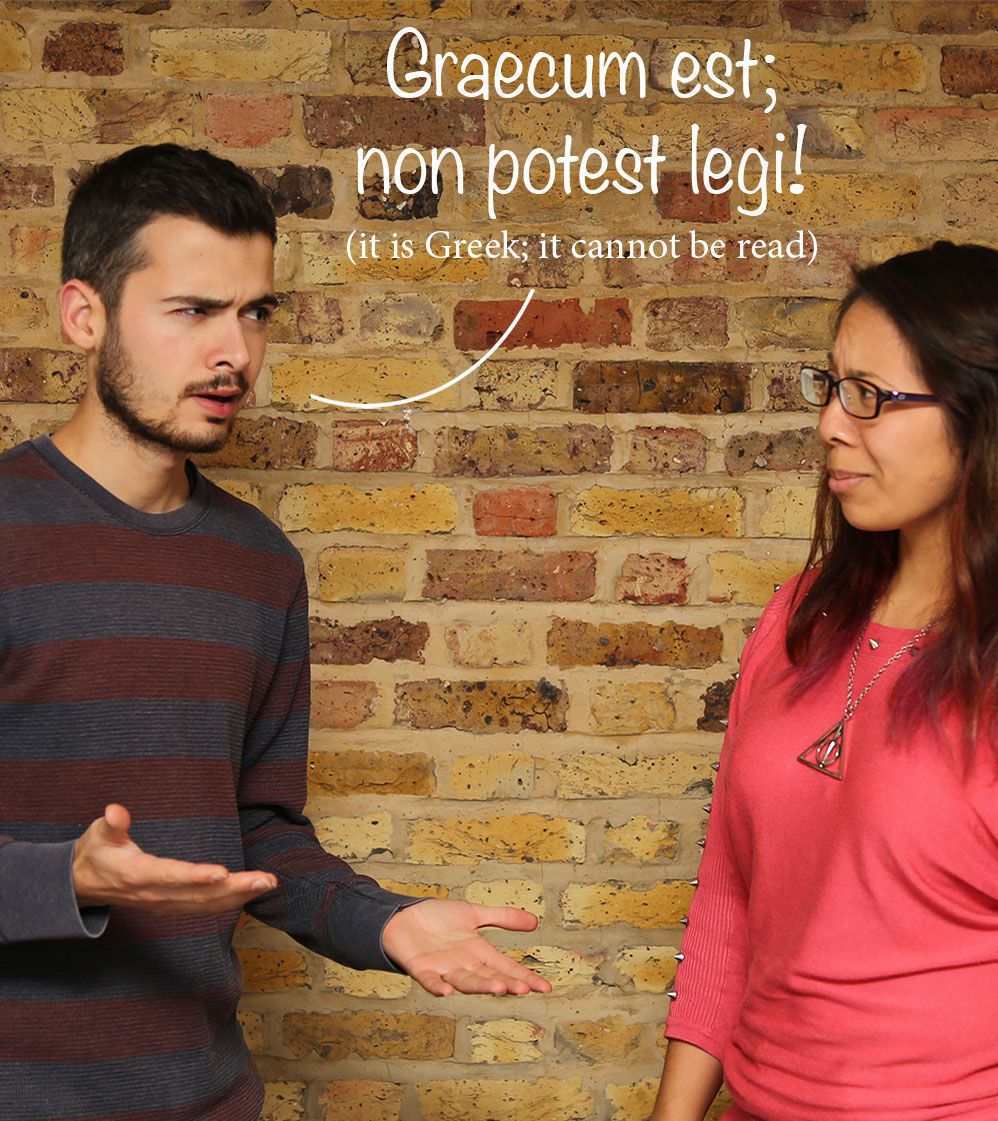
Sometimes the language of incomprehensibility is not a specific human language at all. For example a Chinese (Mandarin) speaker would use something that translates roughly to ‘Ghost’s script’, ‘Heavenly Script’ or ‘Sounds of the Birds’. And a Cantonese speaker might say, ‘These are chicken intestines.’

And how about a constructed international language, such as Esperanto? As a tongue-in-cheek reference, an Esperanto speaker would say ‘That’s a Volapük thing’, Volapük being another constructed language (with about 20 speakers).
How about you? What language do you use to mean ‘incomprehensible’? And is your language used by any other languages as a synonym for ‘impossible to understand’?
Bonus points question:
What does a person whose mother tongue is Greek, but who also speaks English, say in English when they want to say ‘It’s all Greek to me’?
Nikolay
How do you say ‘I have lost my rabbit’ in German?
Blogger Erika Holt is a big fan of languages and learning. In today’s blog post, she tells us why, and explains how knowing a little Greek helped her out in a sticky situation…
What made you start learning languages?
I have always found myself interested in languages. I have a huge passion for reading and writing, I think that it stems from that, coupled with my hunger for learning new things. I am slightly obsessed with learning, I always have my nose in a book or am completing an online course in one thing or another. I just feel like there is so much to know.

Erika in Kenya on her honeymoon
What gives you motivation to continue learning?
I just find it really enjoyable. Years ago I would learn a language (as much as was possible), before visiting a country for a holiday, now it is more to give me the chance to explore more of the internet and books. I also thoroughly enjoy the way various languages are connected, how one has influenced another and so on.
What do you find to be most rewarding about language learning?
It is definitely the moment when you absent mindedly come across the language and read/speak it without thinking, then realise what you have done. It gives you access to so much more of the world and enables you to meet new people.
What were some of the challenges you faced and how did you overcome them?
My challenges stem from how my illnesses can affect my concentration, understanding and memory. I find that having a mobile app really helps, it enables me to learn whenever I want to, rather than having to sit at a computer. Apps also allow for a repetitive learning process, this lets me really cram that knowledge into my brain, over and over, this helps me to retain it better.
The apps are also good for days when I am bedridden; it can get so boring being stuck in bed, but having the chance to feel like I am still being productive makes a huge difference to me.
What is your favourite word/expression in your favourite language?
It is ‘Douitashimashite’ and it simply means ‘you’re welcome’ in Japanese. I love the word, it is beautiful and rolls off of the tongue once you have learnt it. The Japanese people are very polite, something I love, having been brought up in such a way that manners are extremely important.
I have to admit I also, for some reason, have a bizarre one lodged in my brain – ‘Was ist loss? Meine kaninchen ist weggalaufen.’ This translates to ‘What is wrong? I have lost my rabbit.’ Yep, this is one sentence I can not forget and I love saying it, I just need to talk to more German people!

Any funny situations when you used Greek with a native speaker?
There was this one time when I visited Greece, the island of Kefalonia, which is a beautiful place. I had learnt as much Greek as I humanly could before going on holiday, I was able to have a basic conversation and order food, drinks and so on. It was a lovely experience and the Greeks really appreciated the effort I had made.
One morning I was walking along the stunning beach, which was practically deserted. All of a sudden, as the sun was warming and the sea lapping at the shore, I could hear this woman’s voice. At first I thought she was calling my name, as I moved closer I didn’t recognise her or the gentleman with her. I realised she was shouting ‘Ella, ella’ which I believe means ‘come here’. I went over and neither of the elderly people spoke a word of English – why would they, being Greeks, living in Greece? So I had to use the minimal vocabulary and some questionable sign language to establish what was wrong.
Now I should set the scene a little: the gentleman was as thin as a bean stalk, wearing trousers and a shirt with braces, he even had a hat on. The lady was his polar opposite, rather large and wearing just a swimming costume, she had this wild black curly hair that made her seem very odd to me and was obviously shouting at me in Greek. It was a strange situation, what was worse was that both her and the old man were standing in the sea up to their knees.
The lady was getting more and more agitated that I didn’t understand her, it was early morning so I couldn’t go for help either. Eventually, I worked out that both her and her husband were stuck, their feet had sunk into the sand and they couldn’t move. I gathered that it was in fact the lady who had found herself in this situation and her lovely husband, who had been watching her swim from the beach, had ventured in to help and ended up being stuck himself, bless him.
So there I am, 5’3″, a little thing at the time, and I am trying to pull out this couple from the sea. Of course I ended up in the drink myself, but managed to free the lovely pair after some rather awkward pushing and pulling. I was proud of my good deed, but to my surprise the old couple turned and waddled off down the beach without a word, the old man being berated by his wife, leaving me drenched.
Read more from Erika on her blog, Eclectic Enchantments. You can also follow her on Twitter: @LacunaRaven
Do you have a language story to share? We’d love to hear from you! Email ioana@eurotalk.com for more details.
