The uTalk Challenge 2016: New Year, New Language
Quit smoking. Learn Welsh. Finally finish writing that book – and actually let someone read it. Learn Thai. Spend more time sailing. Learn Mandarin. Walk the street map of London. Learn Turkish. Achieve a freestanding handstand and a scorpion/needle stretch (whatever that is). Learn Argentinian Spanish.
These are just a few of the New Year’s resolutions we’ve been setting ourselves in the EuroTalk office, having just realised 2016 has crept up on us and is suddenly, terrifyingly close. And you may have noticed a bit of a language theme…
Introducing the uTalk challenge 2016 – learn a language for free this New Year
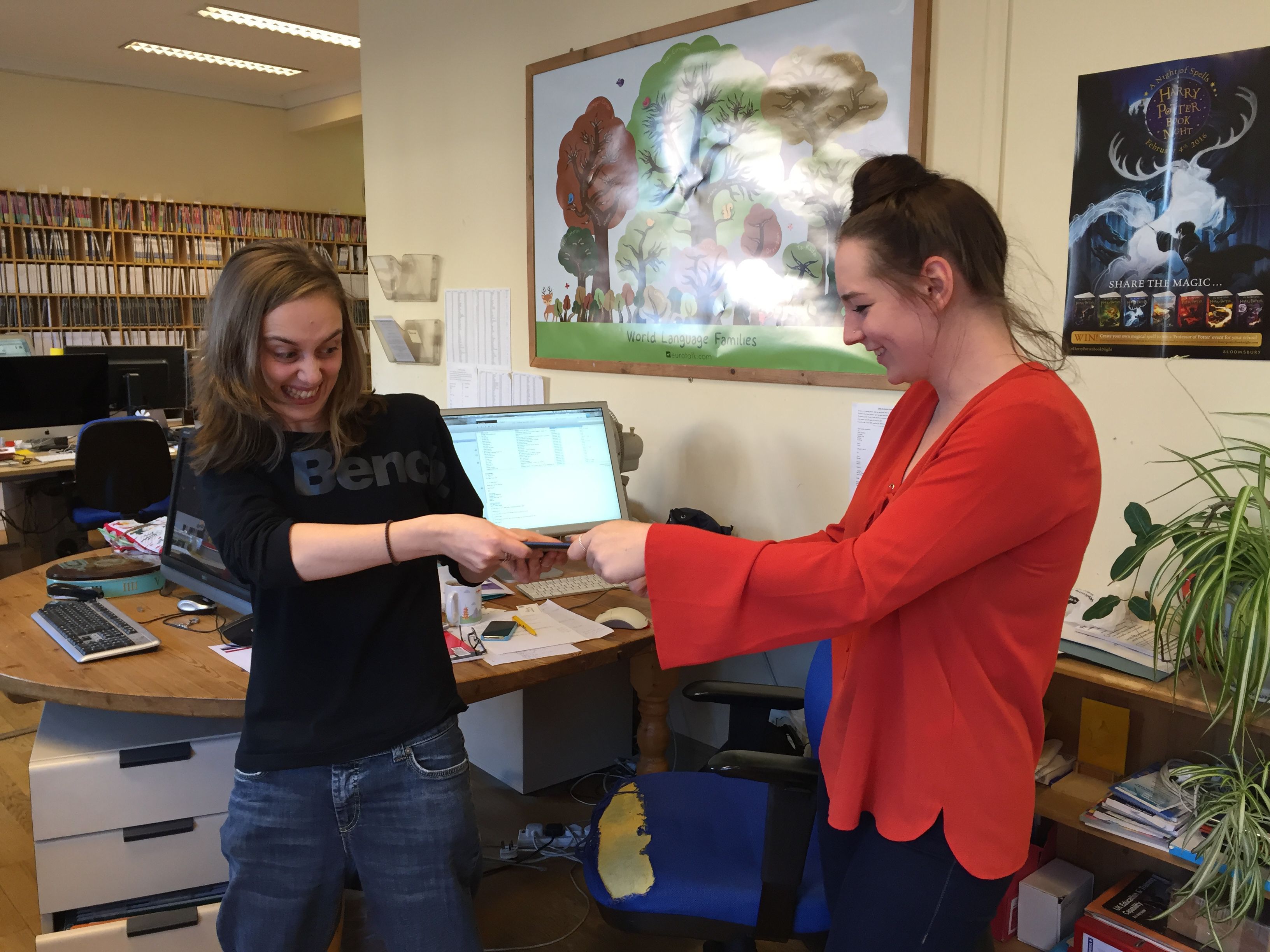
That’s because this January, we’ll be taking on the uTalk challenge 2016, using our uTalk app to learn as much as we can of our chosen language before 31st January. Last year Nat stormed to victory in our first uTalk challenge, completing the app in Icelandic before most of us had even mastered ‘hello’… but we’re hoping for a closer contest this time around. And failing that, our back-up plan is to steal her iPad.
How to join the uTalk challenge
But we don’t want to do it alone! So if you’re an iOS user*, and you’d like to finally start learning that language you’ve been talking about for ages, now’s your chance. And even better, the uTalk challenge is completely FREE. All you need to do is sign up at eurotalk.com/utalkchallenge, and on January 1st we’ll send you over a code to unlock the Essentials upgrade (worth £7.99) for your chosen language. Then it’s over to you…
We’ll check in with you each week by email to see how you’re doing and update the online leaderboard, so you can see how your score compares to everyone else’s. AND if you complete the Essentials by the end of January, we’ll give you another language to learn in February, and so on. So if you’re really determined, you could learn 12 new languages in 2016. Now that’s a pretty cool New Year’s resolution.
*Unfortunately the uTalk app is only available on iOS, we’re really sorry! But we don’t want anyone to miss out, so if you’re not an iOS-er and you’d like to take part, drop us an email to challenge@eurotalk.com and we’ll see if we can work out an alternative for you.
Spread the word
Challenges are a lot more fun if you’ve got company, so please help us spread the word to friends and family using the link eurotalk.com/utalkchallenge and on social media, using #uTalkChallenge. And for regular video updates from the EuroTalk team, in which we’ll attempt to demonstrate how much we’ve learnt, come and follow us on Facebook and Twitter.
Some of last year’s uTalk Challengers (who we hope will join us again this year!)…
Ingrid, learning Serbian
I’ve really enjoyed doing the challenge. Serbian is a language I’ve wanted to get to grips with for a long time for quite a bizarre reason (it involves a love of the Eurovision Song Contest!) but I haven’t really known where to start.
Patricia, learning Icelandic
The uTalk app is a whole lot of fun, filled with useful words and phrases. I particularly enjoyed repeating the words and phrases after the native speakers and then hearing my own voice. What a great tool to gain confidence and improve pronunciation!
Jacqui, learning Croatian
After a month, I’ve made great progress. I haven’t earned maximum points (I’m on just over 4000), but I have managed to learn a lot more than I thought I would, even waking up some mornings with various phrases springing to mind!
And here’s how the EuroTalkers got on…
So… who’s up for the challenge?
EuroTalk Christmas Countdown starts here!
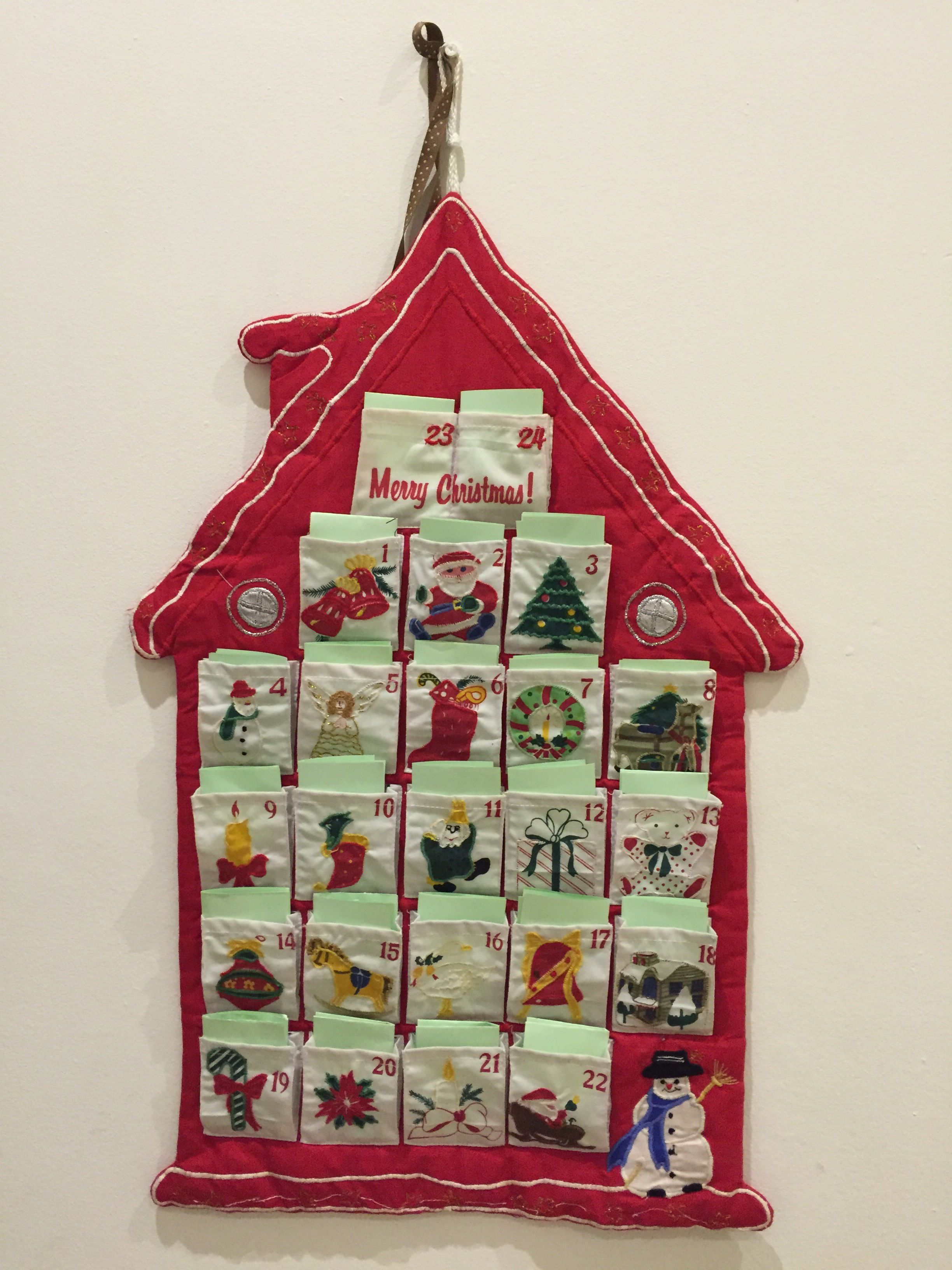
My countdown to this Christmas started on 26th December 2014; it’s my favourite time of year! I keep an app on my phone all year that counts down the number of sleeps until Christmas is back once again.
When it gets to the 1st of December, it’s traditional in the UK to use an advent calendar to count down the days up to and including Christmas Eve on the 24th. As a child, I was lucky enough to have a calendar with little pockets that my mum would place a chocolate and a little present in; these varied from pencils to hair bands.
We’ll be using my calendar at EuroTalk this year, to reveal a different Christmas word, in a different language, each day. You can countdown with us by following us on Twitter or liking us on Facebook – head on over now to find out what today’s word is, and see if you can pronounce it better than Ioana 😉
The idea of advent calendars originated from Germany, but soon spread across Europe and North America. Advent starts four Sundays before Christmas each year. People used to light a candle and allow it to burn down slightly more each day, representing how long there was until Christmas. Advent then moved onto boards with dates, and each day a different picture would be pinned onto the board. The first printed advent calendar dates back to the early 20th century, but during World War 2 production was stopped, in order to save cardboard and paper.
Advent calendars have become part of our annual Christmas celebrations. Today you can buy a standard calendar, which allows you to open little numbered doors and behind each one find either a picture or a chocolate. Alternatively you can buy ones with a gift behind each window; last year Harrods sold one shaped like a house that contained a different porcelain ornament for each day (we’re not sure how many they sold, though, as it cost £9,600…).
Do you have an advent calendar at home? What did you get for day 1?
Merry Christmas!
Alex
Quiz: Can you guess the language?
Are you a language expert? Try our quiz and see how many you can answer correctly…
If you were surprised by any of them, let us know! Don’t forget to share with your friends to see how many they can answer.
If you’re inspired to learn one of these languages, download our free uTalk app for iOS. We have over 120 languages to choose from!
How do you know when you’re fluent in another language?
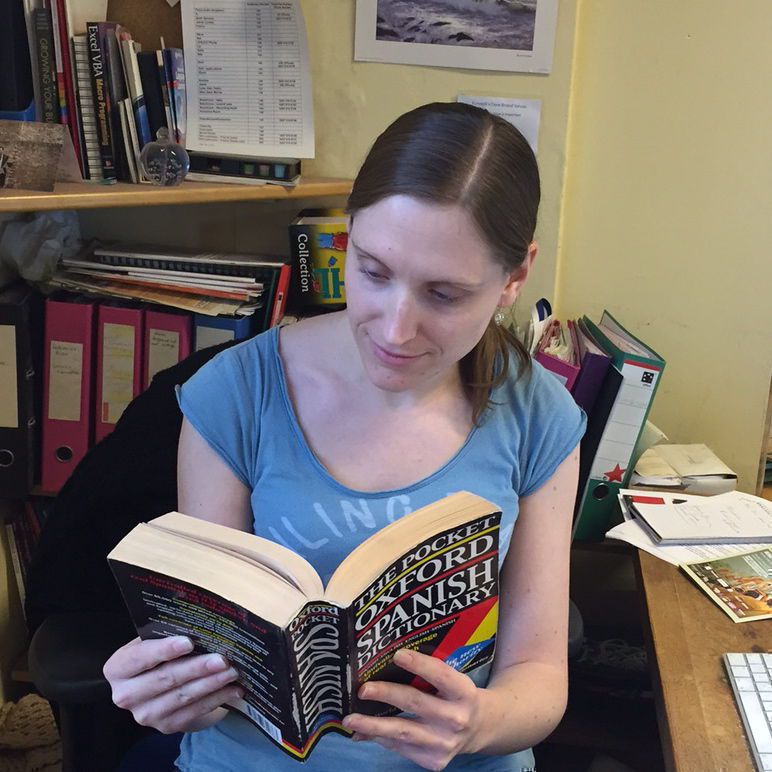
The other day, in a moment of idle curiosity, I took an online Spanish test. And it went rather well; when I finished, I was told that I was 87% fluent.
This is very funny, because – to my shame – I haven’t spoken Spanish properly for years. And although the test proved that everything I learnt at school and university is still there in my head, I know the next time I do try and have a conversation, I’ll struggle initially to remember the right words and how to construct sentences correctly. And there’ll definitely be a lot of ‘um’ and ‘er’.
Defining yourself as ‘fluent’ or ‘not’ seems like a simple enough task. Personally, I’d define fluency as the moment you’re able to have a conversation in another language without hesitation, just as you would in your own native language.
But is that setting too high a standard for myself? Surely what I’ve just described is one step on – what we would call native level?
So, I asked a few other EuroTalkers how they define fluency. A couple of responses were very much like mine:
“When you’re able to have a conversation (spoken or written) without making mistakes, without having to pause to think about words and grammar and without referring to a dictionary or other ‘cheat-sheets’. Be able to use the more complex features of a language with ease (e.g. conditionals, obscure tenses).”
“Speaking another language without having to think about it.”
While a couple were willing to be a bit more flexible:
“When you have enough of the language to get through a visit to the country, you can understand a local and they can understand you back when you speak their language.”
“I think minor mistakes are permitted as long as the other one understands you.”
And another one came at the question from an angle I’d never considered:
“You’re able to have any conversation about general knowledge, not specific fields like medicine, for example.”
But there was one thing all the answers seemed to have in common: the key to fluency is confidence, whether you know all the words or not. And that’s why I can’t think of myself as 87% fluent in Spanish; yes, I understand how the subjunctive works, and perhaps I’d even say that I can read the language fluently – but that doesn’t mean I can confidently have a conversation with someone about the weather.
What do you think ‘fluent’ means? Are you fluent in any other languages?
Liz
Help to choose your loo – and you won’t need to spend a penny
We’ve all had that moment, haven’t we? That moment when you’re in another country, you don’t speak the language, and suddenly realise you don’t know which loo is the men’s and which is the women’s. Do you guess, and risk getting it wrong? Or do you just cross your legs and convince yourself you didn’t really need to go anyway?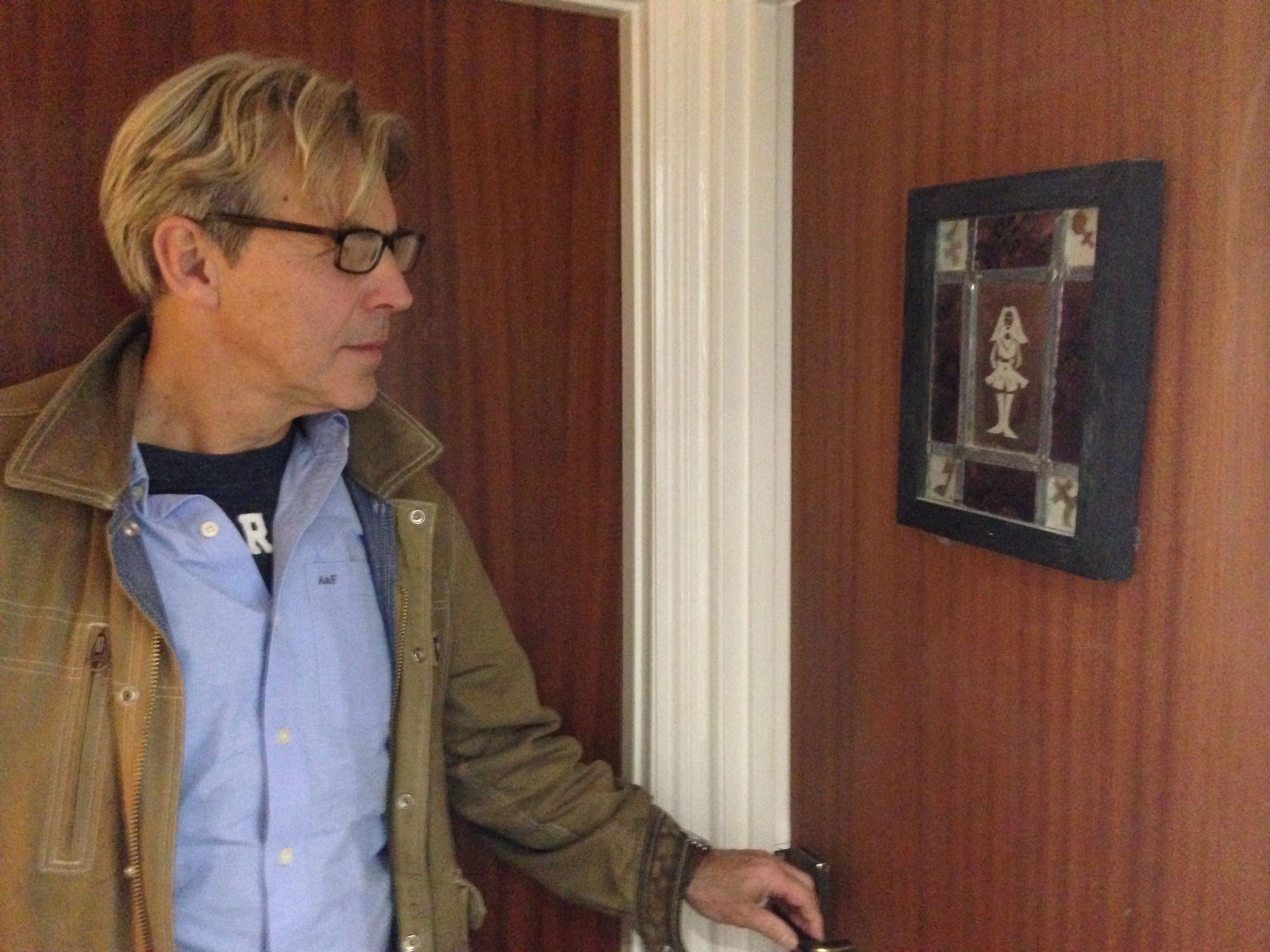
This happened to me several years ago, and it’s still one of my favourite stories (I’ve got a story for every occasion, as anyone at EuroTalk will tell you) – but it came to be the inspiration for a tool that’s helped millions of people learn a language over the past 20 years.
In the pioneer days of EuroTalk I was travelling to Budapest with my business partner Andrew for a meeting. Our plane landed 40 minutes early, so we had nothing to do but sit in the deserted airport and wait for someone to come and get us. During this wait, I went off to use the facilities, but realised when I got there that I had no idea from looking at the Hungarian signs which toilet was for men and which one was for women. After 20 minutes of waiting with crossed legs, I finally resorted to tossing a coin to decide which one I should use. Fortunately, it worked!
But the incident made me realise how important it is to help people make more informed decisions in other languages. That’s why we made toilet talk – or at least the information about how to ask correctly for male and female toilets – an essential part of our Talk Now product and we now give the words for male and female toilets away for free in 120+ languages through our uTalk app. So you’ll never get caught short, wherever you are.
Dick
