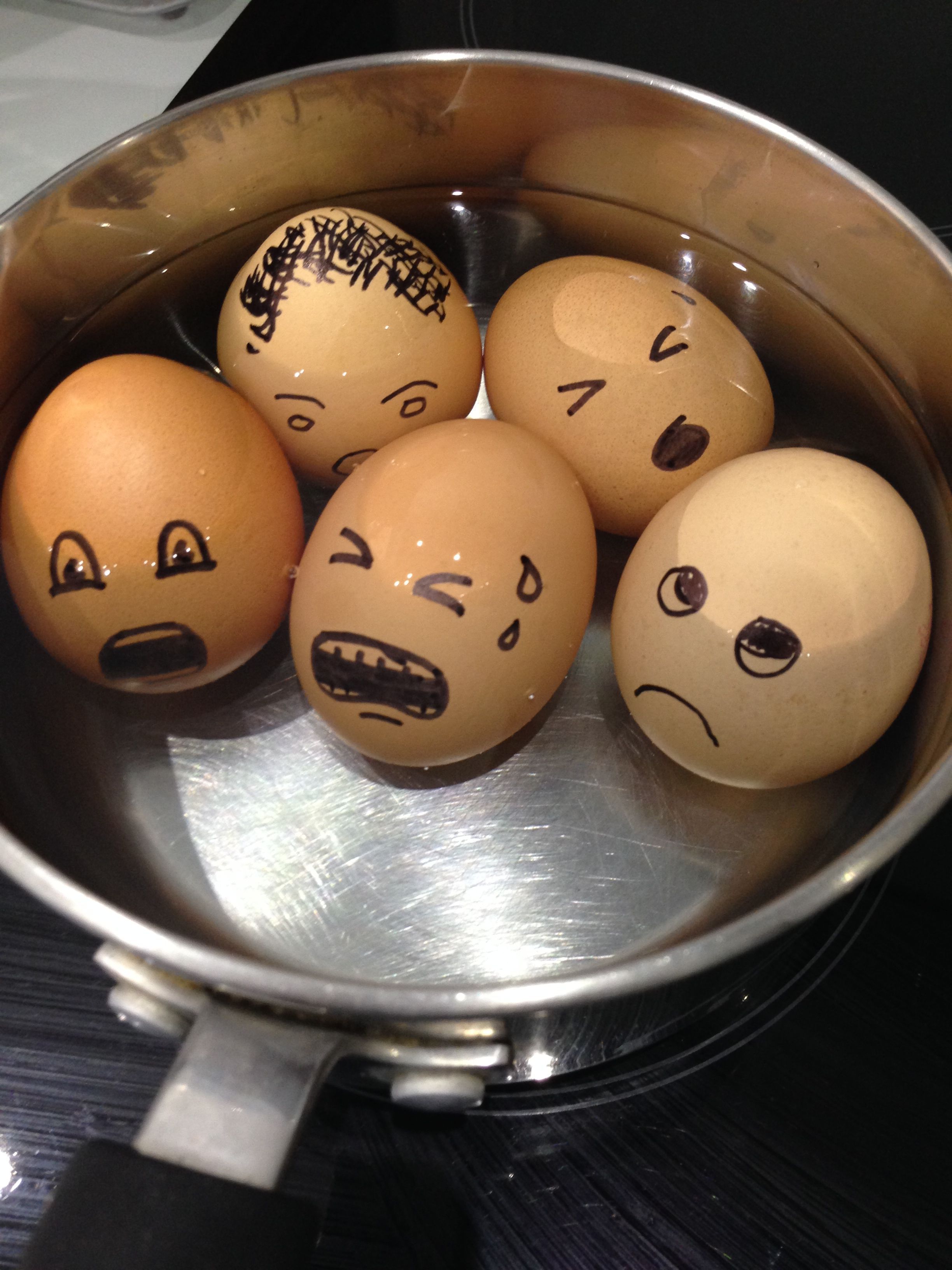
Lost, drowned, in a shirt… how do you like your eggs?
Happy World Egg Day!
English is quite a boring language when it comes to eggs. We boil them, scramble them, poach them, fry them. All very ordinary.
Which is why we were delighted to discover that other languages are more dramatic in their approach to eggs!
Over to Italy:
For Italians, poached eggs are literally ‘eggs in a shirt’ – ‘le uova in camicia’ – possibly because the frilly poached egg white looks like the sleeves of a loose blouse.
Alternatively (but still quite theatrically), you can call them ‘le uova affogate’ (literally ‘drowned eggs’). Poor old eggs!
And now to Germany:
Maybe it’s the same idea of drowning that makes Germans call their poached eggs ‘verlorene Eier’ – ‘lost eggs’. The eggs, like sailors lost at sea, drown quietly in the saucepan.
Or, if it’s a fried egg you’re after, the Germans have a pretty expression for that too: ‘Speigeleier’, literally ‘mirror eggs’. Can anyone tell us why..?
Bullseye!
In Italian, Slovak and Czech (to name but a few), the fried egg is the ‘bullseye egg’- because, of course, it resembles a bullseye (or a porthole, which is the same word): ‘le uova all’occhio di bue’ (Italian), ‘volské oko’ (Slovak), ‘volská oka’ (Czech).
Eyes in a pan?
A similar idea, though slightly more graphic, applies in Bulgarian and Slovenian where the fried eggs (‘яйца на очи’ and ‘jajce na oko’ respectively) translate as ‘eggs eye-style’! So next time you fry an egg, you may choose to remember this vocabulary by imagining a big eyeball staring up at your from the plate… OR you may choose to stick to the safe, if rather boring, English equivalent.
Got any other interesting egg-related vocabulary? Let us know!
Junior Language Challenge: A Mum’s Perspective
by Anna Fawcett
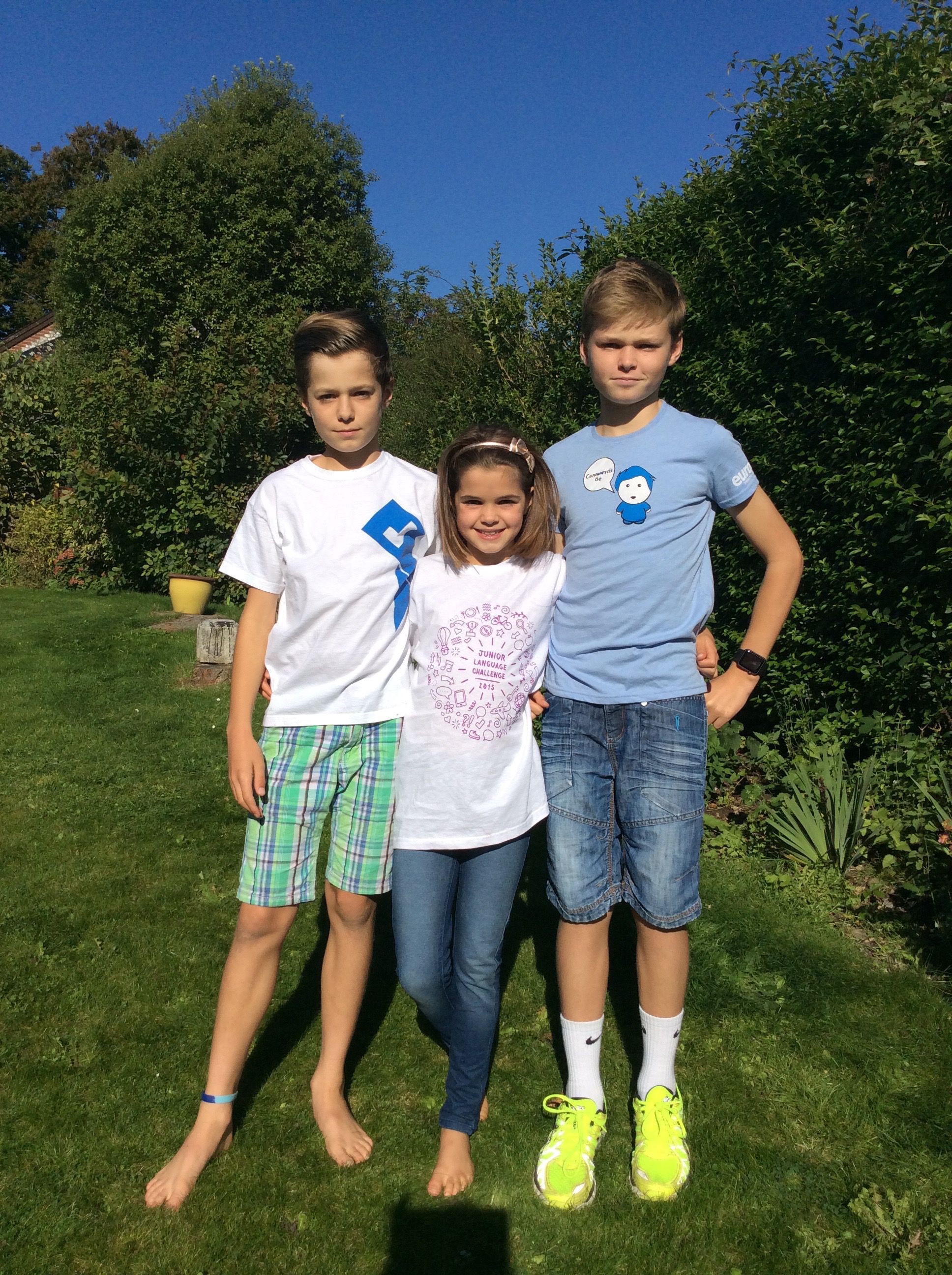
My children, Ben, Josh and Saskia, have all taken part in EuroTalk’s Junior Language Challenge. Ben was first – introduced to it by their language teacher, Mrs Susannah Stockton at their school, Oakwood Prep School in Chichester. Ben really embraced it and managed to win his semi-final… although this was bittersweet, as it meant we had to fly back early from a family holiday in Disney World, just so he could compete in the final in London. It was a great experience for him and well worth it. He reminisces about finishing just one frustrating point away from the prizes! However, coming from a family of non-linguists he learnt a valuable lesson: it was possible to learn any language – even Kazakh – and what’s more it could even be fun! He loved the experience and is now in year 9 studying three languages. I honestly do not think he would have chosen to do so many languages without EuroTalk.
Then came Josh! He was determined to equal his brother, and worked hard to qualify as Ben had done before him. Josh got through the preliminary rounds of Spanish and then Greek in the semi-finals to qualify for the finals in London. Josh, like Ben, enjoyed the whole experience and is now studying two languages at his senior school.
No pressure for Saskia then! The youngest and final Fawcett sibling to enter the JLC, she has been anxious from the start; how could she not do something her brothers had done? I was keen for her to have a go, as I knew the longer term benefits of realising languages are friends, not foes. Saskia sailed through the first round and qualified in the Mandarin semi-finals in second place. She is now learning Arabic for this year’s final, and was delighted and relieved to continue the Fawcett finalist tradition!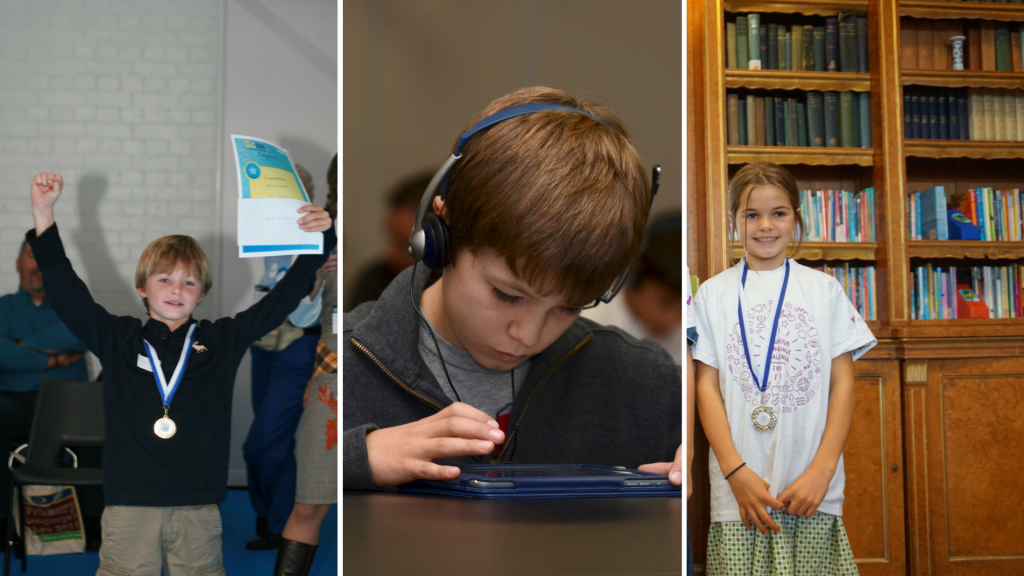
The worst part of the competition for me is without doubt the live scoreboard, continually changing as each child answers questions. This time around, I have learnt that I have to be in the room as support for Saskia, but if I concentrate on a book in my lap I can avoid looking at the live scores!
As for me, I have gone from failing French O’Level, too many years ago to mention, to supporting my children learning 12 different languages in 5 years. My name is down at the local college to take up French again, and this time to crack it! EuroTalk and the JLC has been a mixture of emotions for us all: frustration, laughter, sweat, tears and a huge sense of success and achievement for all three of the children. More importantly, it has eradicated the fear of a new and often relatively unknown language and therefore culture.
How idioms help you make a language your own
When learning a new language we are happy to pass every little milestone: the first time you address a native speaker, the first conversation… All these achievements mean the world to us, they are the reward of our continuous learning. When becoming fluent in a language you can express almost everything you want to say, but there is still that one little step further, that gives your words something that make them yours. Something that gives them personality – and this can be achieved through the use of expressions and idioms.
Many idioms make no sense even if we know the meaning of each individual word! But some of them are easy to figure out, like for example ‘it takes two to tango’, meaning an action or activity that involves participation from more than one person.
To me they are very interesting and it gives me insight into the British culture. Not to mention the fun of using them in a conversation, possibly wrong sometimes but nevertheless entertaining! That is how I learned that when you’re ill you can be ‘a bit under the weather’ or to not take someone seriously is ‘taking it with a grain of salt’.

Not that kind of ‘under the weather’…
Sometimes expressions are international and can be directly translated through more languages without losing their meaning, like ‘a picture paints a thousand words’.
Learning the academic language is certainly the most important aspect when embarking on such a challenging journey. However, informal words, idioms, expressions and slang will bring you closer to the people you share the language with. It will make any conversation more pleasant and will allow you to put your own stamp on the vocabulary you are using.
How do I learn idioms?
The best way to find out which are the most used expressions, or the most popular ones, is to ask a native speaker, read local magazines and newspapers or watch local TV shows. My personal preference is to spot them in conversations and ask people what they mean.
For example, last week I learnt the expression ‘get the bit between the teeth’ from my boss. Which he also kindly explained (possibly because my face indicated that I had no clue what he was on about). The bit is a piece that goes inside a horse’s mouth and pushes against its soft parts, which causes it to turn. When the horse gets it between the teeth he takes control over from the rider and can’t be stopped. Pretty interesting, huh?
What are some funny or unusual idioms in your language?
Ioana
Arabic: are you up for the challenge too?
After seeing how amazing our Junior Language Challenge semi-finalists were at learning Mandarin, we’ve set our 33 finalists the new challenge of learning… Arabic.
Over 250 million people speak Arabic, across 22 countries. There are a number of different dialects within Arabic, including Moroccan, Classical, Lebanese, Gulf and Egyptian. Modern Standard Arabic is understood across the Arab world, and is used widely across different publications.
Is Arabic as different to English as it looks?
There are several similarities between Arabic and English:
- The punctuation marks are used in the same way – however, in Arabic these can look very different; the question mark in Arabic is reversed, compared to the English way of writing a question mark.
- There are some Arabic words that have contributed to the English language, such as succar, which is ‘sugar’ in English.
The differences between English and Arabic make the language rather difficult to learn.
- Arabic letters look completely different to the English alphabet.
- These letters are also written right to left, instead of left to right. This means that the front of the book in Arabic would be considered the back in English.
- Sentence structures also differ to English, with the adjectives coming after the noun. For example, we would say the ‘blue car’, whereas in Arabic it would be ‘car blue’.
- Unlike English, Arabic only has 3 vowels and these have differentiations. Many words in Arabic start with a consonant followed by another consonant, and again like vowels, these have differentiations too. Another difference is that Arabic doesn’t have any capital letters; instead they use quotation marks to emphasise letters instead.
Although Arabic may seem like a difficult language to learn, it is one of the eight most spoken languages in the world. Hopefully with enough practice before the Junior Language Challenge, our finalists won’t be thinking ‘Ana La Afham’ (I don’t understand) or ‘Annajdah’ (help)! I am sure our finalists will be just as fabulous at Arabic, as they were with Portuguese and Mandarin. If you’re going to the Language Show on Friday 16th October, and you’d like to see how great our finalists are at learning Arabic, come and find us in room 3 (level 3).
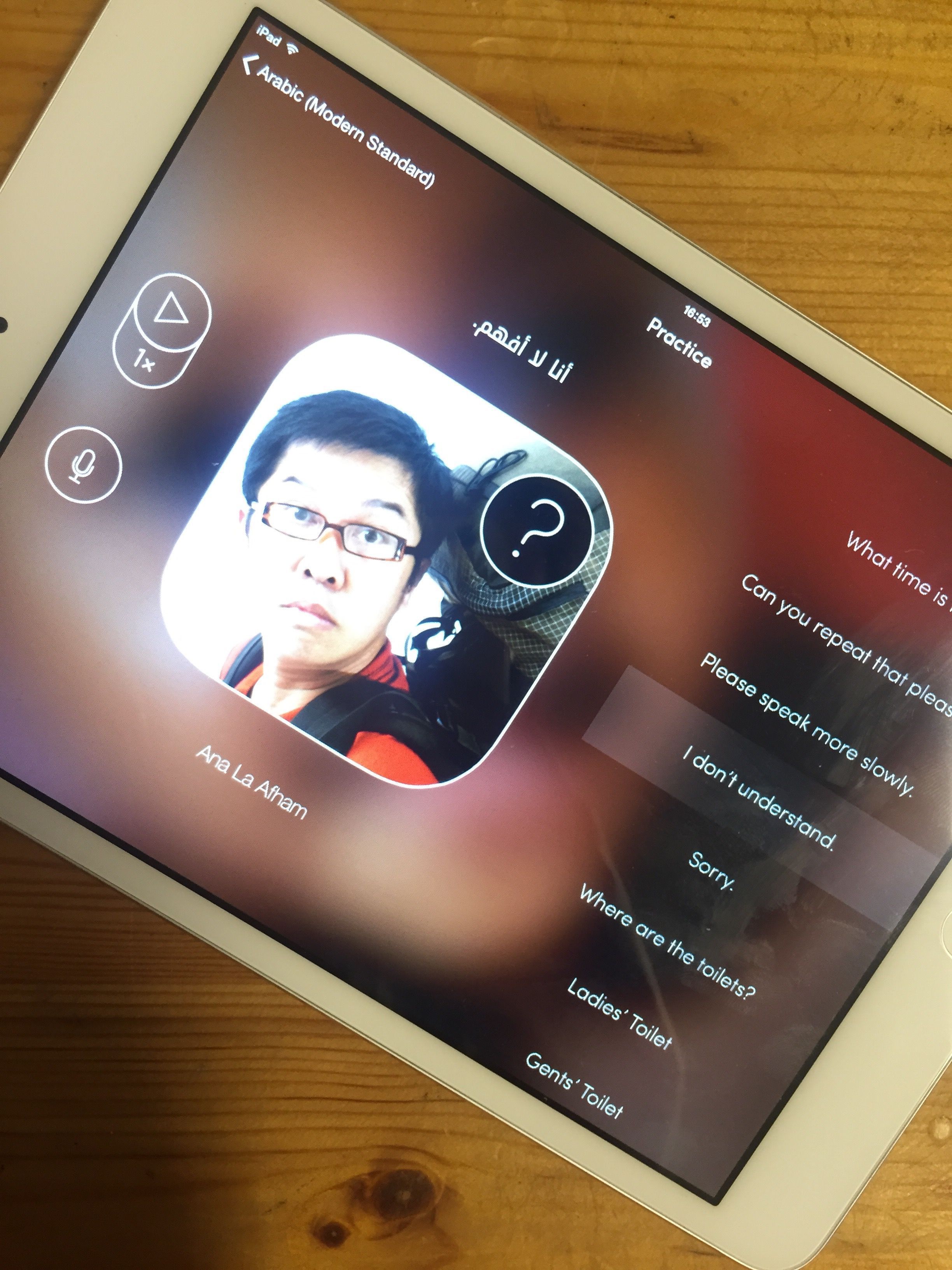
And if you’d like to learn Arabic yourself, you can download our uTalk app to get started for free!
Alex
Learn Chinese? No problem for our Junior Language Challenge semi-finalists!
As a EuroTalk newbie, I had no idea what to expect when it came to the Junior Language Challenge. I have heard a lot of stories (all good, I promise) over the last couple of months on what to expect at the semi-finals. We did a few practice rounds here at the EuroTalk office and I thought we had all done pretty well at getting the hang of Chinese, considering how hard the body game was! However, after the first round at my first semi-final, I realised that we were actually all pretty awful.
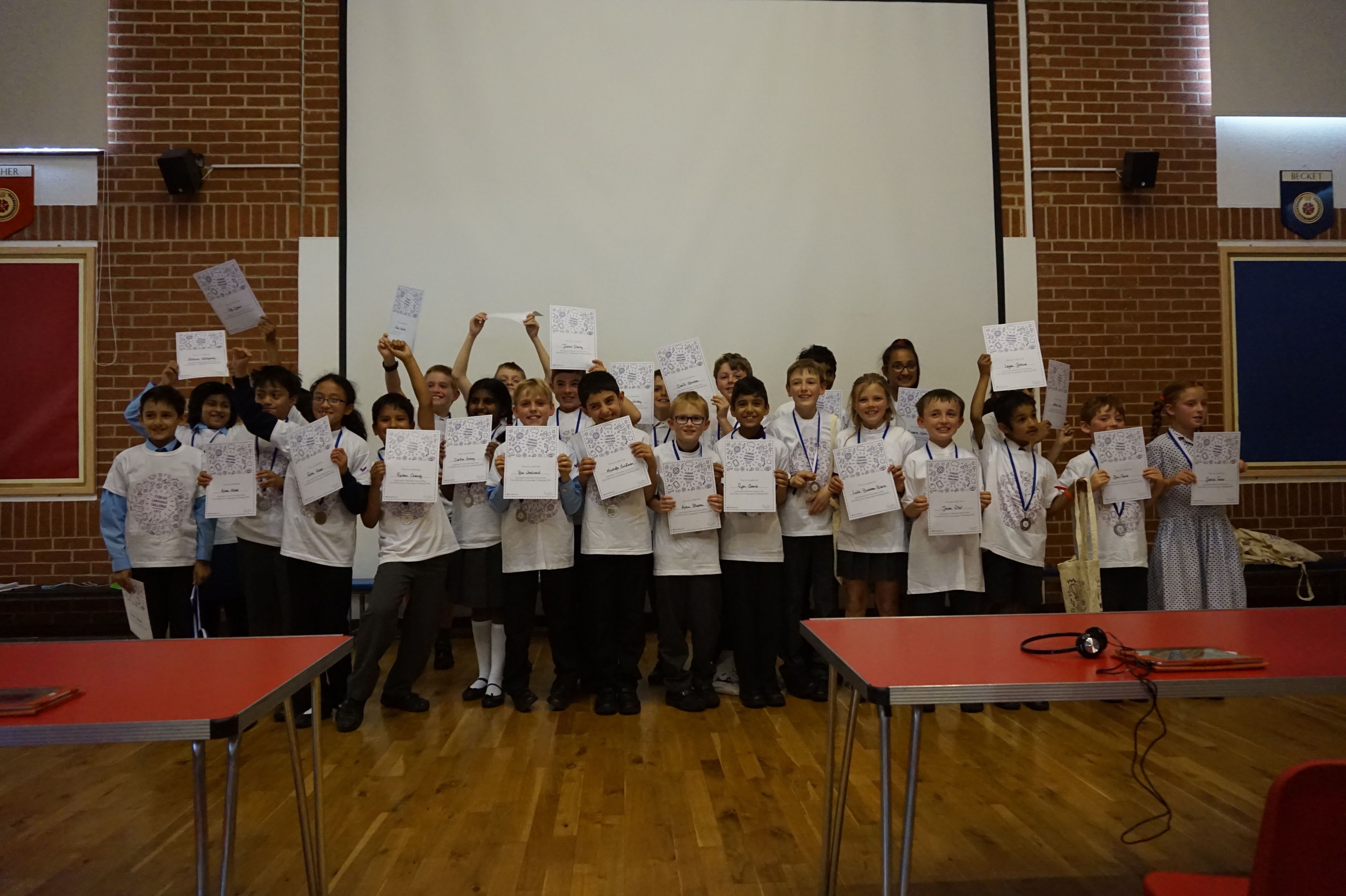
For those of you who are also new to the Junior Language Challenge, it is an annual competition for children who are under 11 years old. It runs from March until October, where the final is held at Language Show Live, London Olympia. Over this period, the children participating learn three languages. This year we chose Portuguese, Chinese and Arabic, three very different and difficult languages to learn. However, the children did not appear to struggle at all; the scores were amazing across all the semi-finals, with children regularly scoring top marks in the games.
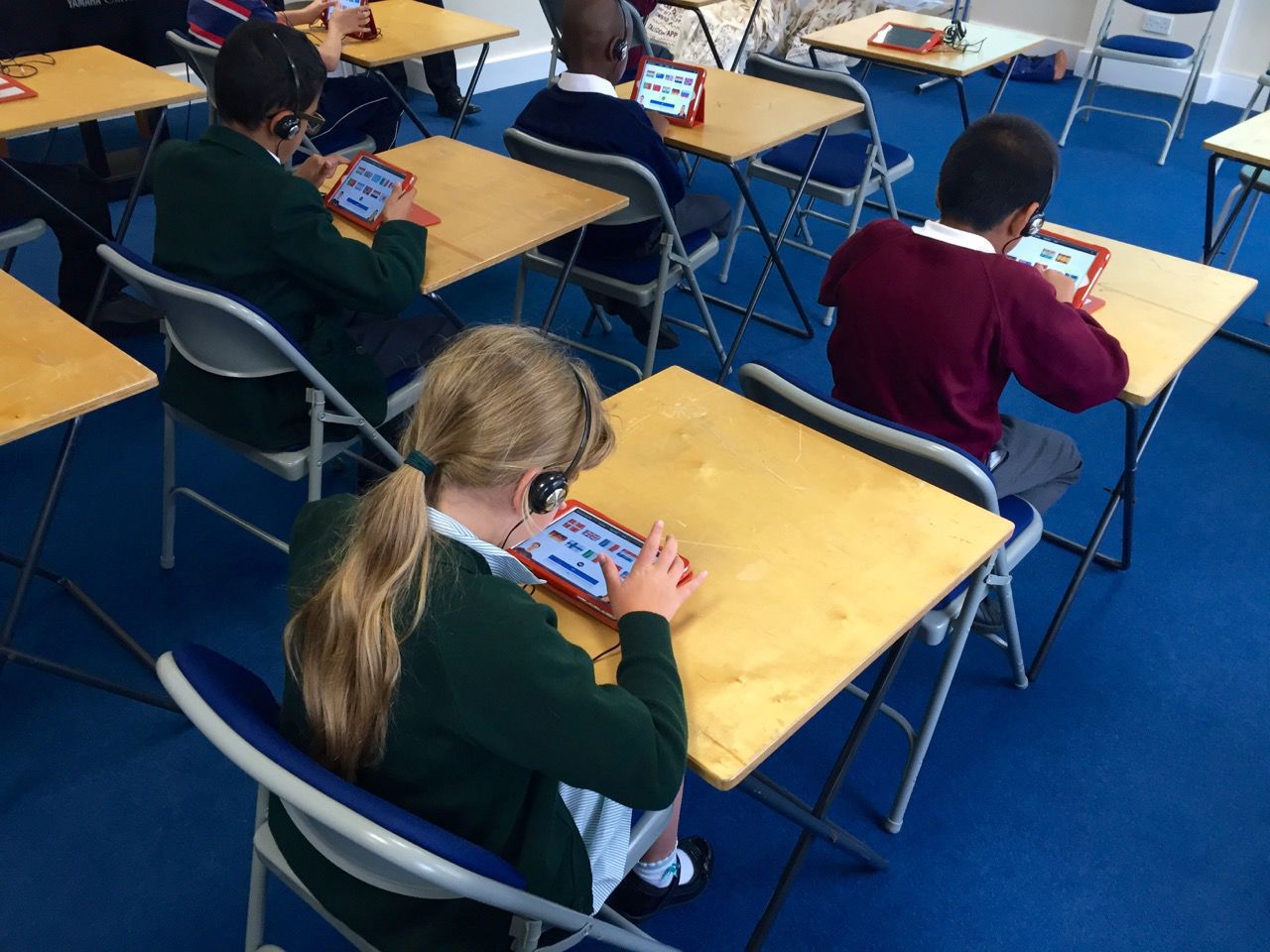
There was a lovely atmosphere at the semi-finals I visited, and both hosting schools were fantastic at making everyone feel welcome (as well as providing us EuroTalkers with a fabulous lunch). The children, teachers and the parents were clearly buzzing with excitement and nerves. Every child put 100% effort into the games, even in the rounds which they made clear were not their favourites!
Even though it’s a competition, it was clear to see there were no hard feelings between the children. All were delighted to receive a goodie bag and a medal, and were eager to find out the final language. The whole thing was organised brilliantly by our marketing manager Liz, and couldn’t have happened without the support of all the schools, pupils, parents and teachers involved; so we thank you all for this! You have also helped us to raise nearly £6,000 for onebillion, who aim to bring education to some of the world’s poorest countries by developing apps. These apps are in the children’s native language and help them to learn maths, English and how to read. This money will help to continue onebillion’s amazing work in Malawi and change the lives of so many children.
The JLC is far from over yet! With the final less than 3 weeks away, on October 16th, the children now have the tough job of learning Arabic for their third language. The 33 finalists will go head to head at London Olympia, for the title of Junior Language Challenge champion 2015, in what promises to be a nail-biting competition. The winner will be going on a family holiday to Africa and we wish everyone taking part in the final the best of luck!

Are you coming to Language Show Live this year? If so, please do come up to seminar room 3 on Friday morning to watch the JLC final – everyone’s welcome!
Alex
