Say what? 10 English expressions you might not have heard before
Here at EuroTalk, we love learning languages, and between us we speak quite a range, including Spanish, Hungarian, Russian, Japanese, German, Portuguese, Latvian, Slovak and more. But one language that the Brits in the office tend to forget about is our own – English.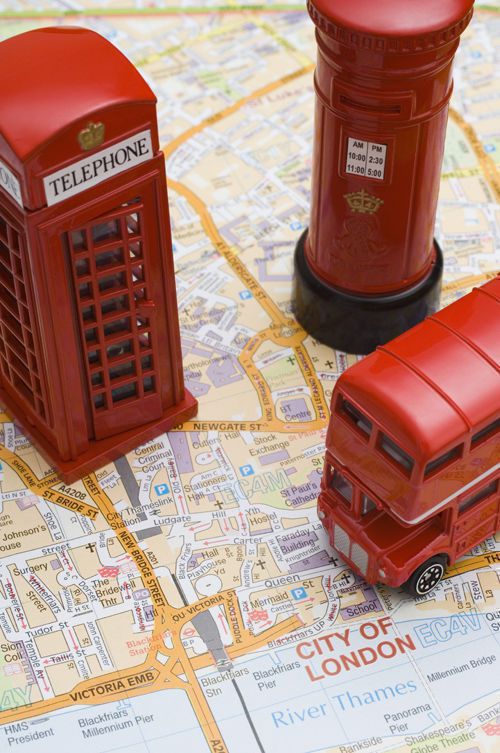
Recently, we’ve had several conversations about the English language, usually inspired by one of our colleagues from overseas asking us what we mean when we use a particular word or phrase. Then Ioana found this article about British slang phrases and wanted to know how many of the listed expressions we use on a regular basis (quite a few, actually).
We thought this might make quite a fun blog post, so here are just a few of the English words our colleagues have discovered since arriving in the UK, along with others that we Brits feel everyone should know…
Pantomime
Discovered by Richard and Pablo
A pantomime (or ‘panto’ for short) is a very British tradition; it’s a musical comedy play performed each year over the Christmas and New Year period. Each town has its own panto, which is usually based on a children’s story and features certain conventions, including the pantomime dame and audience participation (‘he’s behind you!’ etc). It’s something that anyone who’s grown up in Britain tends to take for granted, and is surprisingly hard to describe, as we discovered earlier this week when the guys said, ‘What’s a pantomime…?’
Toad in the hole
Contributed by Gloria
A traditional British dish, consisting of sausages baked in Yorkshire pudding batter. Tastier than it sounds – and there are no toads in it, so we’re not quite sure how it got its name.
Food baby
Discovered by Ioana
We think this might actually originate from the USA, but put simply, a food baby is when you’ve eaten so much that you look a bit like you might be expecting. It’s also Ioana’s new favourite expression.
Numpty
Contributed by Amy
This is basically an affectionate way of calling someone an idiot. If you hear someone say, ‘No, you numpty!’ it means you’ve got something wrong, but don’t be too offended – there are far worse things they could call you. (Another version of this is calling someone a muppet.)
In the doghouse
Discovered by Symeon
If someone’s in the doghouse, it means they’re in trouble, just like a dog that’s been kicked out of the house and made to sleep outside.
Pardon my French
Contributed by Safia
Confusingly, this has nothing to do with speaking other languages. In fact, it’s a way of apologising for swearing, in an attempt to pretend the rude words are a foreign language, even though everyone knows they aren’t. It’s thought the expression originates from the 19th century, when people actually did apologise for using French words, assuming that whoever they were talking to didn’t understand.
Pigs in blankets
Discovered by Franco
Enjoyed particularly as part of Christmas dinner, pigs in blankets are small sausages wrapped in bacon. And they’re delicious. Fun fact: pigs in blankets are known as ‘kilted sausages’ in Scotland.
In a pickle
Contributed by Nat
This one derives from Shakespeare’s The Tempest, and means to be in a tricky situation or ‘a spot of bother’ (another English phrase for you, there).
Snigger
Discovered by Ioana (again)
Sniggering is laughing – but not in a nice way. A snigger is a quiet laugh, often under your breath or behind a hand, at the expense of someone else. We don’t recommend it; it’s mean.
Bodge
Contributed by Luke
Not to be confused with ‘botch’, which means to do something very badly, to ‘bodge’ something is to fix or build something temporarily, using whatever materials you happen to have lying around. The result may not look great, but it isn’t necessarily bad – in fact a bodge job is usually a sign of resourcefulness.
Does anyone else have any great English words you think everyone should know? Or have you learnt a fun English expression you’d like to share? Let us know in the comments 🙂
Why I’m learning Icelandic in January
When Liz asked us if we’d be interested in signing up for her January challenge to learn a language with uTalk, I immediately knew which language I was going to pick: Icelandic. Then she asked me why and I struggled: I don’t have a good reason. I have never been to Iceland, I don’t have any Icelandic friends and, realistically, I’m unlikely to need to speak Icelandic in the near (or even distant) future.
And yet I am incredibly excited about the prospect of cramming as much Icelandic as possible into my mince-pie stuffed head in January, and trying to beat all my colleagues in the challenge. Ever since recording uTalk Icelandic with our genuinely lovely and professional voice artists Saga and Smarri, I have wanted to know more about the language and culture of this beautiful country of Northern lights, roaming wales and unfailingly excellent Eurovision entries.
I’m also a bit of a fan of the Nordic sagas and the idea of being able to vaguely decipher the genuine article with some of my newly acquired Icelandic really appeals. That’s probably a bit ambitious for January, but it never hurts to have a long-term goal, and I’m hoping that the uTalk challenge will start me off on a serious 2015 language quest.

Who else is going to join us?
Nat
Quote of the week: 13 Dec 2014
“If you are interested you’ll do what’s convenient. If you’re committed, you’ll do whatever it takes.” John Assaraf
For more like this, find us on Pinterest.
Embed This Image On Your Site (copy code below):
Why I’m learning Thai in January – a poem
Something a little different today, just because it’s Friday…
Like many of us, Steve will be taking on the uTalk challenge in January 2015, and he’s chosen to explain the reasons for his language choice in verse. As you do 😉
If you’d like to join Steve (in the uTalk language challenge, not the poetry), drop us an email with your chosen language over the next couple of weeks and we’ll let you know how it’s going to work. Good luck!
Last Monday I went into the EuroTalk office, had hardly taken off my hat
When Liz announced to all and sundry: ‘Now here’s a challenge and it’s no trap:
Pick any language from the uTalk App.
I don’t mind which, as long as you try;
You’ll have the month of January, no more,
To use the App and get damn good scores!’
OK, I thought, well … it’s got to be Thai.
Here goes, methinks: it’s a very fine tongue, and could just be a bit of fun!
I go there a lot, it’s lovely and hot, I like Bangkok, the people, the vibe,
But knowing no Thai is something I can’t hide.
It’s a bit of a challenge, it’s a question of pride
I’ll read a menu
In any venue
I’ll not freak out when someone phones
If I can only master those tones
That speakers of Thai use as a matter of course.
I’ll use the App to get damn good scores.
I won’t give up, I will not park it
I’ll have that chat with the guy at the market
To buy my stuff and interact.
I’ll learn some Thai from the uTalk App!

Steve
The importance of Body Language when learning a new language
Today we’re happy to welcome back Izabella Klein, who spent some time with us last year while she was translating the onebillion maths apps into Brazilian Portuguese. Izabella’s new post focuses on a language we all speak, even if we don’t realise it…
Starting next year I will go back to teaching English as a second language. In the meantime I am recalling all the grammar points, reminding myself what to do in a classroom, as well as emphasising the key points when learning a new language. During this process, I thought of myself as a linguist constantly studying new languages: either technical languages or a new language spoken elsewhere in the world.
This moment of reflection and remembrance made me realise in a more mature way how body language is not only important in daily conversation, but it is the ‘real universal language’, since it is the only language that in fact everyone in the world can use. So, it becomes really important when learning/teaching a new language. I would say it is the first key to follow into teaching any new language.
 For instance, how do we recognise body language? Probably when we realise when someone is sad or happy, thrilled or devastated just by their faces and body movements. So body language is when we can interpret without a word being said – only by our eyes observing someone using body language. Old black and white movies are great examples when we notice how they used much more body language than movies nowadays. No sound, no words, all they had were scenarios, costumes and body language to make people laugh or cry.
Now think of an international film festival you’ve been to, or just any foreign movie you’ve watched one day, in a language you either don’t speak at all or at which you are still basic or intermediate level. If you got tired of reading the subtitles, or you’re a language geek like me, always trying to understand what people say even if it’s an unknown language, you had to go with ‘trying to figure it out’ by listening to the sound of the words said by the characters and observing the body language they were using while saying it.
So don’t go taking any conclusion in advance, thinking you will not be able to understand anything at all, just because you don’t speak the language. Relax and watch the movie, observe what the characters do. I bet you will understand more than you imagine and you will learn even if only a little bit of that language.
Meeting foreign people in person and socialising with them is also a great opportunity of observing and learning a new language and culture. We have such opportunities when we travel abroad, have a foreign friend coming over, when we chat with a friend via Skype or similar, or when we have a language teacher.
But if you don’t have those at the moment but you still want to learn, multimedias are really efficient not only for entertainment, but for education purposes as well. We are able to observe images, while we listen and even read. We use both our eyes and our ears; these senses, at the same time connected and alert, increase learning possibilities. And we see not only scenarios and costumes that help identify cultural aspects. We also see body language as a key to trying to figure out what is being said or even really understand what is being said, together with words that might sound familiar due to having the same linguistic routes as another language you already learnt.
Did you ever have a language teacher trying to introduce some new vocabulary in class, acting like a drama teacher, using a lot of mimes and weird sounds trying to make you understand the meaning of the new words? She was not just acting CRAZY, she was trying to make you learn like babies do, by observing. So, pay attention to body language, it will definitely help you learn other languages. As for me, I will probably take drama classes to help me improve my body language skills in class…
Izabella Klein
