How much money are you wasting on language software?
So, you’ve decided to learn a language. Great! Now what?
If you’re anything like me, you’ll have gone straight to the Internet in a fit of great enthusiasm, and bought yourself a language course – whether that’s in an app, on a CD or online. You might even have gone a step further and enrolled in a class.
But then the sun comes out, or the World Cup kicks off, or you decide to start reading the Game of Thrones books (only recommended if you have nothing else to do with your time for at least six months), and that passion for your new language starts to fade a little bit. Suddenly there are other things to do with your time, and although you definitely still want to be able to speak the language, you just don’t seem to have the time or enthusiasm to actually learn it.
And so that language course you bought, which promised so much, is forgotten and unused, and your dream of going travelling and fitting in like a local remains just that – a dream.
Can anyone else hear violins…?
It might sound obvious, but the thing about language courses, whether it’s EuroTalk, Rosetta Stone, Duolingo or any of the other multitude of programs out there, is that they’re only as useful as you allow them to be. I wish I could tell you that simply by downloading uTalk to your iPhone, the vocabulary will magically find its way into your brain while you’re sleeping, but it’s just not true (although if you want to try it, it’s available from the App Store).
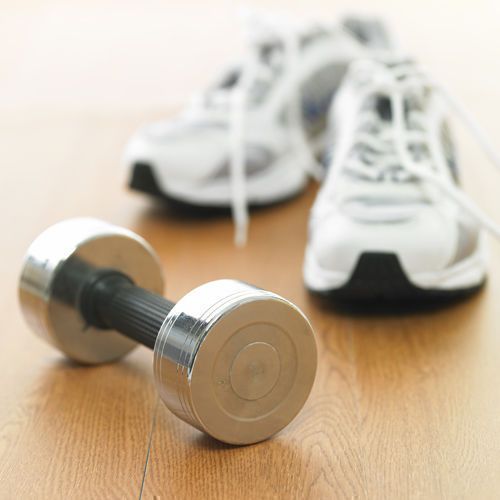 Let’s look at this another way. You want to lose weight, so you join a gym. Logical. Maybe you even go along a few times after work. But then six months later you’re still not skinny, and on top of that you’re out of money and you probably feel pretty bad about yourself too. According to research by online accountants Crunch.co.uk, here in Britain we were wasting £37m a year on unused gym memberships in 2011. Just think what we could have been doing with that money. Or how fit we could all have got if we’d kept going to the gym.
The fact is, gyms don’t magically make you fit, or thin. (If it were as easy as that, I’d have joined one a long time ago.) They just provide the conditions you need to get yourself there. Even a personal trainer, whose job it is to help you, will only get so far if you’re not willing to meet them in the middle. And it’s the same with language software – if you don’t use it, it can’t help you. We’d all love a big red button that will get us instantly to where we want to be, but life isn’t like that.
And that’s not necessarily a bad thing. Learning a language isn’t just about being able to speak that language. It’s also about the things you’ll discover along the way. You’ll learn to appreciate your own native tongue, understand the culture of the language you’re learning; you might even make a whole new group of friends. And personally, I think the satisfaction you feel the very first time you manage to speak to someone in another language, even if it’s just to say hello or thank you, is much greater than the pleasure you gain from becoming fluent. In the same way, reaching your target weight will feel amazing – but nothing will beat that first pound you lose.
So my advice is this – don’t buy language software, unless you’re going to use it. Because as the late Maya Angelou once said, ‘Nothing will work unless you do.’ And we don’t want your language app gathering virtual dust on your iPhone, until one day you realise you don’t need it any more and quietly delete it.
But if you do decide to invest in a course (hopefully EuroTalk!), and you follow through on that crazy plan you had one day to learn Russian, or Korean, or even Klingon, that’s great. I guarantee you won’t regret it – and it’ll definitely be less painful than going to the gym.
Liz
Quote of the week: 21 Jun 2014
“Translators are like ninjas. If you notice them, they’re no good.” Etgar Keret

For more like this, find us on Pinterest.
Embed This Image On Your Site (copy code below):
An update from Malawi
As you may know, EuroTalk have been working for several years towards the goal of bringing the best possible education to one billion children in developing countries. This work is something we’re very passionate about, and so we’re excited to announce the birth of onebillion, a charitable organisation set up by Jamie and Andrew from EuroTalk to focus solely on making this vision a reality. EuroTalk are proud to support onebillion as they continue their vital work, and we’ll be bringing you regular updates and news on what they’ve been up to.
So for today’s post, it’s over to Alex for an update from Malawi:
Over here at onebillion, we’re working hard on producing the final six topics for Maths, age 4-6, writing and programming a practice app to accompany Maths, age 3-5 and planning a whole lot of new Learn to Read and Letters and Sounds material. We’re also making progress, slowly but surely, towards expanding our Masamu (maths) project throughout all 5,000 schools in Malawi!
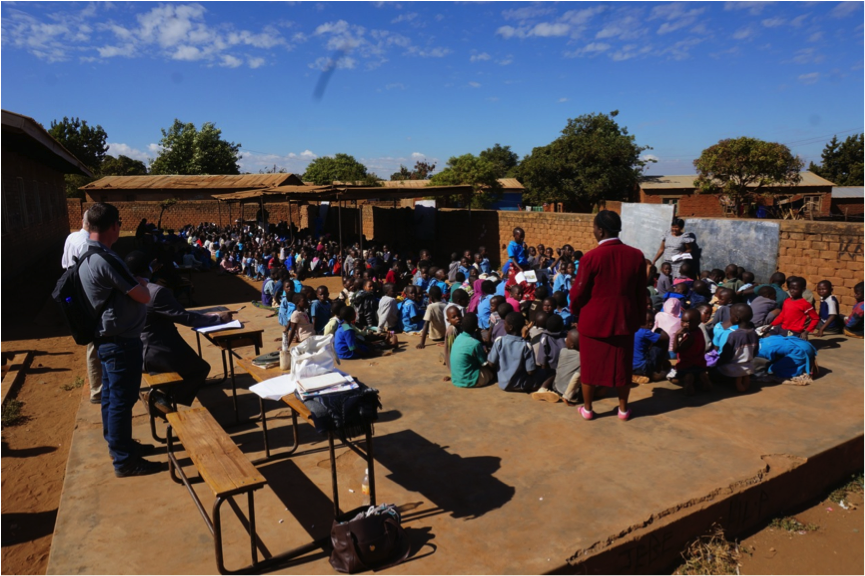
So, what have we been up to in Malawi recently? Well, first and foremost, we’re in the process of looking for a second school in which to implement our Masamu intervention. This has been running successfully at Biwi school in Lilongwe for almost a year now and an independent study by the University of Nottingham has shown that using the apps for as little as eight weeks can drastically increase children’s level of maths knowledge. So Andrew and Jamie have spent a couple of days at Ngwenya school, also in Lilongwe, to assess its suitability as a second school for us to get working in. Ngwenya seems to be a well-organised school, and even has desks in its classrooms! However it is a huge school with 5,000 pupils in total – meaning it will pose some challenges in terms of scaling our current intervention.
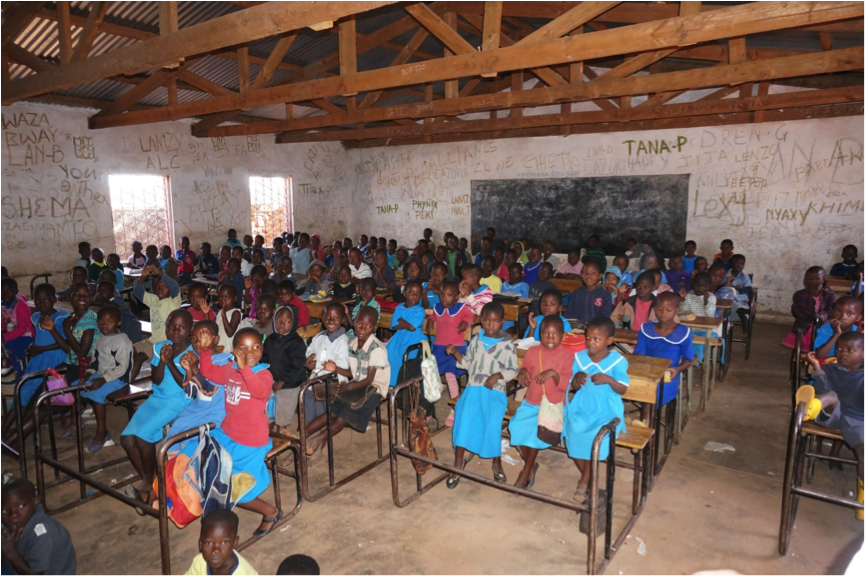
Work is already under way to construct a new learning centre in the school, like the one we’ve been using at Biwi, where the children will have a dedicated space to come and work in, and there will be somewhere to store and charge the ipads.
Speaking of charging the devices, we’ve also been road-testing solar-powered charging to allow large quantities of iPads to be charged even in rural schools which may not have electricity. Biwi school has access to a power socket in the head teacher’s office, but this is restricted to just the one room, and even this is fairly uncommon in Malawian schools, so finding an alternative way to charge the devices was really important to us, and will continue to be as we look at scaling further afield in other parts of Africa.
Our solar charging stations have been working great so far, and are simple for the teachers to use.
We’ve also just implemented our brand-new battery-powered, low-cost printers at Biwi. These allow the children to immediately print their certificates which they win as they complete each topic within the Masamu apps. These are printed on a cheap and durable receipt-style paper, which is a simple and low-cost way for the children to see the results of their hard work, and the teachers to keep records of their achievements. This will work hand in hand with our new server version of the apps, which was the main purpose of Jamie and Andrew’s visit. It allows us to receive data from schools in Malawi almost instantly, keeping us up-to-date on which children have completed which topics, and their results. Hopefully we’ll start to receive data from the server within the next week or so, and will be able to see the apps being used in real time.
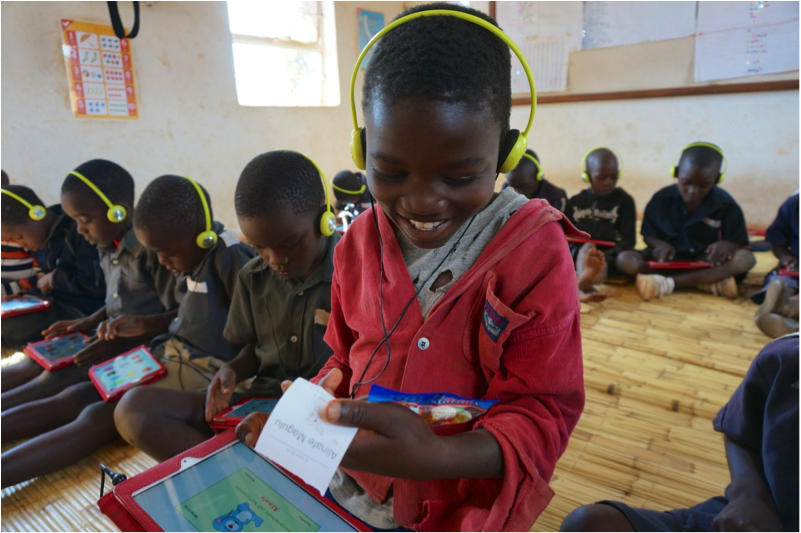
So it’s onwards and upwards in the onebillion office, and we’re really excited to see results coming in from Biwi school and to get our Masamu apps into Ngwenya school. We’re also hoping to get some new topics ready in Chichewa within the next couple of months, which will extend the current Masamu 4-6 app from twelve to eighteen topics!
You can find onebillion at onebillion.org.uk, like us on Facebook or follow us on Twitter @1bnchildren for news, updates and pictures from Malawi.
Alex
Quote of the week: 14 Jun 2014
“To learn a language is to have one more window from which to look at the world.” Chinese proverb

For more like this, find us on Pinterest.
Embed This Image On Your Site (copy code below):
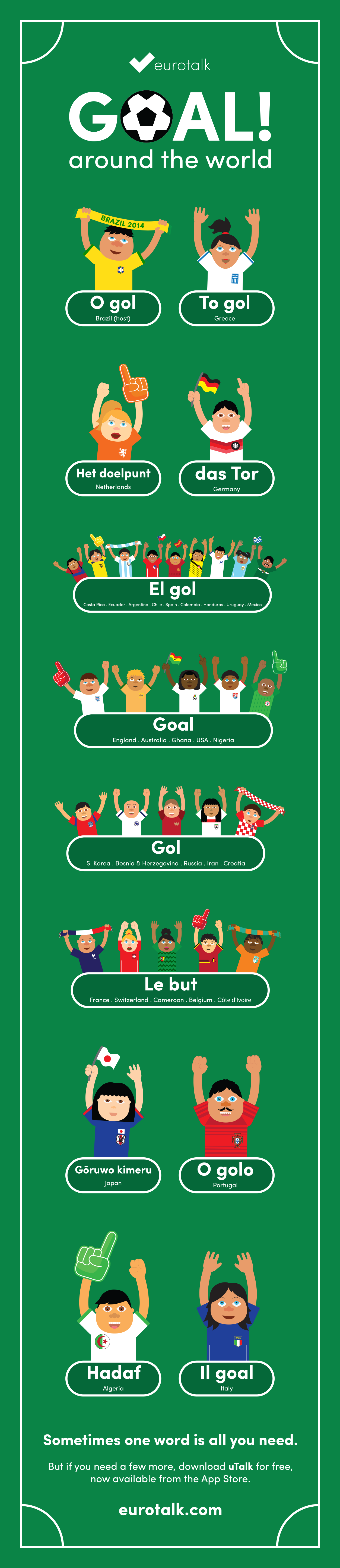
Goal! around the world [Infographic]
Sometimes one word is all you need… With the World Cup getting underway today, here’s how each national team says that all-important word, ‘goal’.
You can find this and lots more in our language learning app, uTalk – available to download and start learning right now from the App Store. So whether you’re watching the football at home or away, you’ll always be prepared.
(There are lots of non-football related words in there too, for those of us with other interests!)
Please do share the infographic with friends and tell us how you’ll be shouting ‘Goal!’ this World Cup 🙂
Embed This Image On Your Site (copy code below):
