Valentine’s – it’s not all flowers and chocolates…
Valentine’s Day is here again, and like a lot of people, I’m a bit fed up with it. I’ve lost count of the number of emails I’ve received over the last few weeks, inviting me to use Valentine’s as an excuse to buy everything from chocolates to an iPad – I even got one suggesting I should hire a private jet (yes, really) to surprise my loved one.
 Here in the UK, Valentine’s Day is very much a day for couples, and has become known as a very commercial holiday. The usual traditions are cards (sometimes anonymous), flowers, chocolates and candle-lit dinners. But not all countries celebrate in the same way (or even on the same day). Here are a few alternatives:
If you thought celebrating Valentine’s once a year was enough, think again. In Japan February 14th is just the start, when women give chocolate to the men in their life. This doesn’t have to be just boyfriends and husbands but can also include co-workers and friends. Then on March 14th, which is known as ‘White Day’, the men give the ladies a gift of greater value (sounds good to me!). Going one step further, in South Korea, the 14th of every month is a love-related day of some kind. On April 14th, anyone who didn’t get a gift in February or March is expected to go out and eat black noodles in recognition of their single status.
In some areas of Latin America, Valentine’s is known as ‘Dia del Amor y la Amistad’ (Day of Love and Friendship). It’s celebrated with ‘Amigo secreto’ (Secret friend), which is similar to the Secret Santa tradition at Christmas and involves buying a gift for a friend selected at random.
In Catalonia, Spain, loved ones exchange gifts on Valentine’s Day and also on 23rd April, which has become known as ‘El Dia del Llibre’ (Day of the Book) because it’s the day that both Miguel Cervantes and William Shakespeare died (in 1616). Women traditionally give men books as gifts, while the men reciprocate with either a book or a rose. Bookshops and cafes hold book-signings and public readings to celebrate the day.
Finland celebrates ‘Ystävänpäivä’, which means ‘Friend’s Day’. Although it is becoming an increasingly popular day on which to get engaged, the main focus of the day in Finland is to celebrate friendship of all kinds, and presents are exchanged between friends as well as lovers.
And finally, France. A (now banned) custom used to be held, known as the ‘loterie d’amour’. Single men and women would enter houses facing each other and call to one another until they were all paired off. Afterwards, any women who were left single would build a huge bonfire and burn images of men who had hurt them, whilst screaming abuse at them. Eventually the ‘loterie’ was banned by the French government. I wonder why.
So, Happy Valentine’s Day everyone, wherever you are and whether or not you’re part of a couple – we all have special people in our lives, so let’s celebrate them 🙂 Will you be doing anything special or unusual to celebrate? Let us know!
Liz
Dinner starts with family
For most people, ‘Chinese food’ would represent the customary weekend or end-of-the-month takeaway, which could include chicken fried rice, spring rolls or even barbeque spare ribs. It is a fact – little known as it may be – that many Chinese families do not eat these dishes on a regular basis. Most of them are probably cooking meals like these daily and are sick of it! 🙂
 Ever since I was young, my parents have stressed the importance of traditional Chinese cuisine, and as chefs, they know it’s all about the flavour. Dinner is the most important meal, as this is the time when all the family sits down to eat.
The main ‘ingredient’ to a usual family dinner is steamed rice or ‘fān’– always white long grain rice, never wholemeal or pre-boiled, and it is always cooked in a rice cooker. Each person at the table has their own bowl of rice and they each pick some ‘sūng’ – dishes that are laid out in the middle, so everyone can have a bit of everything. ‘Sūng’ can be things such as steamed fish with ginger and spring onions, cured meats or mixed leafy green vegetables with oyster sauce. My father does most of the cooking so he sometimes creates his own dishes, such as stir-fried tofu with pork and sweetcorn or marinated chicken wings.
The number of dishes available varies to cater for however many people are at the table, and dinnertime is only over when all of the dishes are eaten – it is sometimes a tough job but it has to be done!
Since living in London, I have tried a number of different cuisines, such as Greek, Lebanese and Japanese, but nothing seems to fill in the gap of a family dinner. Regardless of whether it is Chinese New Year or even just to celebrate the fact that it’s Sunday, I have been unable to indulge in the comforts of a close-knit family dinner as often as I would like to and the idea of resorting to a takeaway, just to fill the void, seems like a somewhat empty substitute.
Has the family dinner gone out of fashion or to some people, is there no place like home?
Katie
Christmas celebrations!
Today is our last day in the office before the Christmas break. It seems like it’s crept up on us this year but now with just two days to go, we’re starting to look forward to our various celebrations. I asked a few people how they’ll be celebrating this year.
Lotta:
My mother is Finnish so we (my three siblings, partners, niece and nephew) have our Christmas meal and presents on Christmas Eve at her house, which is always beautifully decorated Scandinavian style (no tinsel!). That means Christmas Day is like Boxing Day where we just chill out, watch TV and have left overs.
On Boxing Day (26th December) I will cook at my house and have some of my husband’s cousins over, who are from Albania and don’t really celebrate Christmas, but like to get together – and will hopefully like my cooking!
Katie:
I go to my parents, who live up north, and because they live in the middle of nowhere, it’s a nice, quiet setting to celebrate. On Christmas Eve, I help prepare the veggies and set the table so all my Dad has to do is cook the dinner on the day! We exchange presents at midnight and on Christmas Day, we have dinner around 2pm before settling into playing some mahjong with the family.

Zsolt:
We usually buy a Christmas tree, then we spend about two hours in squeezing the Christmas tree into the previous year’s Christmas tree stand which is usually much smaller than the current one. After realising how many things we haven’t bought for the Christmas dinner, we start to decorate the tree and then get a surprise when we see that the cheap Christmas tree lights that we bought in the market for £0.99 don’t work.
When we have enough stress, we start cooking and feel happy because we have a lot of time until our guests arrive, then suddenly someone rings the door bell. Our uninvited guests enter the flat and start consuming half of the food we planned to serve for the dinner.
Hanna:
I’ll be celebrating in Finland by eating too much Christmas ham, going to a Christmas concert, and listening to the Declaration of Christmas Peace. I wanted to go skiing but there’s no snow 🙁
Sheila:
I am trying to make a Trinidadian rum cake for Christmas this year… this is the first time I’m trying to make it – it’s an old family recipe. When I was younger my Gran used to send one in the post every Christmas. Preparations started in August! Step 1 is soaking lots of fruit in rum and cherry brandy for a few months…
Peter:
In the Ukraine we celebrate Christmas on 7th January. Children go from house to house and when people answer the door the children throw a handful of grain then sing a song in exchange for sweets or money (sort of a combination of Halloween and carol singing).
We’d love to hear how you plan to celebrate the holiday. Have a lovely Christmas and New Year everyone. We’ll be back in 2012!
Liz
The Footballer’s Hidden Skills
‘Footballers are a bit dumb.’ This is a general assumption that has existed for as long as I can remember. It also makes it a little easier when you think about the vast sums of money that most get paid. However, what would happen if they suddenly stopped receiving these large weekly amounts? This may sound a little bit of an irrelevant question but this is exactly what happened to many footballers on the continent earlier this year. With arguments about television rights in Spain many of the smaller clubs from La Liga (Spain’s equivalent to the English Premier League) owed players over three month in wages. It would have been a stark realisation for many of these young players that it did not matter if you earned €100,000 a week or €100, rent and mortgages still need to be paid on time, whether you are a footballer or not.
In this case a players’ strike at the start of the season garnered support and action for many of the affected footballers. It got me thinking however, what other attributes do these players have to use in the ‘real’ world? Could a job in languages be a realistic goal?
 If you take the Premier League for instance, there are 72 different nations represented. Now remove Britain, Ireland, America and a couple of other Commonwealth countries; that leaves representatives from 64 separate countries without English as their first language. Considering that the vast majority are now bilingual this is already an impressive item to add to their CV, but if you look at a select few they could shine in a multilingual environment:
Thierry Henry (NY Redbulls) – 4 – English, Italian, Spanish and French
Cesc Fabregas (Barcelona) – 4 – English, French, Catalan and Spanish
Zinedine Zidane (France) – 3 – English, Spanish and French.
The most I can seem to find, however, goes to our local Fulham centre back and Swiss international Philippe Senderos, who speaks six languages (English, French, Spanish, German, Italian and Portuguese), a total that many professional linguists would struggle to contend with.
In a small attempt to dispel the notions that the British are completely monolingual I would like to mention Gary Lineker (English, Japanese and Spanish), Owen Hargreaves (English and German), David James (English and Spanish) and Sol Campbell (English and French).
The variety of languages in the English League alone can lead to problems within teams and especially within management. Chelsea is a prime example where language skills have come to the forefront of the players’ regime. With a multitude of spoken languages, the first ruling of Andre Villas Boas (the current Chelsea manager) was to state that only English was to be spoken at the club, to bring a common language to the players who would otherwise separate into groups based on their mother tongue.
With Villas speaking four languages himself, it has become an integral part of his management style. New Spanish signing Juan Mata stated that understanding the instructions in English is challenging to begin with, but the squad helps out any new team mates who are struggling. With personal problems, however, Mata says that the manager would take him to one side and have any personal conversations in Spanish to allow him to fully express himself; this demonstrates the diversity an extra language can give, especially in management roles.
There is one English based Chelsea induction that the Spaniard could not escape – the tradition of Chelsea’s karaoke initiation, where a song has to be sung in English in front of the entire squad. Mata’s choice? The Macarena… It seems that although we may not be able to write off footballers as talentless off the pitch, due to the language skills that many have learned, we may be able to continue with the assumption that they have some terrible taste.
Glyn
A visit to Malawi
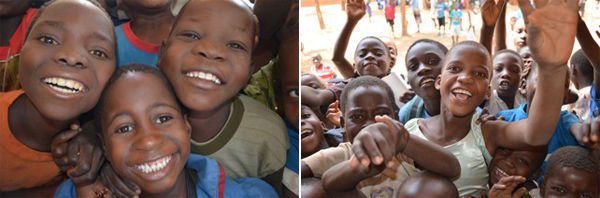
I visited Malawi for a week last month. My first impressions were the enthusiasm and happiness shown by so many Malawians. But real problems are just under the surface. For example, a serious petrol shortage means at least eight-hour waits at petrol stations.
During my visit, we installed gadgets (iPod touches) in two locations:
Primary school
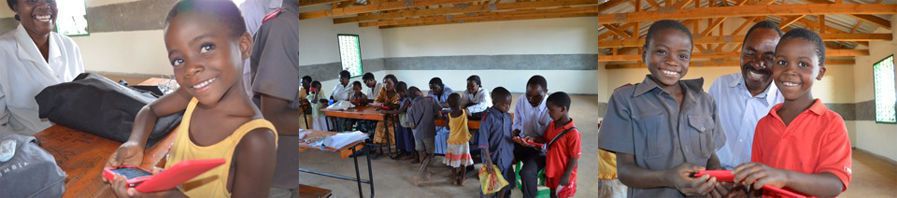
Here we supplied the iPods to ten Standard 1 and 2 teachers (the first two years of Primary education) in a primary school with 5,000 children. Each teacher has a class of more than 250 children. The whole school has 24 teachers – including the head and deputy. The deputy head is paid £80 a month – and needs to spend £40 a month on rent. He has to buy everything for his children and extended family on £40 a month.
Since I got back, the headteacher has written to me:
“How is London these days? Malawi is good and we are waiting for the first rains ready to plant crops since Malawi depends on farming. Andrew I’m pleased to tell you that our pupils have started scoring the stars on the charts using the devices. We are now giving the stars, which is encouraging and interesting.”
Hospital
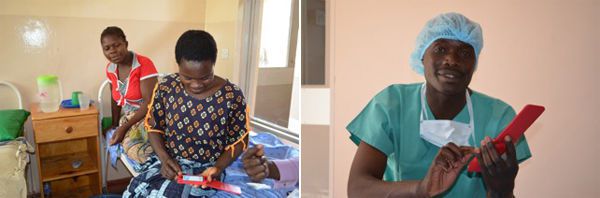
Here I met with some women who had had a fistula operation.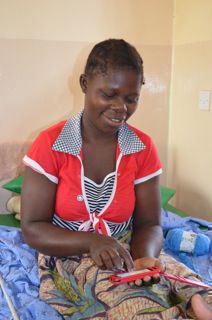 These are women who have had problems giving birth. They not only lose their baby but are damaged – and become incontinent. As a result they are often rejected by the village society and treated like “modern day lepers”. I met one woman who got a fistula as she gave birth 45 years ago. Her whole life changed, as she suffered first the trauma of losing a baby and then being rejected by all around her. The operation takes about three hours, but all the ladies need to be in hospital for a month. Their lives are transformed in the most profound way. EuroTalk have donated software and gadgets for these ladies to use while in hospital. These gadgets had preinstalled language learning and maths apps in English and Chichewa, as well as Malawian music, photos, video clips, lesson plans etc.
The hospital anaesthetist has written:
“… the mothers really like the iPods to the extent that when I am busy they even call for them. Some of our young patients are turning into teachers of elderly patients.”
We are planning an update to the digital resources for the school and the hospital early next year.
I also met with members of the Scottish Government, who were visiting Malawi. The SG and EuroTalk are jointly funding the devices and software for these gadgets to go into 30 schools. It’s a really exciting project!
On a personal note, I was really encouraged by this visit. It follows so much work done by so many people. The potential for low cost digital devices and software in local languages to deliver education is enormous. Thank you to so many at EuroTalk, past and present, who have turned ideas into a reality.
Andrew (EuroTalk Managing Director)
