Are you learning an endangered language?
We’re now into the third week of our uTalk Challenge! Over 350 people are taking part and over 40 languages have been chosen to learn! The most popular languages are some of the most spoken ones in the world like Polish, Spanish and Japanese.
Interestingly, we also have some endangered languages chosen. UNESCO publishes a list of the languages that are classed as endangered; there are five different levels, from Vulnerable (most children speak the language but only in restricted places) to Extinct (no one speaks the language anymore). Some of these surprised as me as Welsh, Scottish Gaelic and Irish are all on the UNESCO list. Hawaiian is on the list as ‘critically endangered’, which is one level away from being extinct, due to the speakers of the language being the oldest generation of the family.
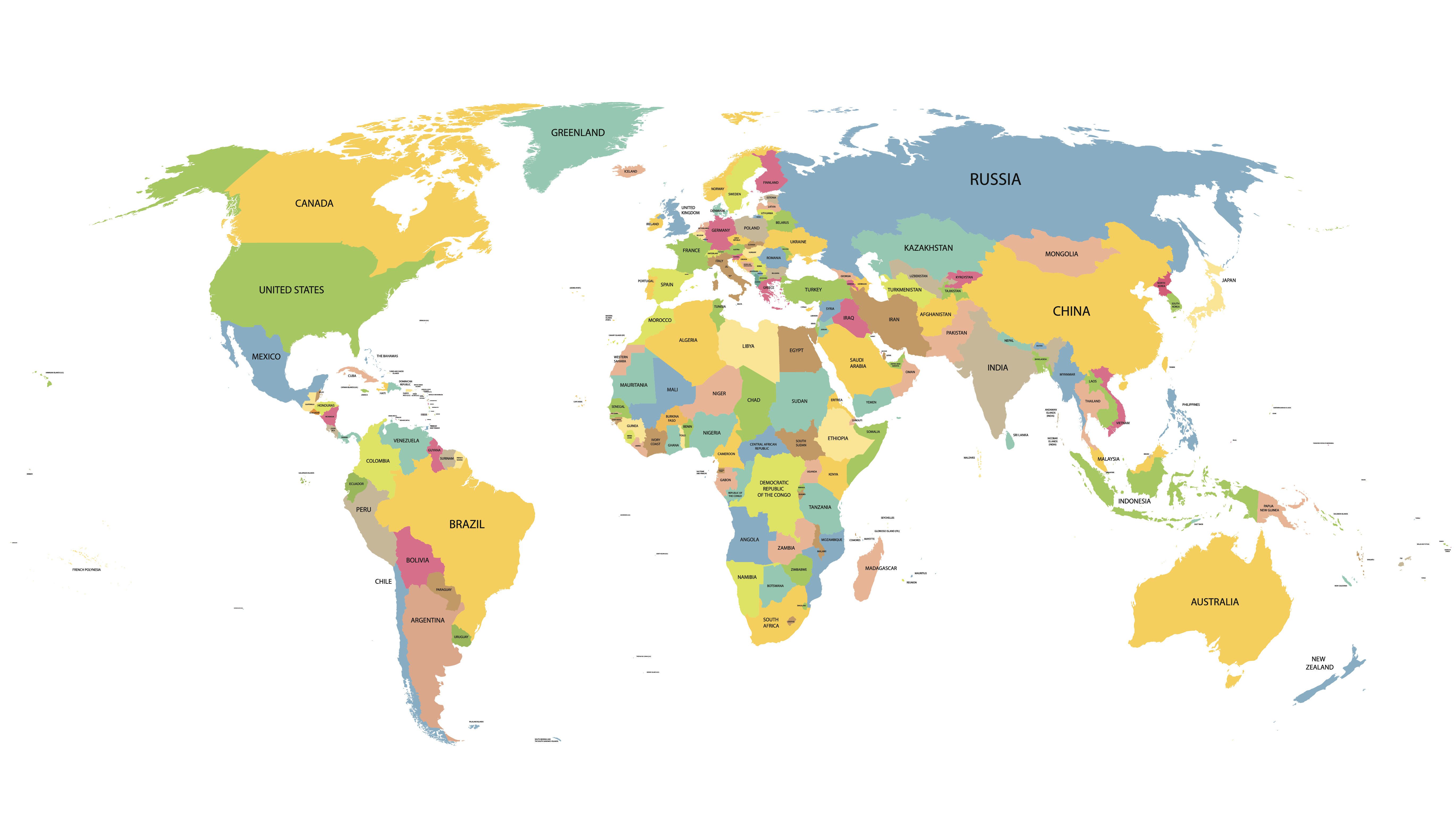
When it comes to our uTalk Challenge here are the four of the endangered languages that have been chosen:
Basque
There are around 660,000 speakers left of this language and although spoken in Europe it’s not classed as the Indo-European family of languages, potentially due to it being totally unique, with no similarities to any other languages. There are many theories on where the Basque language comes from, but none of these have conclusive evidence. One of our uTalk Challengers, Patricia, is learning Basque and quickly selected ‘garagardoa’ as her favourite word for beer in any language! Find out why in her video.

Scottish Gaelic
It is quite clear that Scottish Gaelic is spoken in some parts of Scotland, mainly in the Western Isles. It is one of the three languages in Scotland, with English and Scots also being spoken. Scots is also classed as an Endangered language, but on a lower level than Scottish Gaelic. There are around 60,000 people who speak Scottish Gaelic still. However, across many Scottish schools the introduction of Scottish Gaelic began in the 1980s, with it now being taught across primary and middle schools.
Welsh
Welsh is Britain’s oldest language, dating back to around 4,000 years ago. Today there are 750,000 speakers; this is around 20% of the Welsh population. Welsh is most popular in the west of the country; however, there is evidence that more schools in Wales are now teaching the language. Within Wales there are two main dialects, North and South Walian. It is hard to establish where these two dialects cross over, as they both have different accents, vocabulary and grammar points. Liz and Nat from the EuroTalk office are learning Welsh for the challenge (in fact Nat’s already completed the app because she’s much better at languages than the rest of us!).

Wolof
This is one of the six main languages in Senegal. Originally written with an Arabic alphabet, it was then standardised using the Latin alphabet. A lot of Wolof speakers use French loan words when speaking the language, which could be one of the reasons Wolof has become an endangered language. In certain urban areas of Senegal people use a mix of Arabic, French and Wolof but in Gambia they use English words as loan words instead.
Do you speak any endangered languages? Please let us know on Twitter or our Facebook page. Or if you’d like to learn an endangered language, you can find all of the above and more in our uTalk app.
Alex
How to keep New Year’s resolutions
We’re well settled into the new year and we’re all full of hopes and dreams for the next 12 months – learning a new language, getting fit, changing our job, travelling more. Most likely in the first week of the year you were super pumped, ready to drop anything to stick to your main goal(s).
By the time the second week came however, you kind of settled in, relaxed the rules a bit and got back to some of your old habits. When January’s over, your goal will be completely forgotten like it was never there and you’re going to be thinking ‘how silly of me to think that I could learn Spanish’.
That can be one of the ways the future looks. Let’s take a different turn. Lets push through the phase when we want to give up and see what happens. The other road is familiar but wouldn’t it be nice to see what else can happen? What if you did learn Spanish this year? You could read books in Spanish, and you could talk to other Spanish speakers, and on your next holiday in Spain you could strike up a conversation with a stranger and end up making new friends.
Studies have shown that the human brain tends to value immediate rewards more than future rewards. When you set a goal or a resolution you are in fact making plans for your future self and it ‘s easy to imagine how your life can look. But, when the time comes that you actively pursue that goal most people choose immediate gratification and opt to do what they feel like in the moment.
Now that we understand how our mind works, it’s time to find ways to stop this from happening.
- Start slowly and build a ritual. Set yourself to practice for half an hour a day – that’s not too much to ask right? Offer yourself a reward after – if you’re learning a language with uTalk, the reward comes in the form of earning points and we all like to build up to a nice score, right?
- Put aside some of your other tasks. Obviously not work or eating but if you usually browse the Internet while commuting why not replace that with your main goal?
- Keep your eyes on the prize – never lose sight of your motivation. Look at pictures of beautiful Spanish landscapes and imagine yourself having a chat with the locals, or listen to Spanish songs and try to understand the lyrics.

I hope this helps you push through the temptation of giving up and will ultimately get you to your goal. And don’t worry about making mistakes; the only person who loses is the one that gives up, so no matter how slow you are going, it’s still better than if you weren’t doing anything.
And if your goal is to learn a language (or twelve…), there’s still time to join the uTalk Challenge!
Ioana
#uTalkChallenge – how did we do in week 1?
So, we’re a week into the uTalk Challenge… Thank you to everyone who’s thrown themselves so enthusiastically into learning a new language this month – we’ve been really impressed with your commitment and fantastic scores.
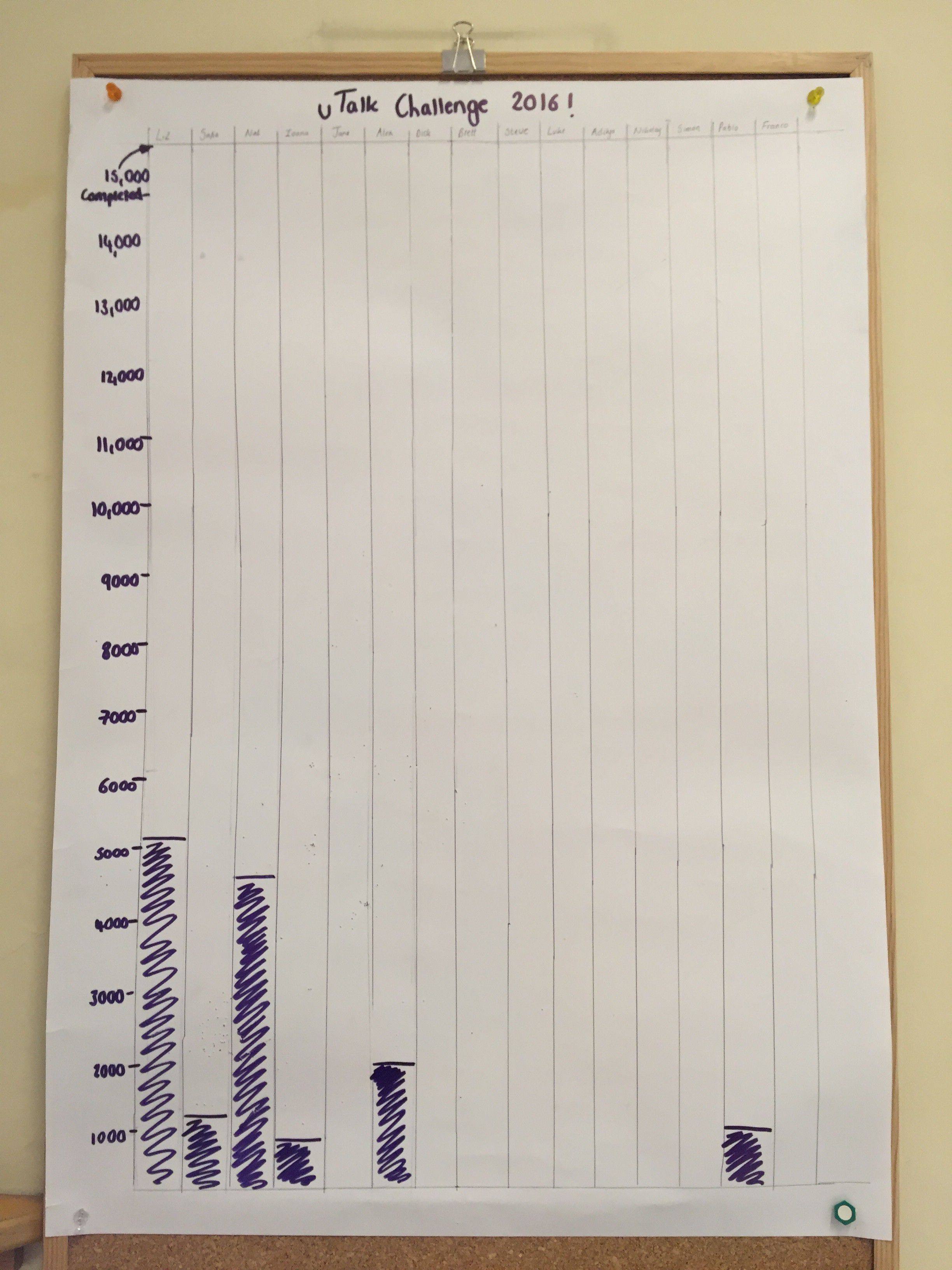
You may remember that we EuroTalkers are also joining in, learning a variety of languages for lots of different reasons. And because we’re a competitive bunch, we’ve set up a scoreboard in the office – right now, Liz and Nat (both learning Welsh) are in the lead, but that could all change over the weekend…
Each week, we’ll be sharing a video update in which a few of us will share what we’ve been learning. For week 1, we’ve got Safia (learning Mandarin Chinese), Ioana (learning Argentinian Spanish) and Liz (learning Welsh). How did we do?
If you’d like to share your own progress, please drop us an email to challenge@eurotalk.com, or – even better – send us your own video, like this brilliant one from Patricia!
Good luck, enjoy and have a great weekend 🙂
4 reasons to learn a language this New Year
I don’t know about you, but I love New Year’s Eve. Not because of all the parties (twelve months ago I saw in the new year at home with a cup of tea, because I’m that cool), but because it’s a great time to set some new goals.
Of course, you can set goals any time, but there’s something special about the fresh start that comes with a new year. It’s like the first page of a brand new notebook; any previous failed attempts or mistakes are erased and you can start over with a clear target in mind.

Yesterday the British Council, supported by actor Larry Lamb, launched a #LearnALanguage campaign, which aims to get Brits learning a language in 2016.
And over 200 people will be doing just that with our free uTalk challenge, which starts tomorrow – learning everything from French to Wolof (there’s still time to join, by the way…).
But why should you learn a language this new year? Here are my top 4 reasons:
New friends
Everyone likes making new friends, and it’s a lot easier to do that if you speak the same language. Sometimes all it can take is one word to break the ice, so even if all you know is ‘hello’, ‘thank you’ or ‘where is the toilet?’ – hey, it’s a start. (And if you can speak a bit of Xhosa or Korean, it’s a great way to show off at parties and instantly become the coolest person in the room.)
New opportunities
The New Year is a time for new opportunities… and learning a language brings you so many. Travel the world. Get a new job. Meet the love of your life. As Larry Lamb says in this video, his enjoyment of languages directly led to his 40-year career as an actor – who knows where it could take you?
It’s good for your brain
A not so nice side effect of the New Year celebrations is the reminder that we’re a year older and time is passing far too terrifyingly quickly. So let’s grab the chance to help out our poor ageing brains; research has shown that bilingual people have better memories and are more successful at multitasking, and speaking a second language can delay the onset of dementia.
It’s fun
And sometimes, that’s the only reason you need. Discovering a new language and culture is one of the most fascinating and rewarding things you can do, and there really is nothing like the buzz you get the first time you have a conversation with someone – however basic – and the two of you understand each other.
So, which language will you learn in 2016?
Happy New Year everyone!
Liz
#uTalkChallenge 2016: which language will you learn?
The uTalk Challenge is almost here!
From January 1st, start a new language for free, and learn as much as you can with our uTalk app by January 31st.
The uTalk challenge is open to everyone and totally free, so if you’d like to join in, you can find more details and sign up to the challenge here: eurotalk.com/utalkchallenge
With 130 languages to choose from (we’ve just added Greenlandic and Indian English to the app, so there’s now even more choice!), there’s something for everyone – and we’re certainly covering a variety of languages here in the EuroTalk office, where competition is bound to be fierce…
Safia – Mandarin Chinese
My mum and little sister despair at my lack of ability to speak any Mandarin so it’s probably about time to rectify the situation. And then they can’t gang up on me anymore when we play Mahjong!
Alex – Turkish
My best friend and her twin sister at uni are Turkish Cypriot, and they always speak Turkish between the two of them when they’re with us, so I want to be able to understand who or what they’re talking about.

Nat – Welsh
I always intended to move to Wales one day so thought I should learn a bit of the language – plus I’m interested to see how much my (limited) Cornish will help with Welsh!
Ioana – Argentinian Spanish
I want to be able to chat with the lovely non-English speaking relatives of my boyfriend, and also to unexpectedly add Spanish words to our daily conversations.
Adi – Arabic
I lived in Dubai for six years, and I hardly know any Arabic, so it’s high time.

Liz – Welsh
No particular reason, if I’m honest; I just fancy a challenge! I think trying to say Llanfairpwllgwyngyllgogerychwyrndrobwllllantysiliogogogoch whet my appetite…
Steve – Scots Gaelic
Scotland is one of my favourite places in the UK and I’d like to learn a Celtic language which is still spoken there.
Simon – Polish
It’s the second most common language spoken in the UK. It’s very different from anything I’ve learnt before, and would be interested to try and pick up a few words and sentences and then try and see if I can hear them in real life!

Brett – Arabic
I have been to the UAE on a couple of occasions this year. I am going again next year to meet some schools who need a solution to help get their English-speaking students to speak Arabic. If I’m trying to help them, then I should really learn it too.
Pablo – Romanian
My girlfriend is from Romania. I’ll try to be able to say something else other than her name and ‘da’.
Which language will you learn?
PS No EuroTalkers were harmed in the making of this blog post.
