Kernow Bys Vyken!
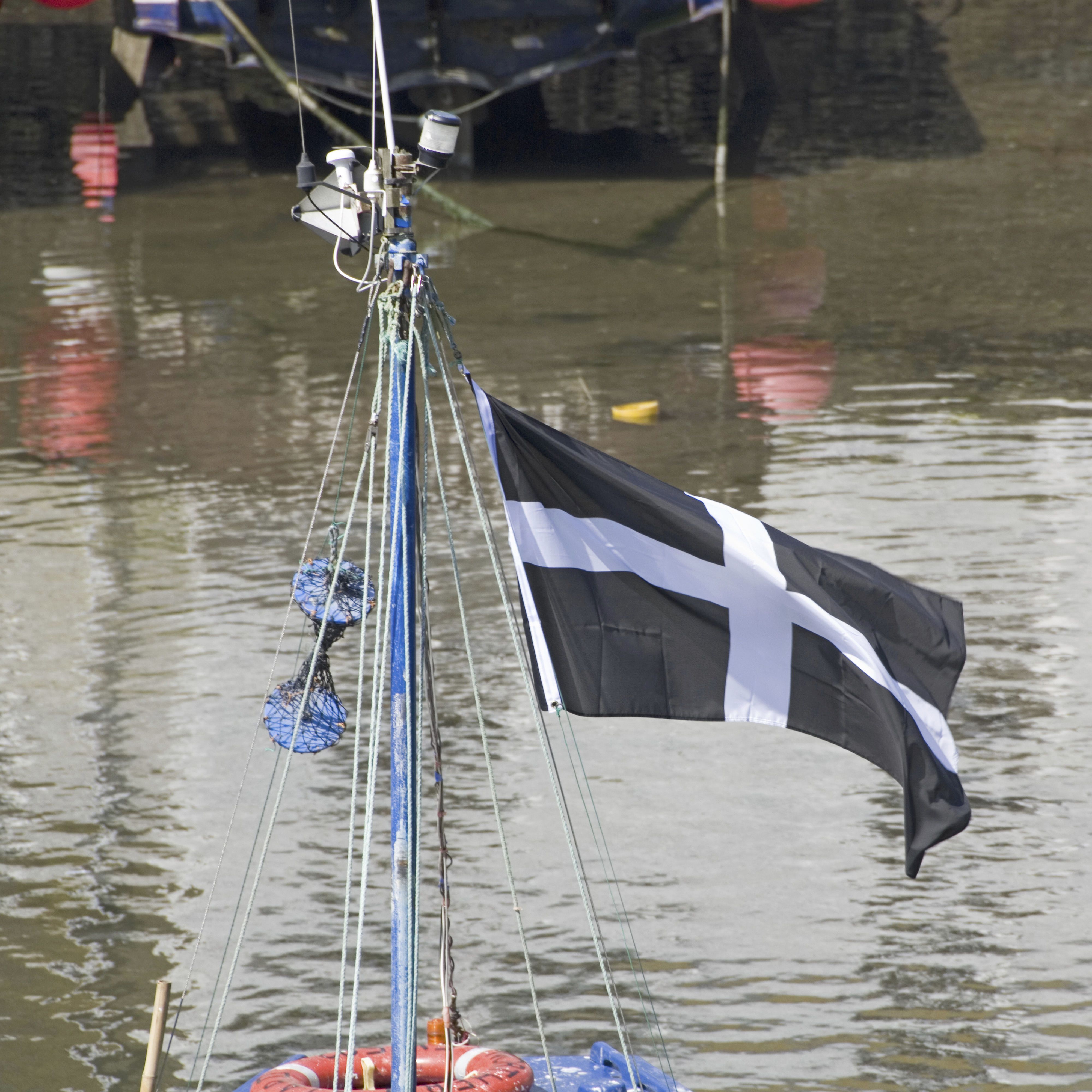
It’s not often you hear the Cornish language spoken in the streets of London. To be honest, it’s not often you hear it in the streets of Cornwall, although I promise it does happen, if you know where to look.
But this weekend was an exception, because Saturday was St Piran’s Day, the national day of Cornwall, and London was celebrating in style with its annual Shoreditch celebration, Kernow In The City.
So what’s it all about?
Drinking heavily!
No, I’m joking, of course – in fact, I find St Piran’s Day is one of the more sober Cornish celebrations, as it’s really more about celebrating the culture of Cornwall. Back home, different towns have different traditions, but usually there’ll be music and singing, a parade of some sort, perhaps some dancing and dressing up, occasionally a pasty competition. In Westminster, the Cornish MPs hold a cultural reception which aims to teach more about Cornwall’s identity and culture.
The Shoreditch evening event, which I’ve been going to for a good 4 or 5 years, is also primarily a cultural celebration, with different Cornish talent every year and a heavy focus on music (this year featured the amazing Flats and Sharps as the grand finale, last year saw The Oggymen taking centre stage), as well as a variety of comedians (The Kernow King has been guest of honour in the past, and still usually makes a remote appearance via video).
But get a lot of pining ex-pat Cornish together and a few kegs of Betty Stogs beer and it will inevitably turn into a somewhat tipsy affair, with plenty of drunken dancing by the end of the evening. And that’s part of the reason I love Kernow In The City: every year I take along a few non-Cornish people, who tentatively agree to attend in the full expectation of being hounded out of the venue for being English, and although some of the in-jokes about miniature Cornish villages do go over their heads, and the bilingual compering leaves plenty to be understood, by the end of the evening they’re usually bellowing out the words to Trelawney (our national anthem) with great passion, and dancing with total strangers.
Nothing could do more to dispel the myth of the Cornish cold shoulder than the St Piran’s Day event: take a small interest in Cornish culture and you really will be welcomed with open arms. Learn a couple of words of Cornish and you’ll be the talk of the town. And if you’re going to learn anything, learn these three words: Kernow Bys Vyken (Cornwall For Ever), a toast to make you Cornish friends for life.
Proper job!
Nat
Baking idioms: the best thing since sliced bread?
Yes, believe it or not, it’s National Toast Day today. Which got us all thinking, how important can toast possibly be?
Turns out, if you look at the English language, it’s pretty important, as are all baked goods to the British mind. We pepper our conversation with references to bread, toast, cake and biscuits on a daily basis:
In this cold weather, you may have turned on the heating, so now you’re as warm as toast. Central heating really is the best thing since sliced bread. Going out in the cold again without a coat would be a really half-baked idea.
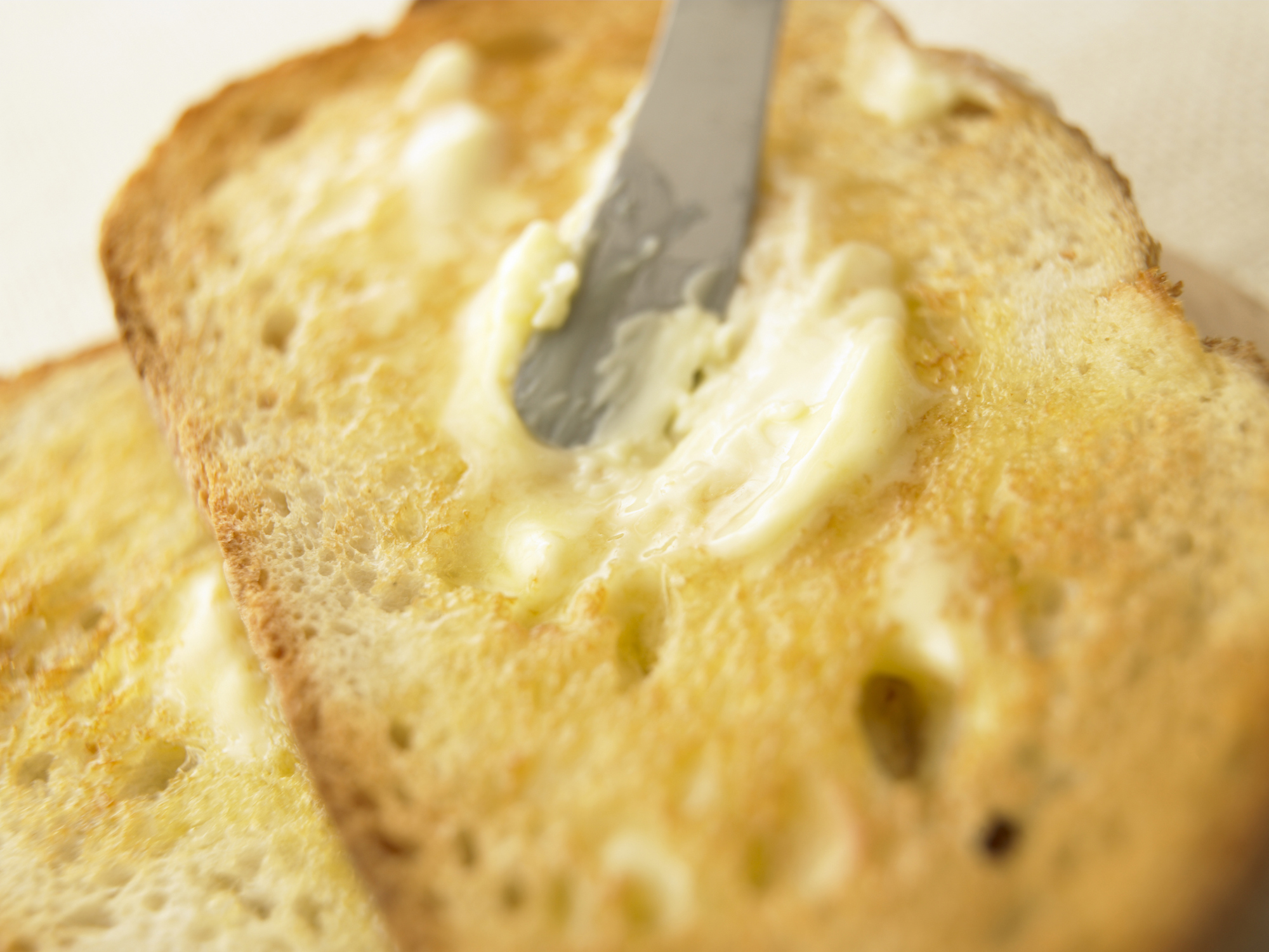
If you’re the breadwinner in the family, you’re the one bringing in the money. Your job’s your bread and butter. Maybe you’ve got several projects on the go at the same time, in which case you’ve got your fingers in many pies. Or maybe you’re from the Upper Crust, in which case you may not need to work at all, and will hopefully know which side your bread is buttered.
If someone’s brown bread (a bit of Cockney rhyming slang, by the way), then they’re dead – or, if used as a threat, about to be dead. You can also say they’re toast.
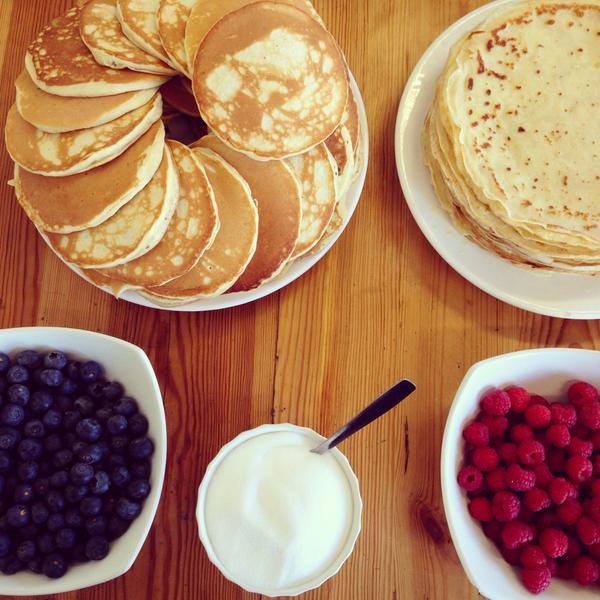
A simple task is as easy as pie or a piece of cake. If something sells fast it sells like hot cakes. The icing on the cake is a lovely, unexpected bonus to a project; the sarcastic alternative is taking the biscuit. When fortune spins the wheel of fate, that’s just the way the cookie crumbles. And if it goes badly for you, you might feel deflated, or as flat as a pancake.
It’s not just English speakers who love to talk about bread. The Polish equivalent of a ‘piece of cake’ is a bułka z masłem (bread roll with butter). In Spanish, someone living a life of luxury nació con el pan bajo el brazo (was born with bread under their arm). If you suspect someone of being up to no good, in Swedish you can suggest that inte ha rent mjöl i påsen (they don’t have clean flour in their bag) – and if you then need to seek revenge, you can demand in Italian that the person who’s wronged you rendere pan per focaccia (to give back bread for focaccia).
Well, that’s probably enough: we don’t want to over-egg the pudding, so time now for us to shut our cake holes. Let’s conclude by raising a toast (which – as all good Big Bang Theory fans know – is so called because of a historic tradition of putting spiced toast in drinks) to all our favourite baked goods… we hope this post has given you food for thought 🙂
Nat and Liz
Happy Burns Night!
 ‘Some hae meat and canna eat,
And some wad eat that want it;
But we hae meat and we can eat,
Sae the Lord be thankit!’
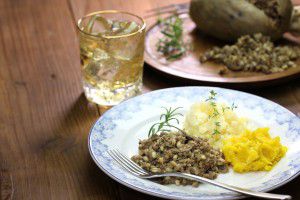
It’s January 25th, the night that no haggis is safe! Lock up your neeps and tatties, and hide the good whisky. The hungry hordes are on the way!
In my family, Burns Night has always been an annual tradition, with my Nan hosting the festivities and always inviting a few new (and unsuspecting) guests each year. Now that she’s gone, I host my own Burns Nights, and always stick to her menu of a cullen skink starter, haggis, neeps and tatties, and cranachan for dessert. Never having been to a Burns Night outside my family, I’ve always suspected that we might do things a bit differently to everyone else, but then that’s part of the appeal: as long as you include a few essential components, every host will have their own twist on the rest of the night.
The elements that can’t be forgotten, in my book, are the piping in of the haggis – although, as nobody I know has any bagpipes, we tend to use whatever musical instrument is closest to hand, including the tin whistle, violin and, perhaps most successfully, the harmonica. The Address to a Haggis has to be delivered by the host, who will stab it as theatrically as they can when they reach the line ‘His knife see rustic labour dight / An cut you up wi ready slight,’ and ideally a spewing out of the haggis’ delicious-smelling ‘gushing entrails bright’ sees an end to any misgivings the guests had about trying their first haggis. (Little side note – if you haven’t ever had haggis before, go and buy one immediately: it’s the one thing that makes me seriously question my commitment to vegetarianism).
In my house, we then tend to relax a bit while everyone gets their teeth into the haggis, but at the arrival of the seriously creamy, very alcoholic cranachan (lots of oats, lots and lots of whisky, lots of cream, with a few raspberries interlaced), some unsuspecting guest will usually be asked to honour Rabbie Burns by reading a poem. Ideally somebody English is chosen so that the attempt to read fluent Scots has maximum effect. My favourite surprise poem to launch on guests is ‘A Man’s A Man For A’ That’, but ‘To A Mouse’ does the trick as well: by the time they get to the line ‘To thole the winter’s sleety dribble, An’ cranreuch cauld!’, all social boundaries tend to have broken down and everyone’s the best of friends.
After that, it’s just a case of more whisky, more whisky and more whisky still, until the wee hours see everyone singing and dancing arm-in-arm around (and occasionally on) the kitchen table.
Guid health!
Nat
What’s in a name?
Welcome to my family! My Grandma’s called Minnie, and my Granddad’s called Jack.
Except, they’re not really.
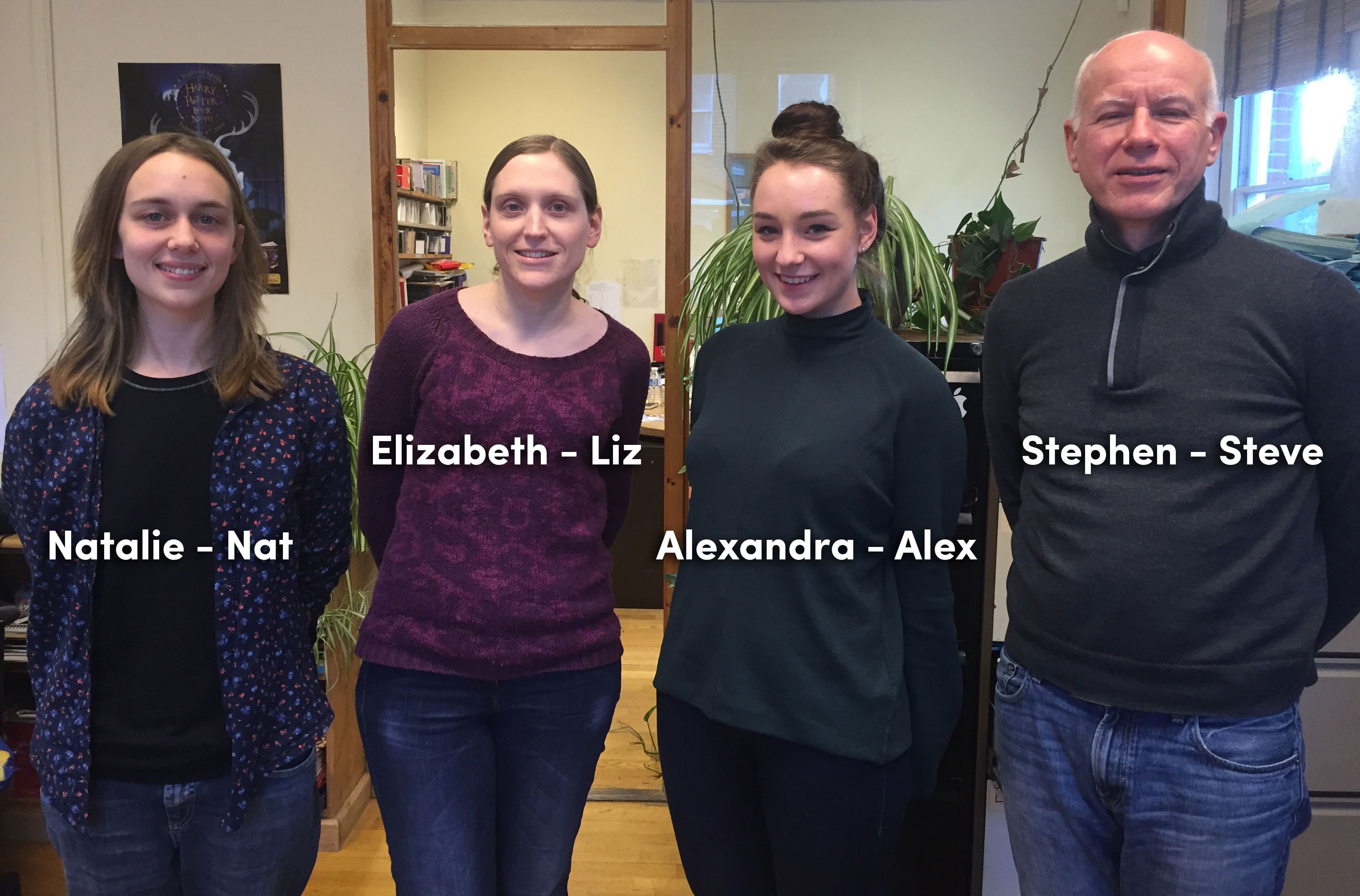
Because, in English, we have an eccentric tendency to distort names until they no longer resemble the original at all. My Gran’s actually called Mary and my Granddad, of course, is John.
Now meet my Uncle Bob, cousins Harry, Bill and Jim, and aunts Kitty and Nancy. Their real names – the names on their birth certificates – are Robert, Henry, William, James, Katherine and Anne. Makes total sense, right?
Some common English names have not one but several permutations, just to make things more confusing. The name Edward can be twisted into Ed (OK, fine), Ted (hmm) or Ned (well….), whilst Robert can be not only Bob but Rob, Bobby or Bertie. James can be Jim, Jimmy or Jem, and Richard can be Rich, Rick, Dick or Dickie.
On the girls’ side, Elizabeth must be one of the most prolific of names, producing not only Eliza, Liz and Lizzie, but Ellie, Beth, Bess, Bett and Bettie, whilst Margaret becomes Maggie and Meg, or Peggie and Peg. Victoria becomes Vic, Vicky, Tor and Tory, and Mary can be Molly, Minnie, Polly or Poll.
It’s not just our language that does this, of course, and Russian is another which can mutate its names into seemingly unconnected variants. When I was in Russia, my friends were Tolik, Vanya, Sanya and Masha, whose real names were Anatolii, Ivan, Alexsandr and Mariya. But whereas in English a Rob might always be a Rob, both in private and public arenas, formal and informal, in Russia someone might be called Alexandr in formal situations but Sasha with friends – and Sanya, Sanka or Sashenka for extra familiarity and affection.
My name, Natalie or Natalia, was used formally, but to most acquaintances I was Natasha, and to closer friends I would sometimes be Nata, Natashenka, Natusik or Natusyenka. Alekseii becomes Alyosha or, more colloquially again, Alyoha, Lyosha or Lyoha. Dmitrii become Dima, Dimka (the -ka ending adding another level of diminutive to the already familiarised Dima), Mitya or Mitka. Evgenii becomes Zhenya and Sergei becomes Seryozha.
Of course, if you have a bit of time in Russia then the aim is to collect a group of friends with the following rhyming names: Masha, Pasha, Dasha, Natasha and Sasha. And, because of the popularity of the names Mariya, Pavel, Natalia, Dariya and Alexsandr, that’s not as hard as it seems!
We’d love to know about other languages that mangle their names!
Nat
Fancy a cuppa? Got time for a brew?
Travel around the UK a bit and you’ll find that tea is not just known as ‘tea’: so ubiquitous is it that there are plenty of regional and affectionate names for our favourite drink. A cuppa, a brew, a cup of char, a Rosy Lee (Cockney rhyming slang), a builder’s will all get you the same thing: a nice cup of steaming hot, milky tea. Lovely!
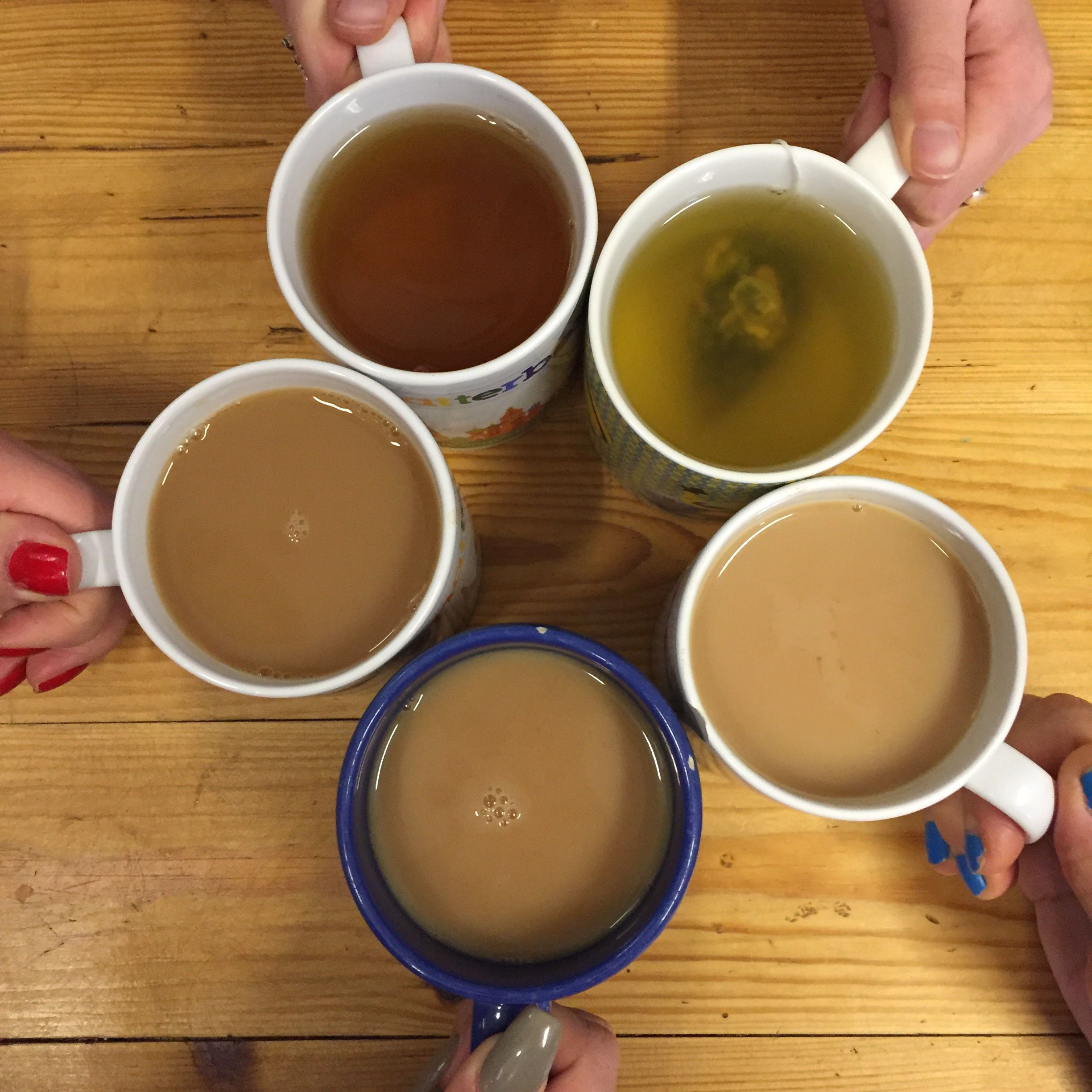
Tea is so important to us that it’s even filtered into our everyday language and is integral to some of our common idioms. Here are a few examples:
Not for all the tea in China!
You want me to do what?? Not for all the tea in China! Essentially meaning that you wouldn’t do something, no matter how good the reward.
It’s not my cup of tea.
Are you enjoying this programme? Not really- it’s not my cup of tea. Very simply, if something’s not your cup of tea, you don’t like it.
As useful as a chocolate teapot.
Fairly self-explanatory: not useful in the slightest.
Tea and sympathy
If someone’s upset, you might give them tea and sympathy (a nice strong cup of hot tea offering, of course, immeasurable comfort).
Tea leaf
Oy! That tea leaf’s ‘alf-inched me wallet! In Cockney rhyming slang, a tea leaf is a thief! (And, in case you’re wondering, to half inch is to pinch.)
Can you think of anymore tea idioms? Lets us know on Twitter or Facebook.
